Pages

Showing posts with label opinion. Show all posts

Wednesday, September 14, 2016

Nursery Rhymes - the horror genre of the preschool set

Today you can find me blogging at the ALSC Blog with a post titled, 

I've opened up a discussion about using some of the more gruesome nursery rhymes in storytime.  If you'd like to weigh in on the topic, or have your own particularly horrific favorite, please click over to the ALSC Blog.

In the meantime, here's my own childhood favorite,

Ladybug, ladybug, 
fly away home.
Your house is on fire.
Your children will burn.
 Note:
I married a firefighter. ;)


Images in the Public Domain and available from Project Gutenberg.

Tuesday, August 2, 2016

Stanley's Shapes and Stanley's Colors - a review

In 2015, I reviewed the new picture book, Stanley the Farmer by William Bee, declaring it (among other things) "a perfect choice for very young listeners."  So when I had an opportunity to review upcoming Peachtree Publishers titles, I was happy to take a look at Stanley's entries into the board book series.  I was not disappointed.


Stanley's Shapes by William Bee
Peachtree Publishers, 2016

William Bee's illustrations are crisp, bright and simple. In Shapes, he ensures that the featured shape on each double-spread page is easy for children to discern, outlined heavily in black.   There are 8 shapes in all, and each one is something that should be easily recognizable for a child.  A tent is a triangle, a window is a square, bike wheels are circles, a kite is a diamond, etc. Text is minimal for each shape,
Wheeeeeeee! Circles make the best wheels!
Preceding the simple, black text is a white outline of the featured shape.  The final spread is an illustration that contains all of the shapes,
What a lot of shapes! How many can you see?
Stanley's Shapes is exactly what a concept board book should be.


Stanley's Colors by William Bee
Peachtree Publishers, 2016

Like Stanley's Shapes, Stanley's Colors is a perfectly simple, child-sized, concept board book.  There are eight featured colors on double-spread pages.  The background is white, except for a colored banner on the bottom.  The colored banner contains the simple black text,
Choo Choo!  Here is Stanley driving his purple train.
and matches the color in the illustration.  Almost everything in the image is purple with the exception of Stanley, and a few small accents.  Black outlining ensures clarity.

If you're looking for a color concept book for very young kids, this is a great choice.


Look for these books in September, 2016.

A note on board books:
I don't usually review board books because I am often disappointed in them.  In my opinion, board books should be exactly like these books, however, in recent years, it seems as if too many of them are just retreads of popular picture books.  They're often too big, too text heavy, too complicated.  If you're shopping for board books for your collection, or your own child, keep it simple!


Note:
Review copies were provided by the publisher at my request.

Thursday, October 1, 2015

The Death Knell for Show-and-Tell

 The Death Knell for Show-and-Tell
For  Library Card Sign-Up Month, I visit every Kindergarten class in town.  I talk about all the great reasons to have a library card, drop off applications for each student, and read a book - preferably a funny one.  Because I visit at least 12 different classrooms, I usually bring an assortment of books so I don't get bored reading the same one in each class.

This year, I brought Otto the Book Bear by Katie Cleminson (not funny, but a perfect choice for pitching libraries!) A Perfectly Messed-Up Story by Patrick McDonnell (the "what not to do with your library book" book), and Elise Parsley's, If You Ever Want to Bring an Alligator to School, Don't!.


If You Ever Want to Bring an Alligator to School, Don't (2015, Little, Brown) is a new book that I find hilarious.   A little girl brings her alligator to school for show-and-tell, and all havoc breaks loose.  I thought it would bring some giggles to Kindergarten kids.  At my first visit, I asked the teacher if the kids had begun show-and-tell yet. I wanted to make sure they would get the joke.  I was told that the new, more rigorous Kindergarten curriculum did not allow the time necessary for the rather lengthy process of show-and-tell.  The teacher suggested that the book would be best shared with preschoolers as they are the only ones with time for show-and-tell.  How sad.

This isn't an individual teacher's decision, it is a by-product of strict, standards-based education.  I get it.  I truly do, but I am glad that I am not a child today.  Today's body of knowledge is so much greater than it was when I was in school, and the process of educating children has moved to a business-like model.  These factors combine to remove much of the joy of early learning - free play, music, art, and show-and-tell.

If you're a parent or librarian or teacher with a few minutes of free time, spread some joy wherever you can.  Life is hard - even in Kindergarten. 

Monday, July 14, 2014

Finish this sentence ...

"Finish this sentence: I'm a librarian.  I ..."

 Mrs. Joan Fertig, Hungarian-born librarian at the Westinghouse plant
Mrs. Joan Fertig, Hungarian-born librarian at the Westinghouse plant
Collins, Marjory, 1912-1985, photographer

Consider these rather simplistic statements that people might make about various degreed professions:

  • I'm a doctor. I care for people's health.
  • I'm an educator.  I teach people new skills.
  • I'm a lawyer.  I assist people with important legal matters.
  • I'm an accountant. I advise and assist people in the management of financial matters.

Now, finish this sentence:  I'm a librarian. I ...

...and therein lies a problem.  Although we are regulated in many states and hold master's degrees in our field, many (most?) people have no idea what librarians do. Even we can't distill it into a single sentence! As a whole, I feel that we're doing a poor job of promoting a greater understanding and appreciation of our profession in today's high tech era.

Here are some conversations I've had recently:

  • The other day I had some uncomfortable dental work (no one asks dentists what they do all day!).  My face was numb, my jaw hurt, and I was complaining about going to work.  "Don't worry about it," said my mother-in-law, "just find a nice corner where you can sit and read all day." (I wish!)
  • At a previous dental appointment, I was speaking with the hygienist and the conversation turned to various state regulations.  When I mentioned that NJ librarians must have state-issued certificates, she said, "Whatever for?  Why would a librarian need to be regulated?" (Among other reasons, because we are degreed professionals entrusted with the privacy and confidentiality of our patrons, the lifelong education of people of all ages, the proctoring of college level examinations, and the proffering of important and often sensitive information.)
  • Out with friends the other night, the topic of my job came up in conversation; someone said, "Oh, right ... Dewey Decimal System and all that." (It's the "all that" that takes up my time)


So - if you're not a librarian, what do you think we do all day?  If you are a librarian, can you finish my sentence for me so I'm ready the next time.  Please?


Note:
Want to know what the American Library Association has agreed that all librarians should know? The list is here, known by its official title of "ALA's Core Compentences of Librarianship." 

Tuesday, June 24, 2014

A 2% Effort is not Sufficient for a 100% Life

A 2% Effort is not Sufficient for a 100% Life
or
In public schools throughout the country, a student is taught to read in Grades K-3. Beginning in Grade 4, there is a fundamental switch.  A student is no longer learning to read, but instead is reading to learn

A school year in my state of New Jersey consists of 180 days. Kindergarten through Grade 3 is 4 years of schooling, or 720 days (assuming 100% attendance). The approximate average life span is 78 years or 28,470 days.  
Roughly stated, those 720 days amount to only 2% of a child's lifetime. Think about that.  Only two percent of a lifetime is allotted to impart the fundamental reading skills which positively or negatively impact the remaining 98% of a life!

A student who cannot read or read well upon entering Grade 4 will be at a distinct disadvantage, possibly for the rest of her life. (see related articles below)


Public libraries around the country stand ready and able to help children attain reading success.  In New Jersey, as in many states, librarians are licensed professionals with a Master of Library (or Information) Science degree.  We are trained to assess the needs of those in our community and provide opportunities for early and lifetime learning.  During the year we typically offer story time programs which promote early literacy skills, as well as book clubs, computer classes, and a host of other educational fare.  In the summer, youth services librarians turn our attention to preventing the "summer slide," the loss of reading skills that occurs during the summer break from school.  We do everything short of standing on our heads to encourage kids to read, and have fun doing it!


Summer reading clubs at the public library are fun, they're free, and they pay lifetime benefits. 


Related articles:


Thanks to school superintendent Peter Morris, for helping me to frame this conversation.


Monday, February 17, 2014

Yes, it's a book - but throw it out!!

Yes, books are wonderful.  Books are precious.  Books should be treasured...but some belong in the trash!

Dumpster-non
* attribution below
If you're reading this, chances are good that you're a teacher, librarian or caregiver; and as such, you're in an important position.  You're someone to whom children look for answers.  They also look to books, and therein lies a problem.  Not all books are good books.  A good book today may be a bad book tomorrow.
Allow me to illustrate.

In first grade, my daughter borrowed a book about the moon from her school library.  It concluded with the inspirational sentiment, "someday men will go to the moon."  She thought this a wonderful suggestion, until I explained to her that men had already been to the moon numerous times and had now set their sights on Mars.  I don't care how true the rest of the book may have been, it belonged in the trash.  It may have been a good book in the 1960s, but it is (or should be) garbage now.

If yours is not a special focus library and your primary patrons are children,  hyper vigilance is in order when deselecting old nonfiction books - particularly biographies. Kids believe what they read.

Currently, we're in the "perfect storm" of biography assignments.  Between President's Day, Black History Month, the new Common Core State Standards, and Women's History Month coming up fast, the biography shelves see more action this time of year than any other.

I gave mine a good, hard look the other day, and here are some things I discovered.

If this is on your shelf,
it's time to replace it ....

with this.
Same author, same book,
updated information.

The President of the United States - He's a very popular choice for assignments, but some of my books were written soon after his first election.  Plenty of things have happened since then, and plenty of new biographies have been published.  Unless the older titles offer a unique perspective not present in other books (the road to the White House, the story behind a particular speech or inaugural address, his childhood), they can go.

Still have this one on your shelf?
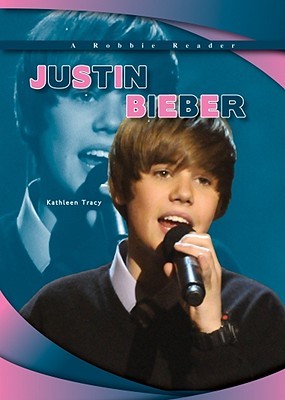
This was published in 2010,
 and appears to be in need
 of an update, no?

Justin Bieber (and other trending musicians, singers, and such) - They're young, they change rapidly (remember Hannah Montana?), their stories are incomplete.  If the person is still popular and your book is more than two years old, it's time for a new one.

A quick check of WorldCat.org
 shows that 368 libraries are still shelving this 2002 book
featuring A-Rod in a Texas Rangers uniform!
How much has changed since then!!

Sports teams and stars -Yes, it's nice to have a book on the shelf for each team, but kids believe what they read in books.  Don't give a child a book that says Curt Schilling plays for the Boston Red Sox. You may remember it as yesterday (heck, I remember him as a Phillie!), but to a child, it's old news.  Players change teams often.  If a book doesn't reflect a player's current team or a team's current players, get a new one or do without.  Again, if it has a unique historical perspective, that's a different story.  I'm speaking of the general formulaic style books on teams and players.


As a general rule, if the subject of your book is deceased, you may be safe with an older title.  If she's still living an active, productive life, look for a new edition.

Happy President's Day!  Buy yourself a new book.


* Niteowlneils at the English language Wikipedia [GFDL (http://www.gnu.org/copyleft/fdl.html) or CC-BY-SA-3.0 (http://creativecommons.org/licenses/by-sa/3.0/)], from Wikimedia Commons

Tuesday, January 14, 2014

Biography assignments, redux

It's January, which, in my neck of the woods, means that it's time for school biography assignments.  I love to read biographies. I'm happy that teachers assign them for reading, and happy that some kids enjoy them.

However, there's always a bit of a disconnect in what is required, what is available and what is wanted.  I'm fortunate to work in a library that is chock-full of great biographies for kids, however, many don't meet the requirements of teachers or CCCS.  As is my usual opinion, I think more dialogue is needed between librarians, teachers, and the creators of subject standards, who sadly, are often not educators.

You can find me today at the ALSC Blog, the official blog of ALA's Association for Library Service to Children, with my annual opinion on biography assignments.  Please visit the conversation there. In the meantime, rather than vent, I'll Venn. ;)


Wednesday, October 23, 2013

A librarian's thoughts on conferences, workshops and such

In addition to being a librarian, I am also a long-time school board member.  Whenever feasible, I have attended state (and sometimes, national) conferences and workshops.  Sometimes, these events are better than other times, but in general, I enjoy learning new things, meeting up with other similarly-interested professionals, and staying abreast of things that affect the education of children in my state and the nation.

Today, however, I realized several things ...

The difference between the annual gatherings of librarians and the annual gatherings of school board members has changed dramatically over the years.  When I return home from a conference of librarians, I am generally enthused, enlightened, and filled with new ideas to bring back to my library.  I used to feel the same when I returned from school board workshops.  This year, however, I was struck by how many of the sessions, labs, and programs were related to budgetary obligations, legal issues, compliance instructions, regulatory updates, legislative updates and the like.  Yes, there were still groups of students performing, and there were enthusiastic young teachers promoting STEM objectives - but even these joyous expressions of creativity and knowledge are seen through the lens of logistics and regulation.  Can we afford to bus these student entertainers to the conference?  Does this exciting lesson in rocket building fill the requirements of the CCCS?  In general, the school community seems to be less A B C than B B B,  beleaguered, besieged, and beset.  Truly, it is amazing how many wonderful and positive things are being done in school communities despite the many obstacles that face them.

Wherever you live, if you are a public librarian, a parent, or a concerned citizen, take an interest in your public schools and offer your support.  Chances are, they are doing their best with a limited budget in an increasingly regulated and litigious world.

OK, off my soapbox now.  Thanks for listening.


Monday, February 4, 2013

Black History Month - fact and fiction

  • "Frederick Douglass appealing to President Lincoln and his cabinet to enlist Negroes," mural by William Edouard Scott, at the Recorder of Deeds building, built in 1943.
  •  Highsmith, Carol M., 1946-, photographer

Last year, I reviewed a copy of Russell Freedman's, Abraham Lincoln and Frederick Douglass: The Story Behind an American Friendship (Houghton Mifflin Harcourt, 2012).  The story of their friendship and the "back story," was so interesting, that I thought it might make a good topic for a Black History Month program for younger children.  I began searching for a way to communicate to a young library audience the connection between the history of African Americans and these two great men. In researching, I found that the founder of African American History Month (it was originally called Negro History Week), Dr. Carter G. Woodson, initiated this cultural celebration in 1926, and chose February because the birthdays of Abraham Lincoln and Frederick Douglass are both celebrated in February. (1)   I then discovered an earlier book, Lincoln and Douglass: An American Friendship (Henry Holt, 2008), that recounts the friendship but targets a younger audience.  Even better, it has a companion DVD.  So, I planned a Lincoln and Douglass birthday celebration, featuring the Lincoln and Douglass picture book and an explanation of the founding of Black History Month. Perfect, right?

Well, not quite.  In reading Lincoln and Douglass: An American Friendship, I found several discrepancies.  As it turns out, the timeline included in the picture book's back matter is correct, but some dates within the book's narrative are not. For example, Freedman's thoroughly researched book has the initial meeting of Lincoln and Douglass as a central theme. The picture book gets the date wrong.  Though the picture book still has merit and will be useful to introduce Douglass and Lincoln to a young audience, I can also use it as a teaching moment.  Always check to see that a book has been properly researched if you plan to use it as a representation of factual material.

Oddly, the same thing happened to me last year.  I sketch out my programs many months in advance to satisfy printing and publicity deadlines.  I fill the details in later.  Last year, I offered a Black History Month program on Follow the Drinking Gourd (Knopf, 1988).  While investigating resources, I found that the story, while well-known and generally accepted, is more folk legend than truth. (2)  Again, the story is not without merit and I was again able to use it as a teaching moment.  Besides the obvious lesson, we looked at ways in which to read the stars without a compass.

I understand narrative license.  I understand that it's particularly useful in treatments of difficult topics for younger children.  I also understand, however, that there is a concerted effort by our nation's leaders to raise a new generation of critical thinkers, and to achieve that end, the use of nonfiction books will rise dramatically.  It is up to us as librarians, teachers, caregivers and parents to discern fact from fiction, even when the line between them may be indistinct.  In doing so, we will help children to navigate a world where information is everywhere for the taking, but truth must be mined.


Today's Nonfiction Monday roundup is at Apples with Many Seeds.

And don't forget, February is a perfect time to head over to The Brown Bookshelf; each day in February will feature a different artist in this annual celebration of Black History Month and children's literature.


(1) Library of Congress, "African American History Month"http://www.loc.gov/law/help/commemorative-observations/african-american.php (Douglass' actual birthdate is not known conclusively)
(2) Follow the Drinking Gourd
http://www.followthedrinkinggourd.org/

Monday, January 21, 2013

It's that time of year - biographies!

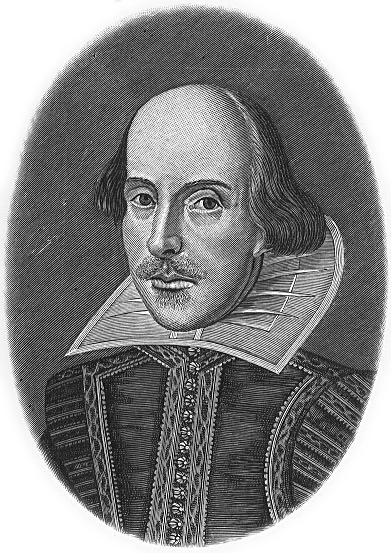
By In Helmolt, H.F., ed. History of the World.
New York: Dodd, Mead and Company, 1902.
Author unknown, [Public domain or Public domain],
via Wikimedia Commons
Whether you're a school media specialist, a public librarian, a parent or a teacher,

if you know children over the age of 7, you're familiar with "the biography assignment."  It comes around every year, and depending one's perspective, it may be a source of excitement, drudgery, irritation, disappointment, interest, or a mixture of all.

Some thoughts on "the biography assignment"

Children need to understand the difference between an autobiography and a biography.  Many students arrive at the library insistent that their teacher has assigned an autobiography and a biography will not suffice.  I always try to comply with their request, however, there are few autobiographies written for children, though if the child is slightly older, I will always recommend Jon Scieszka's, Knucklehead (hands down, the best and funniest autobiography for children). For older kids, Walter Dean Myers and Gary Paulsen have both written excellent memoirs.  In most cases, the teacher will accept either an autobiography or a biography, but children don't always realize that.

Graphic novels biographies are perfect in certain circumstances and I wish more people would give them a try.  A reluctant reader might love Terry Collins', King of Pop: The Story of Michael Jackson, or any title from the American Graphic Biography Collection, or other similar offerings. Just because they have panels, that doesn't make them less true, less valuable, less informative.
Picture book biographies are not just for very young children - in fact, seldom are.  There are so many wonderful and informative picture book biographies.  I urge teachers to read a few and give them a chance.  Demi's books are not only informative, but beautiful and evocative - Marco Polo, for example is simply stunning.  Or how about Bill The Boy Wonder by Marc Tyler Nobleman? Or Michelle Markel's, The Fantastic Jungles of Henri Rousseau?  I could go on for days ...

The most important thing to look for in a biography is veracity.  Are there source notes, back matter, photo credits, suggestions for additional reading - in short, all of the things that indicate the author has thoroughly researched the subject? Has the author taken "artistic license?"  That's not necessarily a bad thing, however, older students should be trained to look for it.

The point is, I understand the dictates of local, state and national policies on what must be taught to children, however, within the parameters of those dictates, there is, hopefully, some room for flexibility - some leeway for children to choose different formats, different topics, different means of delivery. To this day, I don't like the poetry of Percy Bysse Shelley.  Why?  Because when I was in grammar school, I wanted to do my "famous poet" report on Edgar Allen Poe. I was forced to choose Percy Bysse Shelley.  I've long forgotten that teacher's name, and I still don't like Shelley.   In another year, a wonderful teacher allowed me to choose Edgar Allen Poe.  Her name was Ms. Romano and I still read Poe from time to time.  See how it works?

When the biography assignment rolls around, keep your options open!
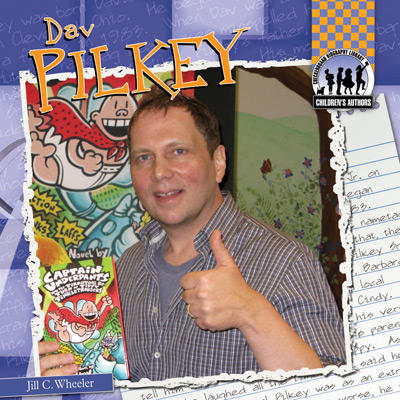
One more thing:

I haven't had one in hand yet, but Abdo Publishing has a new series of Children's Author biographies. Tell me what young boy given a biography assignment would not want to choose, Dav Pilkey?


Related posts:


Today's Nonfiction Monday roundup is at The LibrariYan.  Check it out.

Monday, June 25, 2012

ASL books for kids

American Sign Language (ASL) books for kids

As a general rule, unless I am under obligation to SLJ or LT, I don't write reviews of books that I don't like.  The work of many committed people goes into the commercial publication of a book, and it would be the height of arrogance to assume that I am the best or only arbiter of good taste and quality.  I offer my opinions here for the benefit of myself and those who may not have the time to read as extensively or expansively as I do.  That being said, without referencing a particular book, I wish to offer a caveat regarding American Sign Language books for children.


I am very fortunate in that I work with a deaf woman who has been teaching me sign language for over a year.  She and I often share books and discussion about deaf culture, ASL, and unrelatedly, our interest in star gazing. (We both loved Wonderstruck.)

Over the past few weeks, I've received numerous new ASL picture books at my branch.  These recent additions depict ASL in simplistic drawings.  This may make for a cute picture book, but the signs are nearly impossible to decipher and replicate with one's actual hands. Sign language is a fluid language.  The required movements are very difficult to duplicate in pictures.  If you must rely on printed text and illustrations (which will work fine for most of the ASL alphabet), purchase or borrow books with photographs of hands rather than artistic renderings.  A better suggestion, however, if you are seeking to teach ASL, is using one of the many kid-friendly DVDs, or YouTube tutorials.  Purchasing books which rely on simple, hand-rendered illustrations of complex signs is, in my opinion, a waste of money.  My co-worker did use our new books to teach me something - the signs for "wrong picture."  (I already knew the signs for "bad book.")

If you want to learn about deaf culture or ASL, check out the site for the National Association of the Deaf, or the National Institutes of Health site, or best of all, ask a deaf person.


Today is Nonfiction Monday.

Tuesday, February 7, 2012

What we say without words

It is said that a picture's worth a thousand words.

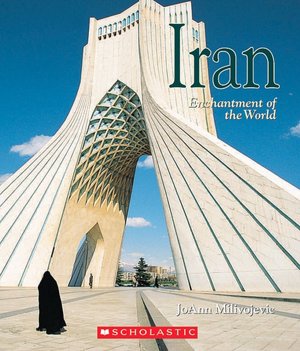
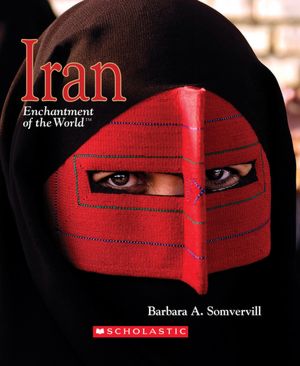
Every few years, publishers will print new geography books, replacing outdated population statistics, government leaders, general information, photos, etc. Cover art is typically updated as well.  In with the new, out with the old, standard procedure, nothing unusual.

Today, however, I spotted the new cover photo for the nonfiction, informational children's book, Iran, and I was taken aback.

If a picture's worth a thousand words, what do these three pictures say? 

2003 edition

2008 edition


2012 edition
Remember, these are books for children.  Can we create bias with a photo?
I think so. Should we? I think not.

Saturday, January 15, 2011

High-tech retro

New - that's the theme requested by Challenging the Bookworm Blog, the host of this month's Carnival of Children's Literature.  So, I started thinking, what's new?

A new year, a new decade - everything is new. Color e-readers, computing in the cloud, smarter phones, 4G networks - the list is endless; and I am a fan of “new” and “high-tech.” In fact, this post was written “in the cloud” that most of my documents call home. However, as I ponder the new year, I have a nagging feeling that for librarians, it is the old that may matter most. Despite the wondrous new advances in technology, librarians (particularly children’s librarians) must remember that many people don’t live in the shiny new world - they live in the old one, and perhaps our greatest challenge is to ensure that we use the latest technology to do our ages-old job.

As a public librarian, I see firsthand, the large number of people who do not have home access to the Internet, printing capabilities, or telephone service. We bloggers and other denizens of the Internet are so familiar with technology that we may take it for granted that others have the same knowledge base. Imagine my surprise when my son received a new touch screen, video music player with the capability to receive RSS feeds. “Oh,” I thought, “how excited he’ll be to find that he can receive ESPN updates!” Oh, how surprised I was to learn that he had no idea what an RSS feed is or why he might want to use one! In some cases, the ubiquitous social networking sites have made the internet so easy, that people no longer understand how it works. And this is good that they don’t have to, but it’s also bad, because it’s limiting. Voice over Internet (VOI) protocol, free cloud computing applications, RSS feeds - all of these have the potential to aid librarians in assisting customers, particularly students, teachers, and those with limited resources; but only if customers know how to use them.

It’s also wonderful that new tablets and color e-readers make picture books accessible in digital format. The small size and portability of new e-readers makes them uniquely personal, but also uniquely solitary. I love my e-reader, but I still want to see children with loved ones, cozying up with beautiful, full-sized picture books. Yes, there may be a cool phone app for a beloved children’s book, but we have to make the physical book available as well - especially for the child who will never have an e-reader.

Smart phones are also a boon, however, a growing portion of society relies solely on wireless phone service for Internet access - for reasons of convenience, cost, or availability. But is the same information available to mobile users? Will they be shut out from some content, or forced to pay more for service because of the deregulated nature of wireless access? I just turned on the new “mobile template” for my blog, making it easier to read on a smart phone, but I wonder if it matters. Do most people access RSS feeds? Do they know how to access them from a phone? Do content providers know how to make them accessible? Again, another opportunity for us to ensure that we use high-tech capabilities to fulfill an older, low-tech obligation - leveling the playing field, offering equal access to information.

So to sum up my rather lengthy post, I love the new technology, but I think, especially in this era of great economic uncertainty, that our primary job is still old - old in the classic sense - to ensure that information is available to people, that the people with the least means are not left behind, that children are encouraged to read, share, and explore great books (and not so great books if they choose), and that we, as a group, do our best to make use of the new to do the classic job of old.

So, in with the old and in with the new, let’s go high-tech retro!


Clip art licensed from the Clip Art Gallery on DiscoverySchool.com


Beneath the Waves - a review

As we read disturbing news accounts of dying manatees , environmental disasters caused by toxic waste, and ocean pollution on the scale of ...