Pages

Monday, February 21, 2011

Batter up! Baseball book reviews

Opening day for the 2011 baseball season is March 31. (not that I'm counting or anything) Informed of my fondness for America's Pastime, Sleeping Bear Press sent me their spring baseball offerings.

First up,

Michelson, Richard. 2011. Lipman Pike: America's First Home Run King. Ill. by Zachary Pullen. Ann Arbor, MI: Sleeping Bear.

Everyone is familiar with Babe Ruth, but Lipman Pike has hardly been a household name.  Nevertheless, he was America's first home run king, and arguably, its first professional ball player.  Born in 1845 to Jewish immigrants from Holland, Lipman Pike joined the amateur National Association of Base Ball Players.  He became a star, playing for teams in New Jersey and New York.  However, more than just the story of his baseball career, Lipman Pike, is also a glimpse into society, politics, and daily life in Civil War era America.  The game of base ball was so popular at the time that even the infamous Boss Tweed was involved,
He joined the New Jersey Irvingtons until a man named Boss Tweed invited him to play closer to home.  Lip was excited because the New York Mutuals were one of the best clubs in the league.

"Of course, we can't pay you, " Boss Tweed explained.  "That would be against Base Ball Association policy, and as New York's Commissioner of Public Works, I would never break the rules."  He waved Lip closer so he could whisper.  "But I can offer you a job in our government office at Tammany Hall.  You would have little work to do and plenty of time to play ball."

Of course, many players were paid, and the league went professional soon after, in 1871.  Throughout his career, Lipman Pike was known as a gentleman as well as a slugger.

Follow-up information on Lipman's career and life, and an author's note complete the book, but no sources are offered.  The illustrations and primarily brown text on sepia-toned pages firmly establish the story in the mid 19th century.  Zachary Pullen's illustrations feature over sized heads with great detail and expression. An interesting picture book biography for older readers and baseball fans in general. How I wish that more teachers would accept picture books for middle grade biography projects.  In any case, this one could easily be shared in school, relating to units on biography or immigration.
Teacher's Guide available here.
On shelves now.

Herzog, Brad. I Spy with my Little Eye: Baseball. Ill. by David Milne. Ann Arbor, MI: Sleeping Bear.

Each double-spread, mirror (or is it?) illustration features an "I spy" rhyme,
I spy with my little eye, a colorful cardboard collection. Pennants switch places, cards get new faces, and a Tiger changes direction.

along with a baseball-related Photo Fact, and a challenge to spot the differences on the two pages.  A great gift for baseball fans, and a great way to pass the time on trips, doctor visits, etc.  I love "I spy!"

On shelves now.

also by Brad Herzog,
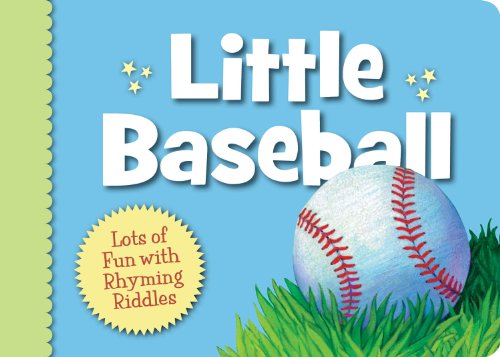
Little Baseball

A small board book with baseball riddles,
Give yourself a great big hand.  It's where a batted ball might land.

Answer: Baseball glove.

This will make a fun and interactive book to share at storytime.  The riddles are difficult enough so that kids won't guess them right away, but not hard enough to be frustrating.

My only frustration is the fact that this will be published in board book format. I wouldn't hand this one to a toddler - too difficult.  This seems to be a trend with many publishers lately. We can no longer count on board books to be simple, concept offerings. Still, this is a fun book with catchy rhymes and upbeat illustrations.
 
Due on shelves in April.
 
Review copies were galley proofs, not final copies.

Today's Nonfiction Monday is at Three Turtles and Their Pet Librarian.

Friday, February 18, 2011

Between Two Ends

Ward, David. 2011. Between Two Ends. New York: Amulet.

Yeats' father has always suffered from depression, triggered by a traumatic event from his childhood.  It has been a constant source of friction in the family, pushing his parents' marriage to the brink of disaster.  Now, in a final attempt to rid his father's mind of its troubles, Yeats and his parents travel to the ancestral home of  Dr. William Trafford, Yeats' father. They hope that a visit with Yeats' peculiar grandmother in her mysterious home on Poet's Lane, will shed some light on, and perhaps relieve William's miserable condition.

But Yeats and his mother are in for quite a surprise.  Mr. Trafford's condition is not a case of mental illness as they had thought; it is a real and palpable fear and despondency over events that occurred at Gran's house, the house of dead poets, many years ago.  Gran's house contains more than an abundance of rooms and books, and a wishing well - it contains magic - a magic that once took Dr. Trafford and a young companion into the written world of The Arabian Nights.  But Dr. Trafford was the only one to return.

Now, with the help (hindrance?) of two magical pirate bookends, Yeats must travel to the Arabia of legend to rescue William's childhood friend, Shari, Shaharazad, the vizier's daughter, who has been trapped in the tales of The Arabian Nights for twenty years!

Between Two Ends is a mysterious story of adventure.  The reader begins the story with the prologue - a scene from the past?  a memory? a story? He doesn't yet know,
The girl tugged at her long black curls, she made to kneel, to reach out to the boy, but strong hands kept her on her feet.  The boy's fair hair and pale complexion contrasted sharply with  the people in the market, but she couldn't remember why that was important.  Hardly distinguishable from the overwhelming odor of cattle dung and fruit, a spicy, pungent smell hung in the air. The girl's heart raced with excitement now at the wonders around her.  Her feet wanted to dance. Wherever the black-robed men wanted to take her she felt no danger going with them. After all, they knew her name.

From here, the reader vaults into the silent, foreboding trip to Gran's house.

Once Yeats disappears into The Tales of the Arabian Nights, the story moves rapidly - full of danger, palace intrigue and adventure.  The location shifts between Arabia and Gran's stately English home, with most chapters following the adventures of Yeats and his quest to break the magic spell and rescue Shari. Third-person omniscient narration offers an easy transition between the two locations and many characters. Also separating the "real" world from the world of legend is an actual "river of words," one that must be navigated by boat. (the pirates are useful here!)

It's hard to read Between Two Ends without recalling Cornelia Funke's Inkheart Series - there are many parallels to the two, but Between Two Ends is a less complex story for a younger reader and comes in under 300 pages with a satisfying conclusion.  Although, the door (or book, as it were) is left open for a sequel.  Treasure Island anyone?

Between Two Ends is a satisfying adventure story with a strong characters in both Yeats and Shaharazad that may well spur an interest in the legendary 9th century tales of One Thousand and One Nights. Fans of many genres will enjoy this story.  Best for middle grades.

Advance copy supplied by publisher.  Due on shelves in May.

Thursday, February 17, 2011

February picture book roundup

Here are a few of my recent favorites - mostly silly

  • Bardhan-Quallen, Sudipta. 2011. Chicks Run Wild. Ill. by Ward Jenkins. New York: Simon & Schuster.
The Caterpillow Fight (Candlewick 1997) was(is) an old favorite of mine.  This is a similarly silly tale of siblings who run amok after Mama has tucked them in for the night. Of course, these aren't caterpillars, they're chicks.  Mama gets increasingly angry after each time she checks in on them,
Wings on hips, she warns those chicks, "No more games and no more tricks!"
One quick peck for each sweet child,
she slams the door . . .
those chicks run wild!
In the end, Mama beats them at their own game.  The illustrations are bright and cheerful and funny. The chick in the over-sized black frame glasses is a riot all by himself!

Illustrator, Ward Jenkins, offers a great preview and some bonus material on his site.  Check it out!

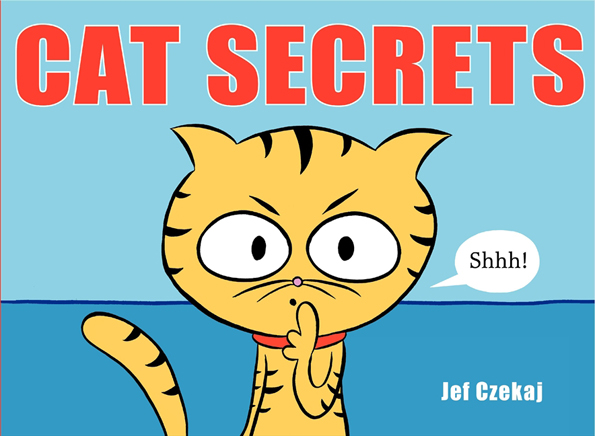
  • Czekaj, Jef. 2011. Cat Secrets. New York: Harper.
This meta fiction picture book is funnier than its trailer. (see below) The cats discover the readers of the book and attempt to verify their identity,
It has come to my attention that someone other than a cat may be reading this book.

Shame on you.

Hey, you!  Yes, you! You don't look much like a cat!
None but cats are allowed to read Cat Secrets!

Cat Secrets by Jef Czekaj -- Book Trailer from HarperTeen on Vimeo.

  • Dormer, Frank W. 2010. Socksquatch. New York: Henry Holt.
A tiny quirky book about Socksquatch, a monster in search of his socks.  Few words,
Flowers tremble.
Trees quake.
Socksquatch lumbers.
...
Got sock?
with hilarious illustrations in a style reminiscent of your funniest grade school pal's drawings. Funny!

And last, but certainly not least, my only serious pick today, the absolutely perfect, Little White Rabbit.

  • Henkes, Kevin. 2011. Little White Rabbit. New York: Greenwillow.
Little White Rabbit is beautifully illustrated in a way that is deceptively simple.  The illustrations are clearly understandable, yet convey and invoke a child-like wonder and imagination.  The text is simple and calming.  This is pitch-perfect picture book.  I can't wait to read it aloud at my next storytime!

Activities to accompany Little White Rabbit.

Wednesday, February 16, 2011

Can you remember this?

What do Cam Jansen (Cam Jansen mystery series), “Steel” Trapp (Steel Trapp series), Sticky Washington (The Mysterious Benedict Society books), Coke McDonald (The Genius Files series) and Dan Cahill (39 Clues series) have in common? Of course, if you read adult fiction, you’re likely familiar with Lisbeth Salander  (The Girl with the Dragon Tattoo series) as well. 


Photographic memories!  

I believe that I’ve read another photographic memory book recently too, though, not possessing a photographic memory (or even an above-average version), I can’t remember the name of it.

So, just wondering ...


  • What other children’s books have characters with photographic memories? and
  • Do you know anyone who actually has a photographic memory?

Clipart copyright: Classroom Clipart

Monday, February 14, 2011

Astro: The Steller Sea Lion

It's Nonfiction Monday again.  Be sure to stop by Wrapped in Foil for the day's roundup of nonfiction gems.

Harvey, Jeanne Walker. 2010. Astro: The Steller Sea Lion. Ill. by Shennen Bersani. Mt. Pleasant, SC: Sylvan Dell.

Steller sea lions are a threatened species; so when a scientist spotted an abandoned pup swimming off the coast of California, the Marine Mammal Center was contacted to save the it. Following the rescue, workers at the Center prepared the sea lion, nicknamed Astro,  for his return to the wild - the usual course of action. However, after multiple attempts to return Astro to the ocean (including one in which Astro swam for three days to return to shore, where he came aground and participated in an elementary school's walk-a-thon!), researchers and scientists finally concluded that Astro was not a candidate for reintroduction into his native habitat.  After a stop at UC Santa Cruz, Astro found a permanent home in at the Mystic Aquarium in Mystic, Connecticut.  You can see him there today.

Astro: The Steller Sea Lion is an engaging teaching tool for readers and students seeking to learn about animal rescue, Steller sea lions, or threatened species.  Astro's unique adventures make his story as entertaining as it is informative,
Finally, he let go. With a huge splash, Astro swam deep into the ocean.  His friends cheered.  But . . .  10 days later, Astro swam under the Golden Gate Bridge into San Francisco bay.  He climbed onto a sandy beach in someone's backyard - not far from The Marine Mammal Center.
Astro had bonded with humans and was not interested in returning to the ocean.

The text is large and the vocabulary is fairly simple, making this a book that children can enjoy without help.  Plain font, black text appears in the open spaces of sea and sky in Shennen Bersani's stunning illustrations.  The double-spread ilustrations are near photographic quality, though the book jacket notes that she uses colored pencils primarily, "sometimes using a mixed-media technique of colored pencils, crayons, and paint."  The results are precise and strikingly realistic.

Back matter includes species facts, information and maps on Steller sea lions, life cycle information, and "Sea Lion or Seal?"

This is a story that does not have the happy ending that children may be expecting; Astro cannot be reintroduced to the wild, however, this is a good lesson on the limits of man's influence over nature. The best that we can do is the best that we can do.

Curiously, the book's cataloging summary lists it as fiction. Though minor details may have been changed, Astro and his adventures are most certainly real. A video about Astro and a link to a related newspaper article are below.

This is an attractive and informative book that will appeal to students, teachers, and marine life enthusiasts.
Preview Astro the Steller Sea Lion here.
A link to a 2007 newspaper article about Astro's surprise participation in a school walk-a-thon.
Teaching resources are available from the publisher.


QUEST on KQED Public Media.

Review copy received from author.

Beneath the Waves - a review

As we read disturbing news accounts of dying manatees , environmental disasters caused by toxic waste, and ocean pollution on the scale of ...