Pages

Showing posts with label quirky. Show all posts

Monday, July 9, 2018

The Strange Fascinations of Noah Hypnotik

The Strange Fascinations of Noah Hypnotik by David Arnold

 If you read or listen to only one YA fiction book this year, make it this winner of AudioFile Magazine's  Earphones Award, The Strange Fascinations of Noah Hypnotik .

You can read my complete review on the AudioFile site. Without giving too much away, I can safely say that this one is definitely mind-blowing. Loveable, quirky Noah Oakman has a relatively good life with his parents, his little sister Penny, and his twin best friends, Val and Alan—until the night when everything (except his strange fascinations) changes. This first-person narrative will take you deep into the suddenly changed world of the kind and introspective Noah Oakman. Even strings of text messages between Noah, Val, and Alan crackle with emotion or humor. Every one of the lesser characters is a star in his own right. Stellar writing, stellar narration! I could listen to it again!

As a side note, many will appreciate Alan, not because he is a gay character, but because he is a fully-developed and integral member of the cast of characters who just happens to be gay, the perfect foil to his dry, iconoclastic sister Val.

Fans of Glory O'Brien's History of the Future by A.S. King will likely love Noah Hypnotik.

Paramount Pictures is developing a movie version of The Strange Fascinations of Noah Hypnotik (details here).  You simply must read it first!  I don't think a movie will do it justice (but I'd definitely go to see it).


Friday, October 11, 2013

A Tangle of Knots - a review

Graff, Lisa. 2013. A Tangle of Knots. New York: Philomel.

A travelling salesman with a Talent for tying knots. "The Owner," a man with no discernible Talent of his own, other than perhaps floating a few inches above the ground. Miss Mallory, who has a Talent for matching orphans with new families. And Cadence,

If you peeked in the window of the orphanage you would see her,

"Cadence, that was her name.
She was standing there now, Cady, deciding what to add to her bowl of batter.  If you squinted through the window, you could just make her out from the chin up (Cady was barely a wisp of a thing). You'd see the shiny, crow-black hair that hung smooth as paper from the top of her head to the bottom of her earlobes.  And you'd see the petite - pixieish, Miss Mallory called them - features of her face.  Tiny nose, tiny mouth, tiny ears.  Cady's eyes, however, those were large in comparison to the rest of her.  Large and dark and round, and set just so on a face the color of a leaf that has clung too long to its tree."

Cady has a Talent for baking the perfect cake.

A chance encounter in a long ago bus station,  a powder blue suitcase, a boy with a Talent for getting lost - these and hundreds of other threads are tangled together, and slowly unravel to reveal a mystery of love and longing and desire and family. A wonderful book!

If you read no other middle grade fiction book this year, you will have made a good choice.

Thursday, September 26, 2013

Middle Grade Fiction Reviews - Jersey style

I've read too much and written too little. Here's a quick rundown on two of my recent reads, The Last Present by Wendy Mass and The Cavendish Home for Boys and Girls by Claire Legrand.  Both authors hail from the Garden State, though I've no doubt that Ms. Legrand would point out that she's a Texas transplant.  Still, we're glad to have her.


  • Mass, Wendy. 2013. The Last Present.  New York: Scholastic.  


The Last Present is the final book in the Willow Falls (or "birthday") series, realistic fiction with just the right amount of magic, courtesy of Angelina, the mysterious old woman with the duck-shaped birthmark. Angelina is seemingly the architect of all that occurs in Willow Falls, the town where nothing happens by coincidence and everything happens for a reason.  Readers of the series will delight in revisiting their favorite characters - Leo, Amanda, Tara, Rory, David and all rest, as their stories intertwine and the story of Angelina is finally revealed.  The fact that I never read the second book, Finally, was a bit of a hindrance to me. With many plot lines, twists and turns, this is a series best read in order. I'm sad to see it come to an end.  It's been great fun!

My reviews of other books in the series:

11 Birthdays 
13 Gifts

A note to parents and teachers - if you bought your copy of The Last Present at a Scholastic Book Fair, consider yourself lucky!  The hardcover library edition was not released until yesterday (my copy was an Advance Reader Copy).  I was surprised to see it available in paperback at the schools I visited last week.  Next year when I visit schools for National Library Card Sign-Up Month, I'm going to bring money for Book Fair shopping!

Fans of Wendy Mass will be thrilled to know that a first draft of The Candymakers movie script has been completed, and A Mango Shaped Space may see its day in Hollywood, too.  Read Wendy Mass' blog post for more details!


As the peculiar and quirky Angelina orchestrates events in Willow Falls, so too does Miss Cavendish wield influence over the perfect town of Belleville in The Cavendish Home for Boys and Girls, though their motives could not be more divergent.


Legrand, Claire. 2012. The Cavendish Home for Boys and Girls. New York: Simon and Schuster. 

Victoria Wright has a perfect life in the perfect town of Belleville. A prissy young thing, she is smart, pretty, and lives in a perfectly appointed home with practically perfect parents.  In fact, the only thing that isn't perfect in Victoria's life is her "friend," Lawrence, a rather disheveled and odd young boy, but Victoria's friend, nevertheless - perhaps because no one else can suffer her compulsive need for perfection.  The fact that her town contains an orphanage of sorts, The Cavendish Home for Boys and Girls, has never given her pause.  In fact, no one in Belleville gives it much thought. Run by the charming, beautiful and well-mannered, Miss Cavendish, it somehow blends into the very fabric of the town. However, when Lawrence goes on an unexplained and lengthy trip to visit "a grandmother," Victoria begins to suspect that something in town may be amiss. The Cavendish Home for Boys and Girls may not be what it seems.  

Dark and decidedly creepy, The Cavendish Home for Boys and Girls will thrill middle grade readers looking for a good scare.  You will be hard pressed to find a more sinister villain than the beautiful Miss Cavendish.   Be careful of wishing for perfection.  It does not come without a price!


Note:
I will have the pleasure of meeting Claire Legrand in person next month. I'm so looking forward to it!

Saturday, August 24, 2013

Three Times Lucky - an audiobook review

Turnage, Sheila. 2012. Three Times Lucky. New York: Penguin Audio. Read by Michal Friedman.

I was looking for a good book to listen to while traveling, and I had heard rave reviews about the 2013 Newbery Honor book, Three Times Lucky.  It features North Carolina, the latest addition to my college road trip cycle, and it comes in Playaway format - how convenient since I've misplaced my mp3 player. I picked up a copy from the library before heading out.

This was the best book that I've listened to all year!  I can't tell you the number of times that I had to pause the recording, chuckling all the while, to repeat a well-turned simile or metaphor to my daughter.  If I had the print copy in hand, I could quote you a dozen - just in the first chapter.

Rising sixth grader, Mo (short for Moses) LoBeau is the funniest, winningest, spunkiest heroine of children's literature that I've met in quite a while.  By the time you've finished Three Times Lucky, you'll know every resident of Tupelo Landing, North Carolina, as well as if they were your own relations. Robbery, snobbery, lies, domestic violence, and alcoholism rear their heads as they do in every community; but despite some heavy-hitting themes, this modern-day, first person narrative is not "contemporary realistic fiction," but rather a delightfully funny, quirky murder mystery, and the story of a loving family, best friends, and a close-knit community. And oh yes, there's a hurricane.

I think you'll love it.  Suggested for ages 10 and up.

Do listen to an audio excerpt of Three Times Lucky here.  You'll love it!

Note:
After reading the book and looking for more information on its fantastic reader, Michal Friedman, I discovered that she died in 2011, from complications from a Cesarean section after giving birth to healthy twins. Heartbreaking and tragic.

Wednesday, May 29, 2013

The Year of Shadows - a review


Let me begin by saying that it's very hard to review a book that has already been so spectacularly reviewed by none other than its own author and main character!  Check out Claire Legrand's review of The Year of Shadows here.

Below is my more feeble attempt.

Legrand, Claire. 2013. The Year of Shadows. New York: Simon & Schuster.

(Advance Reader Copy)

Twelve-year-old Olivia Stellatella is a loner.  Black is her color of choice, and she prefers the company of her ever-present sketchbook to that of her peers at school.  It's been a difficult year, what with "The Economy" and all.  Olivia doesn't know exactly what "The Economy" means, only that in her case, it means that she now shops at the "charity store" and the orchestra that her father conducts may go out of business, taking his job with it. And her mom has left, an occurrence she blames solely on the Maestro. If that sounds bad, just wait; it gets worse.  Having spent all the family funds on the Philharmonic, the family's new "home" is the backstage area of the crumbling Emerson Hall, home of the Philharmonic orchestra.

Initially, her only "friend" is the peculiarly intuitive and communicative cat, Igor.

The cat rolled over at looked at me upside down. "Who's the Maestro?" I rolled over on my back too. Staring at him like this made my head hurt, but it was kind of fun. "Well, technically, he's half my DNA. But I don't like to think about that."
The cat blinked slowly, like he was already half asleep.
"I mean, I guess, yeah, he's my father." I made quotation marks with my fingers. "On paper, maybe. But not to me. I've disowned him, I guess you could say. " I paused, tapping my feet together. "Everyone at school thinks I'm crazy these days, you know.  Because of my clothes and because I draw all the time instead of talking to people.  I guess by talking to a cat I'm proving them right." 
Until she makes an unlikely friend in Henry, the "perfect" kid from school.

"Hey, cool," a voice said from above.  "You found a cat."
I scrambled up into a sitting position and faced the voice: red hair, tons of freckles, stupid ears that stuck out.
Henry Page.
Ugh. 
Together, Olivia and Henry meet the other inhabitants of Emerson Hall - ghosts, or more specifically, the affable Frederick, the mysterious Mr. Worthington, and the close yet strangely disconnected pair, Tillie and Jax. Frederick and friends may be friendly, but they are desperate as well.  Desperate to move on to the world of Death. And there are other more dangerous things than these ghosts haunting Emerson Hall.

If the orchestra cannot make enough money, the hall will be demolished.  If the hall is demolished, Olivia and her ghostly friends will become homeless.   Olivia believes that perhaps by helping set the ghosts on their way, she can begin to find her own way.  In the process, she learns that sometimes, it is only by looking outward to the plights and concerns of others,  that we can begin to understand our own.

The Year of Shadows is a dark and gripping tale that is not without humor, supplied primarily by the wryly comedic cat, and the antics of  Joan, Olivia's classmate and resident intermediate school protest performer. Olivia has just the right amount of sass and sarcasm for a troubled, but ultimately good, young girl. Goth-lite for middle school readers.

The publisher's site suggests The Year of Shadows for Grades 3-7.  I would suggest Grades 4-8, depending on the reader.

Look closely at the cover art for The Year of Shadows and in addition to Olivia and Igor, you will see Frederick, Mr. Worthington, Tillie and Jax.

Coming to a shelf near you, August 27, 2013.

Note:
If you're a librarian or book blogger, you may request an Advance Reader Copy of The Year of Shadows on the author's website.  I did!

Wednesday, April 24, 2013

The Center of Everything - a review

Urban, Linda. 2013. The Center of Everything. New York: Houghton Mifflin.


First line:
In the beginning, there was the donut.

Regret is a curious thing.  Adults often harbor regrets, but in the short life of a young child, regret is a foreign feeling; and so, when Ruby Pepperdine's 12-year-old life is peppered with both loss and regret, she does not feel the sad and wistful feeling that adults know and understand; she feels a topsy-turvy feeling - a feeling that something has thrown off the balance in her circle of life.  Circles are something that Ruby knows a bit about, living as she does in Bunning, New Hampshire, the one-time home of Captain Bunning, inventor of the hole in the donut.

Set entirely within one day and employing flashbacks to fill in the back story, The Center of Everything is a short and quirky, middle-grade novel that deals with the sensitive topics of death and regret in an entertaining, hopeful and even humorous manner,
Ruby should move on to the math books.  She really should. But she can't help but be a little curious. "Who decided?"
"Nobody knows for sure.  That's what bugs me.  Some medieval guys discovered this list and said was based on a bunch of other lists from some ancient guys, including ..." Nero flips to the introduction. "Including a historian dude called Herodotus and another guy name Callimachus, but nobody knows who really decided what the Seven Wonders are. So how come we're all supposed to just say, 'Yeah, okay. Those are the Seven Wonders.' What if there was something else around that Callimachus just didn't like?  Some kind of awesome tomb or statue or something that was made by one of his enemies, so he left it off the list?"
This is exactly the kind of questions that gets Nero DeNiro in so much trouble at school -- the kind of questions that teachers can't answer.
...
"Also, says Nero, "how come nobody gets named Callimachus anymore?" 

Ruby tries to make sense of her new world - without her grandmother, with a possible new friend named Nero, a possibly angry, old friend named Lucy, and a wish scheduled to come true today, on Bunning Day at the Bunning Day Parade where Ruby, the Bunning Day Essay Girl, is scheduled to read her prize-winning essay from a float in the parade.  Ever since her quarter sailed through the donut hole in the Captain Cornelius Bunning bronze statue, Ruby has been waiting for this day.  According to tradition, if her quarter went through the hole on her birthday, and she said her wish the proper number of times, it should come true on Bunning Day. It should.  It's fate.  It's destiny.  But can it come true?  Has she done it correctly? What if she wished for the wrong thing?


Linda Urban's previous novels are A Crooked Kind of Perfect and Hound Dog True.

Her website contains the following declaration, which I think does a wonderful job of describing her unique and personal style of writing.
I’ve always been interested in small things. Tiny gestures, phrases, moments that can seem insignificant to one person and hugely important to someone else. In my books, I write about the small things that matter in a big way.

Monday, March 11, 2013

Hiding Out at the Pancake Palace - a booktalk

Marino, Nan. 2013. Hiding Out at the Pancake Palace. New York: Roaring Brook.
(Advance Review Copy provide by NetGalley)

Due on shelves April 16, 2013

Hiding Out at the Pancake Palace 
(a booktalk)


Cecilia has no rhythm, and not too many friends; but she has something special - a story. A story of a song that connects her to New Jersey's wild Pine Barrens as firmly as the roots of its Pygmy Pines and Atlantic Cedars. Everyone in Wares Grove knows the story of the song played by the forest on the night of Cecilia's birth. Only the story of the Pineland's most famous inhabitant, the Jersey Devil, is known more widely.

But two unexpected things occur as Cecilia's 12th birthday approaches. Cecilia's mother begins to doubt the song, and a young boy, a boy who has perhaps lost a song of his own, has arrived in the middle of the night under suspicious circumstances - and he's hiding out at Piney Pete's Pancake Palace.

A song, a secret, and the legendary tale of the Jersey Devil are entwined in this imaginative story of discovery set on the fringes of New Jersey's Pine Barrens, a natural wonder.

Find out who's Hiding Out at the Pancake Palace.

##


Note:
Lest you think that the Pine Barrens is a made-up place, or that New Jersey is nothing more than exits off the Turnpike or Parkway, be assured that the Pine Barrens are in fact, one of the world's most interesting places. The Pinelands cover 1.1 million acres, or 22 percent of New Jersey's land area. (from the official NJ tourism site - see below)

Learn more about the Pine Barrens and other locations in Nan Marino's new book at these sites:


If I didn't have a sore throat, this one would have been a podcast.  Look for a podcast or video booktalk for Hiding Out at the Pancake Palace soon.

Wednesday, October 24, 2012

The Great Unexpected - a review

Creech, Sharon. 2012. The Great Unexpected.  New York: Harper Collins.

Many things are unexpected in The Great Unexpected, but none more so than the dead boy's body that drops from a tree, nearly landing on Naomi Deane, who notes,

Leaves have fallen on me, and twigs, and a branch during a storm.  Bird slop, of course, everyone gets that.  But a body?  That is not your usual thing dropping out of a tree.

(after some time, the body talked)

And as the body opened his eyes and slowly looked up and looked all around - at the meadow, at the cows in the distance, at the tree out of which he had fallen, and at me, and then he yelled, "Oh no!" and fell back on the ground and his eyes closed and he was dead again.
 
(Hear it read by Sharon Creech)


Unexpected, indeed! The boy, in fact, is Finn, a mysterious, young, flirtatious boy about 12-years-old, with whom Naomi and her best friend, Lizzie, are smitten. 

Half of the story takes place in the small indeterminate town of Blackbird Tree, where many "unfortunate souls," reside - including Naomi and Lizzie - both orphans, "Witch Wiggins," "Crazy Cora," Mr. Canner, and the huge and unruly clan of Dimmenses.  Naomi narrates the story with a generous helping of Sharon Creech's delightfully descriptive prose, as in this description of the newcomer, "the Dingle-Dangle Man,"

His head jerked slightly to the left and then to the right, like a bird on a worm prowl.
 
Or in this depiction of Witch Wiggins' house,

If you had to guess which house a witch lived in, this would be it.  The house tilted to one side, as if eavesdropping on its neighbor.
The other half of the story takes places in Rook's Orchard, Ireland.  The connection between the two towns is also unexpected, and early in the book, unexplained.  The Rook's Orchard chapter names are prefaced with "Across the Ocean," and contain a third person narrative of the activities of a certain Sybil Kavanaugh, her constant companion, Miss Pilpenny, and Mr. Dingle (known stateside as "the Dingle-Dangle Man").

The Great Unexpected is a story of possibility, of friendship, of first loves, and the nature of true love.  Many things are unexpected, and if we greet them with open arms, and there is a hint of magic in the air, who knows what may happen.

Delightful and quirky and highly recommended.
The Great Unexpected by Sharon Creech

Tuesday, November 15, 2011

13 Gifts - a review

Mass, Wendy. 2011. 13 Gifts. New York: Scholastic.

 Earlier in the year, I listened to 11 Birthdays by Wendy Mass. (Review here).  At the time, I didn't realize that it was the first in a series, and while I enjoyed it, I didn't plan to read any follow up titles.  So I passed on Finally, and planned to give away my ARC of 13 Gifts. Instead, I opened it to read a few pages (it is a Wendy Mass book, after all), found the following passage, and was hooked:

     Since the telegram arrived, Mom's been really distracted. She's even stopped asking if I've finished my homework or made any new friends (usually her two favorite topics). Whenever I try to strike up a conversation, she mumbles something and wanders out of the room. This morning I found her keys in the freezer next to the ice cream sandwiches.
     Her normal approach to mothering has always been to smother and overprotect. While I was still in my crib she taught me that talking to strangers would cause my tongue to turn green. (I believed this until I was eight.) I've never been allowed to sleep over at anyone's house, and my cell phone has a GPS tracker in it that links up to her computer. Mom promised me she'd only activate the tracker if I went missing, but when I stopped to buy gum after school last month, she texted me to get a quart of milk.  Coincidence?  I think not.

In a strange turn of events, Tara's overprotective mother and her dad (the devoted husband), have decided to leave Tara with relatives in Willow Falls while they travel to Madagascar, where Mrs. Brennan will be studying the mating habits of lemurs.  Tara barely knows her relatives, and is bewildered by her mother's ironclad decision; but she soon finds out that this may be the least bewildering thing she encounters during her strange summer in Willow Falls.

Due to the loss of her iPod and cash,Tara becomes beholden to a mysterious, old woman named Angelina (who features prominently in the two earlier books).  Angelina operates a curiosity shop, which curiously, cannot be seen by all of Willow Falls' inhabitants. Angelina tasks Tara with finding thirteen items before her 13th birthday, and Tara, normally a loner, is forced to seek the help of the strangely cooperative kids of Willow Falls.

In Willow Falls, everything happens for a reason, and most reasons are unapparent.  In her search for the items on Angelina's quirky list, Tara finds much more than duck canes, frayed shawls, and misprinted books!  But all the mysteries of Willow Falls and its families, are not revealed in 13 Gifts.  Clearly, there are more to come.

A melding of realistic fiction and fantasy, 13 Gifts is a humorous coming-of-age story, but it's part of a much broader picture of a magical small town that, in conjunction with its oldest resident, Angelina, promotes harmony and healing - but not without a price. A fun and unconventional book.

A word of advice: it's best to read these books in order. Normally, it's fairly easy to pick up a series in midstream, but I often found myself wishing that I had read Finally, the second book in the birthday series. Things would have been a bit clearer (or at least as clear as they can be in the magical town of Willow Falls).

If you're a Wendy Mass fan and want to keep up with the latest book (and movie!) news, check out her blog, Wendy's Blog.  Did you know that Jeremy Fink and the Meaning of Life is now a movie?  I didn't!

Monday, October 10, 2011

Picture book roundup - Twitter style

My calendar's packed. I just returned from a trip. I'm in the midst of a class. I'm presenting at a forum this week. But wait, four great new picture books are sitting on my table waiting to be reviewed!

What to do? Do it Twitter-style! Here they are in 140 characters or less:

  • Willy. De Kockere. 2011. Erdman. Celebrating the peculiarities that make Willy the elephant special. Monty Python-esque art, a perfect foil to a quirky tale. Love it!

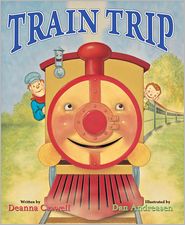
  • Train Trip. Caswell. 2011.Hyperion. Cheerful and rhyming, a boy and a train bond during a trip. “Special treat. “Come on in!” “Sound the whistle?” Eager grin."

  • Little Owl’s Night. Srinivasan. 2011. Viking. An owl observes the night’s activities. Dark colors, cheery wide-eyed creatures. Simple and serene.

  • Shaggy Dogs, Waggy Dogs. Patricia Hubbell. 2011. Marshall Cavendish. Happy, rhyming, romping dogs. Dogs, dogs and more dogs! A storytime gem.

And one more of Willy, in case you didn't get enough!
©Copyright Carll Cneut
(Yikes! I forgot that MSWord doesn’t count spaces. Now I’ll have to be more clever!)

Thursday, February 17, 2011

February picture book roundup

Here are a few of my recent favorites - mostly silly

  • Bardhan-Quallen, Sudipta. 2011. Chicks Run Wild. Ill. by Ward Jenkins. New York: Simon & Schuster.
The Caterpillow Fight (Candlewick 1997) was(is) an old favorite of mine.  This is a similarly silly tale of siblings who run amok after Mama has tucked them in for the night. Of course, these aren't caterpillars, they're chicks.  Mama gets increasingly angry after each time she checks in on them,
Wings on hips, she warns those chicks, "No more games and no more tricks!"
One quick peck for each sweet child,
she slams the door . . .
those chicks run wild!
In the end, Mama beats them at their own game.  The illustrations are bright and cheerful and funny. The chick in the over-sized black frame glasses is a riot all by himself!

Illustrator, Ward Jenkins, offers a great preview and some bonus material on his site.  Check it out!

  • Czekaj, Jef. 2011. Cat Secrets. New York: Harper.
This meta fiction picture book is funnier than its trailer. (see below) The cats discover the readers of the book and attempt to verify their identity,
It has come to my attention that someone other than a cat may be reading this book.

Shame on you.

Hey, you!  Yes, you! You don't look much like a cat!
None but cats are allowed to read Cat Secrets!

Cat Secrets by Jef Czekaj -- Book Trailer from HarperTeen on Vimeo.

  • Dormer, Frank W. 2010. Socksquatch. New York: Henry Holt.
A tiny quirky book about Socksquatch, a monster in search of his socks.  Few words,
Flowers tremble.
Trees quake.
Socksquatch lumbers.
...
Got sock?
with hilarious illustrations in a style reminiscent of your funniest grade school pal's drawings. Funny!

And last, but certainly not least, my only serious pick today, the absolutely perfect, Little White Rabbit.

  • Henkes, Kevin. 2011. Little White Rabbit. New York: Greenwillow.
Little White Rabbit is beautifully illustrated in a way that is deceptively simple.  The illustrations are clearly understandable, yet convey and invoke a child-like wonder and imagination.  The text is simple and calming.  This is pitch-perfect picture book.  I can't wait to read it aloud at my next storytime!

Activities to accompany Little White Rabbit.

Thursday, December 30, 2010

The Kneebone Boy

Potter, Ellen. 2010.  The Kneebone Boy. New York: Feiwel and Friends.

I like books that surprise me. I like books with intriguing cover art. I like quirky books. (The Death-Defying Pepper Roux, The Problem with the Puddles, to name two)

The Kneebone Boy is all three.


The Hardscrabble family is an odd one. The children Otto, Max and Lucia ("you pronounce it Lu-CHEE-a," the narrator reminds us), live with their father, Casper - an artist who makes his rather peculiar living, painting portraits of dethroned royalty. Their mother, Tess Hardscrabble, disappeared years ago under suspicious circumstances. Caspar was immediately suspected by the police; but the neighborhood children believe that Otto, the mute and eldest Hardscrabble child, murdered his mother with the scarf that he wears always around his neck. The outcast children are frequently left in the care of a neighbor with an unsightly neck boil, while their father travels the globe to immortalize down-on-their-luck princesses, sultans and baronesses.

But this trip is different. Their father has failed to make the proper arrangements and the children find themselves on an adventure - a frightening, exciting, exhilarating adventure!
All in all they were in that gorgeous state of mind in which they felt free and unafraid and sharply aware of how large and exciting the world was.
     In other words, it hadn't gotten dark outside yet.
The Kneebone Boy is narrated in the third person by one of the three Hardscrabble children, with frequent asides and commentary on the nature of storytelling and writing. The narrator prefers to keep her identity a secret, insisting that the story belongs to all of them, but it soon becomes plain which of the children is narrating the story, as she gives away a clue in the title of the very first chapter,

In which we meet the Hardscrabbles, unearth a triceratops bone, and begin to like Lucia even more.
After some trouble in London, they arrive in Snoring-by-the-Sea and take up temporary residence at their Great-Aunt Haddie's castle folly. The quite young Great-Aunt Haddie (do the math, it's possible) is an adventure unto herself, and in her curious care (which involves dungeons and peanut butter and jelly), the siblings begin to imagine that they can find their mother, discover a secret passageway through the castle folly, and rescue a sultan. Perhaps they can, or perhaps they are on a completely different adventure - one about which neither they, nor the reader, knows anything!

Though told through the lens of Lucia's mind, The Kneebone Boy displays all facets of the Hardscrabble children's personalities. Max may be a know-it-all who isn't fond of animals, but he is also a companionable and loving brother. Lucia sometimes resents Max's bossiness and feels herself to be Otto's protector, but she knows when to defer to Max's superior intellect and wonders if she may need Otto as much as Otto needs her. And though fearful of many things, she is more than capable of overcoming her fears when the need arises. Otto, who is mute and communicates with his hands, also has more to him than his description and appearance might suggest. Though speechless, Otto knows and understands more than his siblings think.

Dark and quirky, Otto and the rest of the Hardscrabble family will draw the reader into this witty and mysterious adventure with a completely unexpected and thought-provoking conclusion.

A discussion guide for The Kneebone Boy from the publisher.

Read an excerpt here.

More reviews @
Kids Lit
A Chair, A Fireplace, and a Tea Cozy

Share |

Beneath the Waves - a review

As we read disturbing news accounts of dying manatees , environmental disasters caused by toxic waste, and ocean pollution on the scale of ...