A Fire Story
by Brian Fies
Abrams Books, 2019
In graphic novel format,Brian Fies tells his own personal story as well as those of others who lost everything in the devastating Northern California fires of 2017. Their stories highlight the more mundane aspects of a living through a natural disaster—the bureaucratic red tape, the small things that trigger immense emotion, the weird sense of living as a displaced person in your own environs. Having experienced two devastating hurricanes myself, I can attest that Fies has accurately captured the moods and experiences of survivors of catastrophe. Some photos are also incorporated into the dramatic illustrations. This affecting book will stay with you much longer that the short time it will take to read it.
Originally published online, A Fire Story was recreated (the original web comic is included in the print version) and enhanced for print publication.
Read the original web-based version here.
Book reviews (and news) you can use. A librarian's opinion on books and media for children and young adults
Showing posts with label catastrophes. Show all posts
Thursday, January 2, 2020
Monday, February 13, 2012
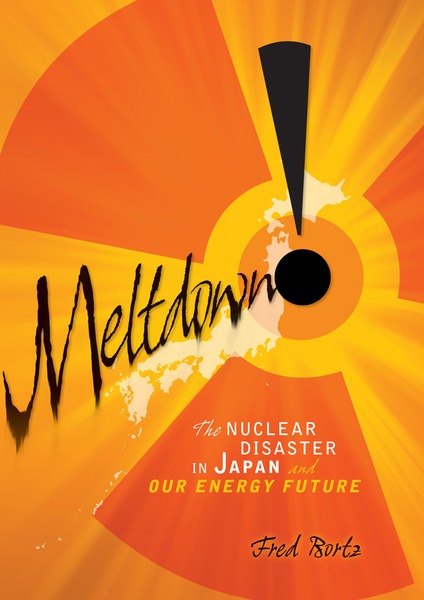
Meltdown! a review
Bortz, Fred. 2012. Meltdown! The Nuclear Disaster in Japan and our Energy Future. New York: Lerner.
(Advance Review Copy provided by NetGalley)
Last week, if you asked me to explain the processes and dangers inherent in the creation of nuclear energy, I would be hard-pressed to offer more than a rudimentary explanation. After reading Meltdown! however, I marveled at how easily I grasped the entire process. Physicist and author, Dr. Fred Bortz, has a distinct talent for distilling a complex subject into an easily understood concept.
In a compact, colorful book, complete with numerous illustrations and photographs, Fred Bortz recounts the Fukushima Daiichi disaster, sandwiched between solid scientific facts and a global view of the world's energy needs. The reader is left shocked by the massive destruction caused when a natural disaster causes a man-made one of nearly equal proportion. However, the purpose of Meltdown! is not to shock the reader, but to make him think. Yes, this was a terrible disaster, but what are the alternatives? Can the world's energy needs be powered by solar? by wind? by coal? by oil? No, they can't - at least not now. The readers of Meltdown! (recommended for ages 11-17) will be the decision makers of the world within a few short years. Meltdown! will challenge them to see that the world's problems do not always have easy answers.
This seems to be the time of year that teachers are assigning many biography and nonfiction reading assignments. If this were on my shelves now, I would be recommending it highly, though sadly, many teachers will likely dismiss Meltdown! as a book report choice because of the number of its pages, 64. (This gives me a meltdown, as minimum page requirements give me "Minimum Rage.")
This should be required reading, offering an easily understood lesson in nuclear energy, a factual account of the Fukushima Daiichi nuclear power plant disaster caused by the massive Japanese earthquake and tsunami of March 11, 2011, and extensive references and supplemental materials.
Teachers, check the Fred Bortz website for great resources including news stories, videos, and classroom connections.
Due on shelves March 1, 2012 - in time for the one-year anniversary of the earthquake, tsunami and nuclear meltdown.
(Advance Review Copy provided by NetGalley)
Last week, if you asked me to explain the processes and dangers inherent in the creation of nuclear energy, I would be hard-pressed to offer more than a rudimentary explanation. After reading Meltdown! however, I marveled at how easily I grasped the entire process. Physicist and author, Dr. Fred Bortz, has a distinct talent for distilling a complex subject into an easily understood concept.
In a compact, colorful book, complete with numerous illustrations and photographs, Fred Bortz recounts the Fukushima Daiichi disaster, sandwiched between solid scientific facts and a global view of the world's energy needs. The reader is left shocked by the massive destruction caused when a natural disaster causes a man-made one of nearly equal proportion. However, the purpose of Meltdown! is not to shock the reader, but to make him think. Yes, this was a terrible disaster, but what are the alternatives? Can the world's energy needs be powered by solar? by wind? by coal? by oil? No, they can't - at least not now. The readers of Meltdown! (recommended for ages 11-17) will be the decision makers of the world within a few short years. Meltdown! will challenge them to see that the world's problems do not always have easy answers.
This seems to be the time of year that teachers are assigning many biography and nonfiction reading assignments. If this were on my shelves now, I would be recommending it highly, though sadly, many teachers will likely dismiss Meltdown! as a book report choice because of the number of its pages, 64. (This gives me a meltdown, as minimum page requirements give me "Minimum Rage.")
This should be required reading, offering an easily understood lesson in nuclear energy, a factual account of the Fukushima Daiichi nuclear power plant disaster caused by the massive Japanese earthquake and tsunami of March 11, 2011, and extensive references and supplemental materials.
Teachers, check the Fred Bortz website for great resources including news stories, videos, and classroom connections.
Due on shelves March 1, 2012 - in time for the one-year anniversary of the earthquake, tsunami and nuclear meltdown.
It's Nonfiction Monday. Today's roundup is at Wrapped in Foil.
Subscribe to:
Posts (Atom)
Beneath the Waves - a review
As we read disturbing news accounts of dying manatees , environmental disasters caused by toxic waste, and ocean pollution on the scale of ...
-
I'm delighted to host today's Nonfiction Monday. My contribution for today is Marc Aronson's If Stones Could Speak: Unlocking th...
-
Welcome to Shelf-employed! I'm the host of this week's Nonfiction Monday . Grubman, Steve and Jill Davis. 2010. Orangutans are Tic...
-
Gutman, Dan. 2012. Election! A Kid's Guide to Picking our President. New York: Open Road Media. Advance copy provided by NetGall...