Pages

Showing posts with label adult. Show all posts

Saturday, November 14, 2020

The Lost Pianos of Siberia - a review

The Lost Pianos of Siberia


By Sophy Roberts

Grove Press, 2020


The Lost Pianos of Siberia is nonfiction with epic proportions. Spurred by a request from a Mongolian pianist and a dated photo of a piano outdoors in Siberia, British author Sophy Roberts embarked on a quest to find pianos in Siberia and document their provenance. Each of her artfully crafted sentences begs further thought or investigation—but on she goes, searching for pianos, while unearthing cultural, historical, artistic, political, and architectural details that captivate the mind. Just to consider the difficulty in transporting pianos across the frozen permafrost of Siberia in previous centuries is to bear witness to its people's love and appreciation of music. Consider that Tsar Nicholas and the entire Romanov family were transported from Moscow to Siberia, over one thousand miles, for execution, and yet, their piano was brought with them. During WWII, a later generation of Russians risked life and limb to save the Romanov's piano. Siberia's is an immensity of space, time, and misery—but also of music and endurance. To read this book and not pine to see Siberia will be a harder feat than finding the lost pianos of Siberia. 


Some facts about Siberia:
  • It comprises more than 55% of Russia's total size
  • It is roughly equal to the size of Canada
  • Its Lake Baikal is the deepest freshwater lake in the world and is about equal to the Netherlands in surface area


My copy of this book was provided by NetGalley.


Sunday, July 12, 2020

Stolen Justice - an audiobook review

Stolen Justice: The Struggle for African American Voting Rights
by Lawrence Goldstone | Read by James Shippy
Scholastic Audiobooks 2020

Following the Civil War, ratification of the Fourteenth and Fifteenth Amendments was intended to guarantee civil rights to formerly enslaved people. It quickly became apparent, however, that many states were scheming to systematically erode these rights. Ironically, the justice system was the most effective instrument to dismantle African American rights.

I reviewed Stolen Justice for AudioFile Magazine several months ago, but because of current events, I'll post a link here now. You can read the entire review on the AudioFile Magazine website, but I will summarize and say,

If this audio book doesn't offend your sense of justice, you're not listening hard enough.

Thursday, January 2, 2020

A Fire Story - a review

 A Fire Story
by Brian Fies
Abrams Books, 2019

In graphic novel format,Brian Fies tells his own personal story as well as those of others who lost everything in the devastating Northern California fires of 2017. Their stories highlight the more mundane aspects of a living through a natural disaster—the bureaucratic red tape, the small things that trigger immense emotion, the weird sense of living as a displaced person in your own environs. Having experienced two devastating hurricanes myself, I can attest that Fies has accurately captured the moods and experiences of survivors of catastrophe. Some photos are also incorporated into the dramatic illustrations. This affecting book will stay with you much longer that the short time it will take to read it.


Originally published online, A Fire Story was recreated (the original web comic is included in the print version) and enhanced for print publication.
Read the original web-based version here.

Friday, June 28, 2019

Voyages in the Underworld of Orpheus Black
By Marcus Sedgwick and Julian Sedgwick
Illustrated by Alexis Deacon
Walker Books, 2019

Voyages in the Underworld of Orpheus Black is a book that defies categorization, and is one of the most unique and affecting books that I've read this year.

Harry Black is a conscientious objector to the war; he is also an artist. His brother Ellis is a soldier; he is also a writer. They don't see eye-to-eye, however, both risk his their lives for his country. Harry is a firefighter—tasked with responding to the fires that break out during the devastating air raids on the city of London. In a rare wartime opportunity, Harry and his brother meet up for a beer at a London pub. Soon after they separate, the block where the pub stood is bombed to obliteration. Harry finds himself in the hospital in a hazy, surreal state of shock. Ellis' whereabouts are unknown. There is also a curious young German girl in the hospital—Agatha. 

It is in this otherworldly scenario that Harry draws and thinks, and digs to the tune of an unknown musician who plays with great beauty amidst the horrors. The reader has the benefit of understanding the musician's purpose. The story is told in prose, in Harry's sketches, and in the haunting speech of the musician, whose words turn often to song,

I've a story to tell of Harry Black,
who went to the Underworld and how he came back;
of the love for his brother, who'd pushed him away.
Of London by starlight, under attack,
of bombs falling, of people calling
   through darkened streets,
of sirens and wayfarers, of lost souls,
of vicious women and mindless dogs.
These are the things of which I'll sing.

There are many books about WWII, the Kindertransport, the bombing of London. None are like this one. Read it.


My copy of Voyages in the Underworld of Orpheus Black was provided by the publisher.

Monday, June 17, 2019

Convenience Store Woman - a review

I try to squeeze in a few adult books between reviewing for SLJ and AudioFile.

My two latest adult reads were Where the Crawdads Sing and Convenience Store Woman. I loved them both.  I won't post a review of Where the Crawdads Sing because it is wildly popular, and good reviews may be found almost everywhere. It has cross-genre appeal (nature, crime, mystery, society) and more than a few surprises.

Here's my short review of Convenience Store Woman, an homage to those who don't fit the mold.

Convenience Store Woman
By Suraka Murata
Grove Press, 2018

Convenience Store Woman will give you greater respect for the perceived "otherness" of others, and will compel you to examine the seemingly benign social mores to which you likely adhere. Short and thought-provoking.

Both books would make excellent beach reads!


Read an excerpt from Where the Crawdads Sing here.

Tuesday, April 9, 2019

Chicken Soup for the Soul: Life Lessons from the Dog

Today is the book birthday of Chicken Soup for the Soul: Life Lessons from the Dog.

I'm particularly excited about this book, because it includes my story, "All the News That's Fit to Chew," featuring my dog, Annie! My story recounts Annie's desire to maintain her sense of purpose and duty after our family was displaced during Superstorm Sandy.

I hope you'll have an opportunity to read it. If purchasing the book is not in your budget, ask your library if they can acquire a copy.

If you're fond of dog videos and photos, I've included one below, but there will plenty to see on Twitter at the launch party for Life Lessons from the Dog, today at 2pm. Search for the hash tag #CSSLifeLessonsfromtheDog to follow along.


I'm so thankful to Chicken Soup for the Soul for including my story.

Wednesday, April 18, 2018

Alpha: Abidjan to Paris - a review

As you if you read my blog often, you know that I occasionally post adult books in addition to children's literature.  This is a powerful graphic novel that is also suitable for young adults, and I think it deserves attention. 


Alpha: Abidjan to Paris
By Bessora
Illustrated by Barroux
Translated by Sarah Ardizzone
Bellevue Literary Press, 2018

Alpha: Abidjan to Paris is a tragic, graphic novel account of one man's attempt to flee a life of misery in Côte d'Ivoire and follow his wife and child to Paris. After numerous attempts to depart legally, Alpha discovers that the process to obtain a visa is corrupt and impossible for an impoverished man. He researches his options carefully and strikes out with a group of other would-be emigrants. Although he knows the trip will be dangerous, he is nevertheless hopeful that he will be reunited with his family and his relatives in France. He fancies himself an "adventurer." His first-person account of his "adventures" devolves into a living nightmare as the journey drags on with a constantly changing group of companions. The prose is simple, and the story is told without embellishment—there is no need for embellishment; the facts are gruesome enough,

"Very quickly, I learn to avoid the barricades. We stop a lot. Abebi is vomiting froth. She has no bile left. She's spitting bubbles of saliva. We've been on the road for nine hours, and we still haven't covered a hundred miles. Darkness falls. Perhaps Abebi will feel better tomorrow. Augustine sucks his fingers in silence. It's a cold night. We sleep huddled together, forming a sort of human radiator. We can't even make a fire—the smoke would betray us."


The illustrations—one or two panels per page, are also spare—mostly shades of black and greys with an occasional splash of color—Alpha's red shirt, the striped soccer jersey of an emigrant hoping to land in Spain and play for Barcelona, a flowered dress. The illustrations set a mood of haste and simplicity, appearing to be marker sketches - almost as if they could have been made on the journey.

An epilogue provides the outcome of the trip from Abidjan to Paris. It will be difficult to look upon the plight of any refugees without reflecting on Alpha's journey. This is a short and powerful, award-winning graphic novel.

Alpha: Abidjan to Paris resources:


 My copy of Alpha was provided by LibraryThing Early Reviewers.

Monday, December 4, 2017

Wild Things: The Joy of Reading Children's Lit - a review

Wild Things: The Joy of Reading Children's Literature as an Adult
Written and read by Bruce Handy
HighBridge Audio, 2017

Some unsolicited gift advice for you today. 🎁

I recently had the pleasure of reviewing Wild Things for AudioFile Magazine

Usually, I'm a proponent of using your local library, however, if your holiday gift list includes a youth services librarian, you might want to buy this one!

Click any of the links to read my review of this Earphones Award winner in AudioFile Magazine

Monday, October 23, 2017

Death on the River of Doubt - an audiobook review

Death on the River of Doubt
By Samantha Seiple
Read by David de Vries


Modern presidents usually retire to enjoy family and do charitable works.  Theodore Roosevelt was unusual even in his day. Small and sickly as a child, he became a fearless outdoorsman.  After his presidency, despite his advancing age, he accepted a dangerous mission to survey an uncharted Brazilian river with a team of Brazilian and American explorers and cartographers.

Relying heavily on the journals of the explorers, Samantha Seiple tells a riveting true story of the exploration of the river that now bears his name.  i listened to the audio version, but I'm sure it's equally entertaining in print.

Generally listed as a YA nonfiction title, this is also suitable for older middle school readers. Adults will find it interesting as well.  In audio book format, it's a brisk 3.5 hours.

I recently reviewed this book for AudioFile Magazine. You can read my complete review at AudioFile Magazine. [https://www.audiofilemagazine.com/reviews/read/124096/death-on-the-river-of-doubt-by-samantha-seiple/]

Saturday, July 1, 2017

A Fugitive in Walden Woods - a review

A Fugitive in Walden Woods
by Norman Lock
Bellevue Literary Press, 2017

A Fugitive in Walden Woods is historical fiction, a revisionist history featuring some of the greatest American minds of 1845. The book is part of The American Novels series.

At the cost of his shackled hand, the enslaved Samuel Long escapes via the Underground Railroad to relative freedom in Massachusetts. His benefactor, Ralph Waldo Emerson, gives him a job of sorts—monitoring the well-being of Emerson’s friend, Henry David Thoreau, who is in the midst of his famous sojourn in Walden Woods. In the occasional company of these men, Samuel becomes acquainted with Nathaniel Hawthorne, Louisa May Alcott, William Lloyd Garrison, and other Transcendentalists. A Fugitive in Walden Woods is Samuel Long’s memoir of his year in Walden Woods, written through the lens of his later experiences.

So thoroughly does Lock set the mood that it is impossible to tell which words of Thoreau, Emerson, and Hawthorne are ones actually spoken or ones created by Lock. Though these men pondered the great questions of their age (and our own), the insertion of Samuel into the story, forces a more practical rendering of their great ideals. 

Samuel writes,

"Emerson had asked me what it meant to be human. I should have told him that a person cannot be human if his life is perpetually in the grip of terror and uncertainty. Just as cities are built by people unafraid of marauding barbarians and the caprices of a hostile universe, so will we become human when we no longer live in fear for our lives."


A Fugitive in Walden Woods does not shrink from the difficult questions of our time, including racism. It succeeds in its goal of nudging us to become deeper thinkers.


"It is easy to misjudge others—a commonplace remark, but nonetheless true. We close our minds to the completeness of others, striking from the portraits we draw of them in our imaginations all contradiction."


My copy of A Fugitive in Walden Woods was provided by LibraryThing Early Reviewers.

Tuesday, May 30, 2017

Navigating Life with Epilepsy - a review


Navigating Life with Epilepsy
By David C. Spencer
Oxford University Press, 2016

I recently found myself in need of information on epilepsy, and found this book in my college library's collection.While I sincerely hope that you do not find yourself in a similar situation, I can recommend this book if you do.

Navigating Life with Epilepsy is not too difficult for the average person to understand, yet offers very specific medical and practical information. It contains a brief history of epilepsy, first aid for seizures, types of epilepsy, diagnostic and testing methods, real life scenarios, discussion of surgical options, a basic explanation of brain functions, treatment options for epilepsy, and more. A glossary, index, and a description of the most commonly prescribed medications are also included. Many of the sections begin with a real-life scenario making it easy to skip over medical information that is not pertinent to your interest or specific type of seizure.

It's helpful to know as much as possible about a life-altering medical condition, however, it's often difficult to process everything a doctor says during an office visit. Navigating Life with Epilepsy can assist in understanding treatment options and in knowing what questions to ask of your medical professional.  My family has found it helpful.


This is part of the Neurology Now Books series that includes Navigating Life with Migraine and Other Headaches, Navigating Life with a Brain Tumor, and other titles.


You can read a sample of Navigating Life with Epilepsy here.

For a fictional look at epilepsy, try 100 Sideways Miles, a YA novel by Andrew Smith. I reviewed 100 Sideways Miles for AudioFile Magazine.


If you're seeking more information on epilepsy, start with the Epilepsy Foundation website.

Friday, May 5, 2017

A comparison of Rules of Civility and A Gentleman in Moscow

I recently read A Gentleman in Moscow by Amor Towles
(Penguin, 2016) which I consider the best, new adult novel I have read in years. I followed it up with his first book, Rules of Civility.

Here is my take on both.

First - the most basic differences:

Rules - spans one year
Gentleman - spans one adult lifetime
Rules - social climber
Gentleman - social outcast
Rules - Manhattan
Gentleman - Metropol Hotel, Moscow
Rules - female protagonist
Gentleman - male protagonist

My takeaway: Become the master of your circumstances or they will master you.

The protagonists in Rules of Civility and A Gentleman in Moscow manage their circumstances with aplomb, however, the characters could not be more different. One's fortunes are ascendant, the other's—quite the opposite. Both protagonists are smart, well-read, and appreciative of life's finer things.

Rules of Civility spans a single year—1938 in New York City. The young secretary, Katherine Kontent, can recognize a custom-made suit, an expensive lighter, or a fine glass of liquor because she aspires to have fine things. A Gentleman in Moscow spans a tumultuous period in Russian history—from the Bolshevik Revolution to the Cold War. It takes place within the confines of the fictionalized Metropol Hotel in Moscow, where Count Alexander Rostov has been sentenced to a lifetime of house arrest. He, too, can easily recognize a custom-made suit or a fine glass of liquor—not because he aspires to have them, but because he had always had them.

Katherine (Katey) is a woman who enjoy life's smaller pleasures. She enjoys people-watching, a well-written book, a well-timed phrase or gesture. But her enjoyment is fleeting—a moment marked in time, appreciated, and discarded without sentimentality.

The Count enjoys similar simple pleasures—but he savors them, appreciating that it is these small joys that make a life worth living. Although his fortunes literally and figuratively spiral downward, his spirit and joie de vivre are rarely diminished. At the worst of times, he finds pleasure in the most basic events.

 The Count has deep, genuine, and lasting connections with those people he counts among his friends—be they cook, revolutionary, poet or child. Katey, too, appreciates her friends, but in a more offhand manner—seeking or eschewing their company as it suits her mood or needs. Still, each has an ethic that suits his/her particular place and time.

Amor Towles' writing is replete with short literary passages that are worth reading on their own. That he has filled two historical fiction novels with thought-provoking commentary of literary quality is impressive. The words of a young girl in pre-WWII Manhattan and a disgraced aristocrat in post-revolutionary Russia jump off the page and insert themselves in the modern world in a way that is urgent and immediate, and not without surprises.

I know that I am late to the party and both books have garnered numerous awards, but I would like to add my hearty recommendation of Rules of Civility and A Gentleman in Moscow. I cannot wait to see what Amor Towles will offer next!

Thursday, April 20, 2017

Monticello - a review

Monticello: A Daughter and Her Father; A Novel
by Sally Cabot Gunning
Harper Collins, 2016
ISBN 9780062320438

No one can ever recount with certainty the conversations and events that transpired within Thomas Jefferson's sphere of influence at his famous Virginia plantation, Monticello.  However, because of his status as, arguably, the most famous of the nation's founding fathers, the particulars of his business dealings, his ownership of enslaved people, and other financial matters are as well known today as they were in his own time.  Also well-documented are his periods of travel to/from Monticello and the important life events (births, deaths, marriages, etc.) of his legal family members.

Armed with this information, Sally Cabot Gunning has crafted a thoughtful piece of historical fiction that explores the relationships of Martha Jefferson, the former President's eldest child, with her father, her siblings, her large family through marriage, and the people enslaved by her family—particularly Sally Hemmings.

The story unfolds in three parts, arranged by date and the plantation at which Martha lived. It begins with the years 1789-1800, and her residence at the Varina planation with her husband Thomas Randolph, whom she married shortly after returning from France.

Martha had decried the decadence and filth of Paris to Tom Randolph, but in truth, there was something as decadent about Monticello, although in a different way—the slower pace of life, perhaps, or the way her father's French wines and more elaborate French furniture, just now beginning to arrive from France, seemed out of place.  And then Negroes.  They crept about in an unnerving, pantherlike silence that Martha hadn't noticed before she left for France.  What did they hear as they moved about? And why hadn't Martha ever before wondered about that?  Martha puzzled over what seemed such a great change, either in her or in life at Monticello, she truly didn't know which.  She asked Maria, pointing as Sallys' sister Critta whispered out of the room after stirring up the fire, "Were they always so quiet?"
(from page 20)

This finely crafted work of historical fiction gently forces the reader to view history through a variety of lenses, none of which are rose-colored. Wishing for an end to the family's dependence on slavery, Martha nevertheless becomes embroiled in a lifelong conflicted existence - constrained to the restrictions and social mores of a Virginia planter's wife and daughter of a President, which render her often helpless yet still complicit in her family's continued connection to enslaved people. The political upheavals of the new nation provides the backdrop of the story, but politics is not the story.  This is a story of a woman's struggle to be a good wife, to be a good mother, to honor her father, and to help shape his legacy.


Resources:

My copy of Monticello was an Advance Reader Copy supplied by the publisher.

Monday, February 22, 2016

Most Dangerous - a review

Most Dangerous: Daniel Ellsberg and the Secret History of the Vietnam War by Steve Sheinkin (2015) Roaring Brook Press

As he did with the spy, Harry Gold, in Bomb: The Race to Build—and Steal—the World’s Most Dangerous Weapon, Steven Sheinkin uses one man to tell a much larger story in Most Dangerous: Daniel Ellsberg and the Secret History of the Vietnam War.  That man is the infamous leaker of the so-called Pentagon Papers, Daniel Ellsberg.   A veteran himself, and a former Pentagon employee, Ellsberg initially believed that the war in Vietnam was a noble cause.  However, the more he learned, the less he believed so.  Eventually, based on the information to which he was privy and the US populace was not, he changed his mind completely.

Whether you believe Edward Snowden to be a patriotic whistleblower or a traitorous leaker, and whether you believe that Apple's refusal to hack into the phone of the San Bernardino murderers is reprehensible or ethical, it cannot be denied that these are weighty matters worthy of national discussion.  In the time of Daniel Ellsberg, people read newspapers and watched a generally unbiased nightly newscast.  In contrast, many people today derive their news from "sound bites," political analysts, and partisan news stations. These issues deserve more thoughtful consideration.

While Most Dangerous is an excellently researched biographical and historical account, and can be  appreciated for that aspect alone, Steve Sheinkin's book also will also promote reflection on the nature of national security, personal privacy, democracy, freedom of the press, and foreign intervention.  We have been on very similar ground before. 

Selected quotes:

page 149
"They all drove to the Capitol for the traditional outdoor inauguration ceremony.  Johnson watched Nixon take the oath of office, wondering what lay ahead.  "I reflected on how inadequate any man is for the office of the American Presidency," he later recalled.  "The magnitude of the job dwarfs every man who aspires to it.""

page 160
"He had often heard antiwar protesters shouting that Americans were fighting on the wrong side of the Vietnam War. They were missing the point. "It wasn't that we were on the wrong side," Ellsberg concluded, "We were the wrong side.""

FBI agents began questioning the Ellsbergs friends and relatives.  They even attempted to obtain Patricia Ellsberg's dental records, but her dentist refused to cooperate.  Nixon's operatives broke into the office of Daniel Ellsberg's doctor in a failed attempt to steal his medical records.  They were searching for anything to use in a campaign to discredit Ellsberg. 

page 263
 "Psychologically, it's not so bothersome, because we believe in what we're doing," Patricia Ellsberg said about the feeling of being watched by one's own government.  "But I think it's troublesome for the country that there is surveillance of citizens, and that the right of privacy is being threatened."

Read an excerpt from Most Dangerous here.
Awards and accolades:
Other Steve Sheinkin books reviewed on Shelf-employed

Wednesday, December 23, 2015

My favorite books of 2015

It's the end of the year and I had great plans of writing about all my favorite books of the year - there were so many!  But there was also ALSC committee work, my fledgling freelance writing career, that five days a week thing they call work, and my family.  As I write this, I'm waiting for the last of my children to arrive home for the holidays (one's flight was canceled, the other one's delayed).

So, for now, the best that I can do is this:

In middle grade fiction, I loved Echo: A Novel by Pam Muñoz Ryan. Here's a link to my review: http://shelf-employed.blogspot.com/2015/02/echo-novel-review.html  


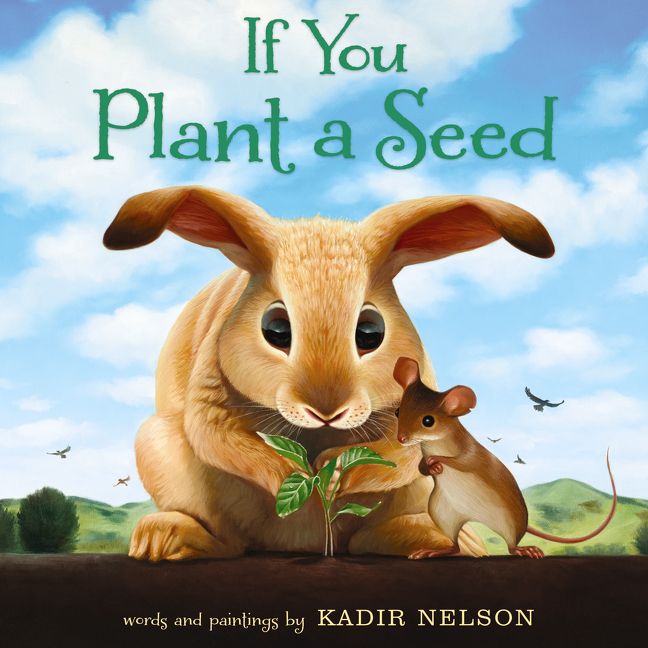
In picture books, If You Plant a Seed by Kadir Nelson is simply perfect. My review is here: http://shelf-employed.blogspot.com/2015/03/picture-book-roundup-new-or-coming-soon.html


I listened to lots of great audiobooks, but I think Me and Earl and the Dying Girl was tops. I reviewed it for AudioFile Magazine.  Here's the link: http://www.audiofilemagazine.com/reviews/read/101740/  (Diary of a Mad Brownie is a very close second!)


For the best in dealing with sad news, I was taken by Anastasia Higginbotham's, Divorce is the Worst (for school-aged kids), and Todd Parr's, The Goodbye Book for little ones dealing with loss.


In adult books, it was Lafayette in the Somewhat United States by Sarah VowellIt's no surprise.  I love everything she writes. I love my well-researched history with a humorous dose of irony and sarcasm.

Whether I review a book or not, if I've read it, I log it and star it in LibraryThing.  Yes, I know that Goodreads is more popular, but LibraryThing's aesthetic matches mine.  I'm comfortable there.  You can see my virtual library of over 1600  searchable books and 800 reviews on LibraryThing.

I may take the next week off, perhaps not, but just in case - best wishes for a safe and happy holidays.

Monday, July 13, 2015

The Boys Who Challenged Hitler - an audiobook review

The Boys Who Challenged Hitler: Knud Pedersen and the Churchill Club by Phillip Hoose. Narrated by Phillip Hoose and Michael Braun.  (2015, Recorded Books)

This is the heretofore little-known story of schoolboys who challenged the Nazi army even as their country's leaders collaborated with the Germans. Alternating first-person accounts of young saboteur, Knud Pedersen, with carefully researched narrative, Phillip Hoose tells the compelling story of these daring young boys who were willing to risk their lives to free Denmark from German occupation. Without their parents' knowledge, the boys raided, stole, and destroyed German property with nothing more than bicycles for transportation! Their heroic actions sparked the Danish resistance.

Michael Braun narrates the chapters containing Knud Pedersen's first-hand recollections of the events. While his delivery is weighty, it lacks personality. It is through the actions of Knud that the listener learns to like and admire him, rather than through his speech. Because the book is targeted at a young audience (ages 12-18) and Knud himself was only a teen at the time, a younger narrator may have been more appropriate. Author Phillip Hoose does an excellent job with the alternating chapters. He reads precisely and takes great care in the pronunciation of Danish names and places.

This is a well-researched, captivating story that proves the ability of individuals to effect change against overwhelming odds.

4 CDs

Review copy supplied by LibraryThing.


Today is Nonfiction Monday


Tuesday, December 30, 2014

Favorites of 2014

As the years go by, I get less and less comfortable choosing “best of” books at year’s end.  There’s no way that I can read all of the deserving books, and what I may find moving or amusing may not resonate with others.  However, with that being said, and in no particular order,

here are my personal favorites of 2014:

Juvenile Fiction
Young Adult Fiction
Adult Fiction
Juvenile Nonfiction
Picture Books
Audio Books
Graphic Novels

Beneath the Waves - a review

As we read disturbing news accounts of dying manatees , environmental disasters caused by toxic waste, and ocean pollution on the scale of ...