Pages

Showing posts with label immigration. Show all posts

Wednesday, April 18, 2018

Alpha: Abidjan to Paris - a review

As you if you read my blog often, you know that I occasionally post adult books in addition to children's literature.  This is a powerful graphic novel that is also suitable for young adults, and I think it deserves attention. 


Alpha: Abidjan to Paris
By Bessora
Illustrated by Barroux
Translated by Sarah Ardizzone
Bellevue Literary Press, 2018

Alpha: Abidjan to Paris is a tragic, graphic novel account of one man's attempt to flee a life of misery in Côte d'Ivoire and follow his wife and child to Paris. After numerous attempts to depart legally, Alpha discovers that the process to obtain a visa is corrupt and impossible for an impoverished man. He researches his options carefully and strikes out with a group of other would-be emigrants. Although he knows the trip will be dangerous, he is nevertheless hopeful that he will be reunited with his family and his relatives in France. He fancies himself an "adventurer." His first-person account of his "adventures" devolves into a living nightmare as the journey drags on with a constantly changing group of companions. The prose is simple, and the story is told without embellishment—there is no need for embellishment; the facts are gruesome enough,

"Very quickly, I learn to avoid the barricades. We stop a lot. Abebi is vomiting froth. She has no bile left. She's spitting bubbles of saliva. We've been on the road for nine hours, and we still haven't covered a hundred miles. Darkness falls. Perhaps Abebi will feel better tomorrow. Augustine sucks his fingers in silence. It's a cold night. We sleep huddled together, forming a sort of human radiator. We can't even make a fire—the smoke would betray us."


The illustrations—one or two panels per page, are also spare—mostly shades of black and greys with an occasional splash of color—Alpha's red shirt, the striped soccer jersey of an emigrant hoping to land in Spain and play for Barcelona, a flowered dress. The illustrations set a mood of haste and simplicity, appearing to be marker sketches - almost as if they could have been made on the journey.

An epilogue provides the outcome of the trip from Abidjan to Paris. It will be difficult to look upon the plight of any refugees without reflecting on Alpha's journey. This is a short and powerful, award-winning graphic novel.

Alpha: Abidjan to Paris resources:


 My copy of Alpha was provided by LibraryThing Early Reviewers.

Thursday, April 10, 2014

Picture Book Roundup - Wordless edition

It's been ages since I've done a picture book roundup!  Here are two wordless masterpieces.

  • Becker, Aaron. 2013. Journey. Somerville, MA: Candlewick.
A Harold and the Purple Crayon for a new generation.  Beautiful!


  • Kim, Patti. 2014. Here I Am. North Mankato, MN: Capstone Press. 
An insightful story of a young boy's experience in emigrating from Asia to the United States.


Monday, August 5, 2013

Angel Island: Gateway to Gold Mountain - a review


Freedman, Russell. 2014. Angel Island: Gateway to Gold Mountain. New York: Clarion.
(Advance Reader Copy)

Many of us, especially here on the East Coast, are familiar with stories of immigrants passing through the inspection station at Ellis Island in New Jersey. (Yes, folks, it is in New Jersey. The Supreme Court of the United States has said so.)  Less familiar are the stories of Asian immigrants who arrived and were processed or detained at Angel Island in San Francisco Bay.

  • Title: Immigration station, Angel Island, Cal.
  • Related Names: 
       Givens, J. D. (James David), 1863- , copyright claimant
  • Date Created/Published: c1915.
  • Reproduction Number: LC-DIG-ds-03059 (digital file from original item) LC-USZ62-125996 (b&w film copy neg.)
  • Rights Advisory: No known restrictions on publication.
  • Repository: Library of Congress Prints and Photographs Division Washington, D.C. 20540 USA
Thanks to the efforts of Park Ranger Alexander Weiss and an encouraging librarian, Russell Freedman has brought the stories of these Angel Island immigrants and the story of the Immigration Station's preservation to young readers in this brief, yet powerful, image-filled book.

When the buildings on Angel Island were falling into disrepair and slated for demolition in the 1970's, Alexander Weiss found rows and rows of poetry, much of it written in Chinese characters undecipherable to him, etched into the walls of the island's detention center.  Convinced of the historical significance of these poems, he brought them to the attention of Chinese community leaders in San Francisco, and so began a movement to retain the buildings as landmarks of cultural and historical significance.  Many of the poems were translated and included in the book,

Oh, poor me, Banned from landing,
     fearful of being deported back to China.
There is no way for me to face the elders east of the river.
I anticipated wealth, but it's only poverty, alas, that I've
     reaped.
Because of exclusionary laws, Chinese immigrants faced particularly intense scrutiny and interrogation, sometimes even questioning about the location of household items left in China! Answers were then checked against those of relatives to test for truthfulness.

Angel Island contains nine chapters, beginning with the discovery of the carvings by the park ranger, continuing with typical experiences of the immigrants and the notation of important laws and political events affecting immigrants, and finishing with a look at Angel Island State Park today.

Hundreds of thousands of immigrants, mostly Chinese, passed through Angel Island Immigration Station.  This is their story that deserves to be told.  

The final copy will have Source Notes, Selected Bibliography, Acknowledgments, Picture Credits and Index. Keep an eye out for its 2014 publication date.

A perfect fictional pairing for Angel Island: Gateway to Gold Mountain is Laurence Yep's,The Dragon's Child: A Story of Angel Island (2008, Harper Collins).


The Nonfiction Monday roundup is here today!  
Add your post to the form below, and I'll add them later in the day after work. Thanks for participating.

And don't forget - there's still time to enter the giveaway for an autographed copy of The Bear Hug by Sean Callahan. See Saturday's post for the online entry form.

Thanks to all of today's Nonfiction Monday contributors!  Be sure to check out these posts:


Jeanne at True Tales & a Cherry on Top, is featuring Write On, Mercy! The Secret Life of Mercy Otis Warren.  Jeanne just attended an SCBWI conference and felt inspired to feature a picture book biography of a female writer.  Write on, Jeanne!


At NC Teacher Stuff, Jeff has a review of No Monkeys, No Chocolate. "This is an interesting and informative account of how the cocoa tree produces cocoa beans for chocolate."  Thanks, Jeff, however, after reading your review, I think I now know a little too much about what's involved in the life of a cocoa bean! 


Sue, at Sally's Bookshelf, has Noisy Bug Sing-Along. "Summer is one huge concert of chirps, buzzes, hums and thrums. Who wouldn't want to sing along with the bugs?"  As this year is a 17-year cicada hatch in my area, there's been a lot of "singing!"


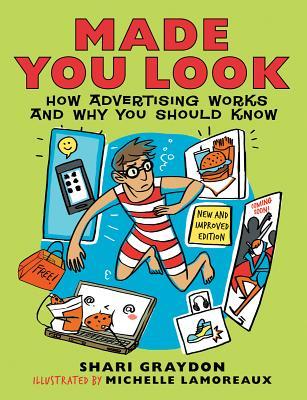
Made You Look is a featured book at Ms. Yingling Reads.This is a narrative nonfiction book for older readers. "This updated book on advertising includes helpful information on internet and social media advertising."  

Alex at Randomly Reading has a review of Lifetime: The Amazing Number in Animal Lives, a "counting book using different behaviors or features of animals in the wild."  Thanks, Alex.  I love the cover!


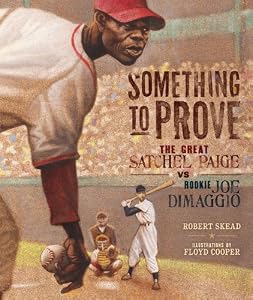
At Booktalking, Anastasia (our Nonfiction Monday organizer extraordinaire) features a picture book biography for older readers, Something to Prove: The Great Satchel Paige vs. Rookie Joe DiMaggio.  Baseball history - one of my favorite topics!


Wrapped in Foil's, Roberta, has a book on another of my favorite topics - space.  Beyond the Solar System: Exploring Galaxies, Black Holes, Alien Planets, and More is a "great book that ties history and astronomy with hands-on activities, perfect to share with the upcoming Perseid meteor shower."

(Don't miss the Perseid meteor showers coming up on the 11th and 12th of this month!)


At Jean Little Library, Jennifer has a review of the narrative nonfiction book, The Mystery of Darwin's Frog.


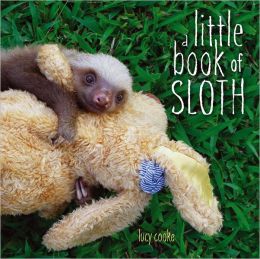
At A Mom's Spare Time (is there such a thing as a mom's spare time?), Ami has a picture book for young readers, A Little Book of Sloth.  No one will be able to resist that cover, and my teenage daughter tells me that sloths are the new hip animal. They do seem to popping up where they're least expected!  (How long before they get their own pistachio commercial?)


Sondy at Sonder Books has a review of Hoop Genius: How a Desperate Teacher and a Rowdy Gym Class Invented Basketball.  A picture book biography for young readers, Hoop Genius is a fun look at the invention of basketball.

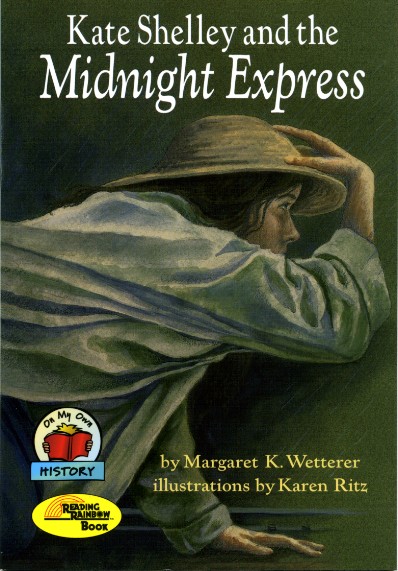
At Stacking Books, Reshama has a review of Kate Shelley and the Midnight Express, "a true story of a brave 15 year old girl, Kate Shelley, who saved lives in a raging storm by risking her own life when a railroad bridge collapsed."  


It's a wrap!   Thanks to everyone who participated!

Wednesday, February 10, 2010

Evolution and the Pelican

I have delayed posting reviews of Katherine Paterson's, The Day of the Pelican, and Jacqueline Kelly's, The Evolution of Calpurnia Tate, because I have mixed feelings about them both. I think they are well-written, thought-provoking books; however, I do question their "suggested reader" age ranges and their general appeal to children.

Paterson, Katherine. 2009. The Day of the Pelican. New York: Houghton Mifflin.

The Day of the Pelican (so named for an incident involving a drawing of a pelican that occurred on the day that Meli's life took a turn for the worse) is a historical fiction account of the flight of 11-year old Meli Lleshi's Kosovar Albanian family from the Serbian ethnic cleansing campaign of terror.  Meli comes from a large, tight-knit extended family, however the focus of the book is primarily on Meli, her older brother Mehmet, and her parents.  After Mehmet is arrested, jailed, beaten and left for dead by the local police force, the Lleshis are forced to admit and react to the fact that they are no longer welcomed in their homeland.

This book is suggested by the publisher for grades 5-9.  I disagree.  The underlying reason for the Lleshi family's flight is the ethnic cleansing of Albanian Kosovars.  Additionally, there is veiled reference (explained more fully in the author's notes following the story) to war crimes against women - both very heavy topics for 10-year old readers. Additionally, Meli's brother, Mehmet, who becomes, understandably, radicalized by his treatment at the hand of the Serbs, is a difficult character for young readers to embrace.  It is easy to dislike Mehmet for his headstrong and moody demeanor; and it will take an older, more experienced reader to comprehend the reality that makes Mehmet's character not only believable, but sadly commonplace.

Congratulations to Katherine Paterson on her appointment as the new National Ambassador for Young People's Literature. She follows in the esteemed footsteps of the first National Ambassador, Jon Scieszka.  "Read for Your Life" is the theme for Ms. Paterson's platform. She has her own website and a fan page on FB.

Kelly, Jacqueline. 2009. The Evolution of Calpurnia Tate. New York: MacMillan.

The Evolution of Calpurnia Tate takes place in rural Texas at the turn of the 20th century.  Eleven-year-old, Calpurnia is the only daughter in a family consisting of six brothers, Calpurnia, her parents, and Granddaddy.  The Tate's successful farm was established by Granddaddy, but he has since retired after serving in the Civil War, and has turned his attention to scientific endeavors - not the least of which is an attempt to create liquor from distilled pecans.  Calpurnia and Granddaddy develop a very close relationship based on Calpurnia's interest in the new and controversial book, On the Origin of Species by Charles Darwin. Each chapter begins with a passage from Darwin's book. The "evolution" in Kelly's novel refers not only to the evolutionary adaptations of Texas' native plants and insects, but also to Calpurnia herself, who evolves into a budding feminist, ready to challenge the societal expectations for women at the dawn of a new century.

Kelly's story is a mix of science, Darwinian Theory, family life, and a large helping of humor.  There is no crisis in the story, no action-packed turning point - just a warm, familial march to an unknown future.  Calpurnia is a delightfully funny and intelligent protagonist.

MacMillan's discussion guide for The Evolution of Calpurnia Tate offers discussion questions and a list of words that may send young readers (hopefully) scurrying for a dictionary (ignominy, dragooned, desiccated, to name a few).  These words, however, weren't the ones that sent me to my online nook dictionary. I had to hunt up several archaic words, most of which did not appear in the nook dictionary. (Note to Barnes and Noble: Merriam-Webster would be nice.) This book's suggested age range is grades 4-7.  Although I am a proponent of challenging vocabulary for children, I think that the level of vocabulary difficulty combined with the scientific premise of the book may be off-putting for young readers.

Bottom line - recommend these books to thoughtful, older readers who enjoy history, science, and/or world cultures.  Readers who stick with these two titles will end up enlightened.

Tuesday, August 12, 2008

The Dragon's Child: A Story of Angel Island

2008. Yep, Laurence. The dragon’s child: A story of Angel Island. New York: Harper Collins.

Prolific writer, Laurence Yep and his niece, Dr. Kathleen S. Yep, are fortunate to have uncovered over 500 pages of historical documents relating to their family’s immigration records. Children are fortunate that they have chosen to share this information in The Dragon’s Child: A Story of Angel Island. The Dragon's Child, is written in the form of an interview of Yep Gim Lew, by the author, Laurence Yep. Each answer is followed by a first-person "flashback" to young Yep Gim Lew's past in 1922.


QUESTION: Did you want to go to America?

POP: Sure. I didn't have a choice. My father said I had to go. So I went.


"I had always known I would have to leave home. Our villages land was so poor that men in my clan always had to work elsewhere. My grandfather had been one of the first to cross the ocean to the Golden Mountain. Others went to different countries. For generations my clan had been like rice chaff, scattered in the wind all over the world."

The book follows Yep Gim Lew's journey from his rural village in China to San Francisco, where he will become a Guest of the Golden Mountain. Full of documented information on the difficult path to immigration faced by Chinese immigrants in the era of "Chinese exclusion" laws, this is a wonderful resource for children learning about immigration. The immigration stories of Angel Island, "The Ellis Island of the West," are markedly different from the stories of those greeted by the Statue of Liberty.

A stuttering, 10-year-old, Yep Gim Lew must make the long journey to San Francisco and study for the grueling interrogation at Angel Island as he prepares to make the transition from Chinese farm boy to grown-up, Guest of the Golden Mountain, as travelers to the American West were called. His father, Yep Lung Gon, uncomfortable as a wealthy Chinese "lord" during his visits back to China, instructs Yep Gim Lew in the ways of the west.

In addition to the novel, there is an extensive Author's Note, a chapter on Chinese Immigration , as well as period photographs, web resources, and a bibliography. At under 150 pages including extras, this book is a quick and interesting read. There are not many light-hearted moments in the story, but the voice is authentic, and the story offers a great insight into Chinese and Chinese-American culture.

Coincidentally, according to immigration documents, the author's grandfather, Yep Lung Gon arrived in San Francisco on one of his many voyages, the day after the devastating San Francisco earthquake and fire of 1906. He writes about this period in history in The Earth Dragon Awakes. (see earlier post)

Thursday, July 31, 2008

Lady Liberty: A Biography

Rappaport, Doreen. 2008. Lady Liberty: A biography. Ill. By Matt Tavares. Cambridge, MA: Candlewick.

Lady Liberty is a biography of a national monument, a history of the myriad of people and events necessary to create one of the modern world’s most recognized symbols of freedom. Each “chapter” of this picture book consists of a short vignette about a person, related in some way to the Statue of Liberty. The vignettes are typeset like poetry, in narrow columns on the edge of the page, the illustrations receiving the majority of attention. Rappaport begins the book with a piece about herself, had her grandfather not told her stories of his flight from Latvia and his admiration for “The Lady,” the book would not have been written. From herself, Rappaport continues on - from Edouard De Laboulaye, who first envisioned the gift to America, to common Americans who donated pennies, nickels, dimes and even roosters (!) to raise money for the statue’s great base. Rappaport profiles poet Emma Lazarus (“bring me your tired, your poor, …”), sculptor Auguste Bartholdi, assistant Marie Simon, engineer Gustave Eiffel, construction supervisor Charles P. Stone, publisher Joseph Pulitzer, and journalist José Martí. Each story is written simply and majestically,

She wears a flowing robe
Like the ancient goddess Libertas.
Her right foot is raised.
Liberty walks.
Freedom never stands still.
A broken shackle and chain lie near her feet.
America broke the links of slavery
To fulfill its promise of equality for all.

The watercolor, ink, and pencil illustrations are all double spreads, with the exception of one lengthwise foldout of the completed statue after its initial unveiling, resplendent in its original copper coloring. Tavares’ illustrations are as varied as the scenes which they depict, a grim immigrant working to dig the massive hole for the statue’s foundation, a serious Joseph Pulitzer in his darkened office writing editorials to embarrass the nation’s elite into giving financial support for the statue’s installation, an enthusiastic New Jersey farm girl racing after the rooster she plans to donate to the cause of Lady Liberty.

Completing the book are remembrances from individual immigrants, dimensions of the statue, important events and dates, author’s and illustrator’s notes, and resources.

A beautiful book.

Beneath the Waves - a review

As we read disturbing news accounts of dying manatees , environmental disasters caused by toxic waste, and ocean pollution on the scale of ...