A Fire Story
by Brian Fies
Abrams Books, 2019
In graphic novel format,Brian Fies tells his own personal story as well as those of others who lost everything in the devastating Northern California fires of 2017. Their stories highlight the more mundane aspects of a living through a natural disaster—the bureaucratic red tape, the small things that trigger immense emotion, the weird sense of living as a displaced person in your own environs. Having experienced two devastating hurricanes myself, I can attest that Fies has accurately captured the moods and experiences of survivors of catastrophe. Some photos are also incorporated into the dramatic illustrations. This affecting book will stay with you much longer that the short time it will take to read it.
Originally published online, A Fire Story was recreated (the original web comic is included in the print version) and enhanced for print publication.
Read the original web-based version here.
Book reviews (and news) you can use. A librarian's opinion on books and media for children and young adults
Showing posts with label graphic novel. Show all posts
Thursday, January 2, 2020
Wednesday, April 3, 2019
Queen of the Sea - a graphic novel review
Queen of the SeaBy author/illustrator Dylan Meconis
Candlewick, 2019
Queen of the Sea is a 400-page historical fiction, graphic novel adventure set in a time and place reminiscent of the sixteenth century British Empire. A prologue introduces a queen in mortal danger, and the story then shifts to Margaret, an orphan who lives on a remote island in the Silver Sea. She has been raised in a convent. The nuns, a few servants, a priest, and Margaret are the island's only inhabitants, and life for Margaret is peaceful, pious, and predictable. A ship with supplies arrives twice a year to bring supplies. However, one day, the ship brings a boy and a lady, and life on the island will never be the same.
Queen of the Sea is a rousing adventure, but it's also an education in sixteenth century politics and the lifestyle of a religious order in the early days of modern Western history. Though the destiny of women was often determined by men, Queen of the Sea offers strong, but believable, female protagonists in young Margaret, Lady Cameron, and the nuns. A sequel will be most welcome!
Read a sample chapter of Queen of the Sea.
![]() | ||||||
| Inside spread from Queen of the Sea by author/illustrator: Dylan Meconis © |
My advance copy of Queen of the Sea was in black and white with only a sample page in color. The first 3/4 of the book were finished black and white drawings, the latter portion of the book was comprised of sketches. I almost wish that everyone had an opportunity to see a graphic novel is this format. It makes one so much more aware of the work that goes into every aspect of a book.
My copy of Queen of the Sea was provided by the publisher.
Tuesday, October 2, 2018
Lost Soul, Be at Peace - a review
Lost Soul, Be at Peace
by Maggie Thrash
Candlewick Press, 2018
Librarians are always trying to ensure that all people are able to find people like themselves in books—people with disabilities, people of color, people from all nations and religions—it’s not only important that we see ourselves in books, but it’s important that others see people like us so that they may learn that while we may be different, we also have much in common. But I’ve often wondered…what about those who are depressed? Do they want to see themselves in books too, or does it painfully reinforce the depression from which it is so often difficult to emerge? I asked a dear family member who suffers from depression. She told me that it all depends on how the story is told. I think Maggie Thrash has told her story well in the graphic memoir, Lost Soul, Be at Peace.
Eleventh grader, Maggie is depressed,
“It’s like, you're falling into a deep cave on a moonless night, and there’s no escape, and suddenly you realize: it’s not a cave, it’s your soul.”Maggie is failing school, her brother has left home for college, her father is an introverted, workaholic judge, and her mother is a socialite with whom she has little in common. She’s fairly certain that she’s a lesbian, but contrary to what she thought, coming out at school didn’t make things any better or worse. She finds comfort in her cat, Tommi. When Tommi goes missing, Maggie’s search for her turns up something else entirely.
Maggie tells her story in graphic novel format with the emphasis on dialogue. Back story information is handwritten in memoir style, or provided in illustrations of newspapers, computer screens, notes, or other drawn realia. The panel style varies and includes full spreads, three-per page, classic comic book style, and gutterless panels. My review copy is in black and white, but judging from the cover, the colors in the finished book will be dark and rich. Even without color, emotion is clearly visible in Maggie’s large eyes and expressive face. That she is ill-at-ease in most situations is painfully obvious throughout most of the book, but yet, her position as person in charge of her dance group offers a hint that Maggie has an inner spirit that is only awaiting an opportunity to soar. She is not a girl without hope; she is only a girl searching for her opportunities. She will find them.
Look for this book in October. My copy was provided by LibraryThing's Early Reviewers program.
Friday, May 18, 2018
The Bridge - a graphic novel review
The Bridge: How the Roeblings Connected Brooklyn to New York
by Peter J. Tomasi
Illustrated by Sara DuVall
Abrams Comic Arts, 2018
If you've never watched the Ken Burns documentary, "Brooklyn Bridge," you may not fully grasp the truly marvel qualities of the Brooklyn Bridge. Besides being an engineering masterpiece, it is an architectural beauty, and the result of a heroic and lengthy commitment by the Roebling family and countless workers. The Bridge: How the Roeblings Connected Brooklyn to New York is the true story in graphic format of the epic task of building the bridge.
The book begins in 1852, when the bridge was just a dream in the mind of John Augustus Roebling and his son Washington. Washington Roebling's father was a non-nonsense man, who doled out praise sparingly, but had great faith in his son. In 1862, after designing the bridge and receiving approval for its construction, John Augustus Roebling died and the young Washington Roebling became the chief engineer—a job that he eventually shared with his wife, Emily, after he contracted what was then an unknown disease.
Peter J. Tomasi tells this heroic story with little need for explanatory text, employing artistic license to recreate dialogue that rings true and gives a real feel for the political and personal dramas that unfolded throughout the fourteen years that passed during the bridge's construction.This is not an entirely personal story however, Tomasi includes ample description of the actual engineering of the bridge—a process with many failures and tragedies on the road to eventual success.
This is Sara DuVall's first graphic novel and the style is simple and appealing. The colors are bright and engaging, but background details are minimal, allowing the reader to focus on the expressions, the emotions, and the individual episodes that tie this epic story together.
The Bridge: How the Roeblings Connected Brooklyn to New York is well researched and accurately captures in graphic format this engineering marvel and the personal triumphs and sorrows associated with it.
See a slide show of images from The Bridge at Abrams Books.
Enjoy these actual photos from the New York Public Library's digital collection.
Irma and Paul Milstein Division of United States History, Local History and Genealogy, The New York Public Library. "View of Manhattan waterfront and Brooklyn Bridge under construction; temporary footbridge " New York Public Library Digital Collections. Accessed May 18, 2018. http://digitalcollections.nypl.org/items/75c1c390-9f35-0132-e3a4-58d385a7b928
Irma and Paul Milstein Division of United States History,
Local History and Genealogy,
The New York Public Library. "View of Manhattan from Brooklyn; men
working on bridge cables; Fulton ferry boat "Hamilton"; sailboats"
New York Public Library Digital Collections.
Accessed May 18, 2018.
http://digitalcollections.nypl.org/items/7c0ce5f0-9dc2-0132-d343-58d385a7bbd0
Irma and Paul Milstein Division of United States History, Local History and Genealogy, The New York Public Library. "Pedestrians on the Promenade (copy of #23:7)" New York Public Library Digital Collections. Accessed May 18, 2018. http://digitalcollections.nypl.org/items/bfc671e0-9f3a-0132-96cc-58d385a7bbd0
Note: My copy of The Bridge was provided by the publisher.
by Peter J. Tomasi
Illustrated by Sara DuVall
Abrams Comic Arts, 2018
If you've never watched the Ken Burns documentary, "Brooklyn Bridge," you may not fully grasp the truly marvel qualities of the Brooklyn Bridge. Besides being an engineering masterpiece, it is an architectural beauty, and the result of a heroic and lengthy commitment by the Roebling family and countless workers. The Bridge: How the Roeblings Connected Brooklyn to New York is the true story in graphic format of the epic task of building the bridge.
The book begins in 1852, when the bridge was just a dream in the mind of John Augustus Roebling and his son Washington. Washington Roebling's father was a non-nonsense man, who doled out praise sparingly, but had great faith in his son. In 1862, after designing the bridge and receiving approval for its construction, John Augustus Roebling died and the young Washington Roebling became the chief engineer—a job that he eventually shared with his wife, Emily, after he contracted what was then an unknown disease.
Peter J. Tomasi tells this heroic story with little need for explanatory text, employing artistic license to recreate dialogue that rings true and gives a real feel for the political and personal dramas that unfolded throughout the fourteen years that passed during the bridge's construction.This is not an entirely personal story however, Tomasi includes ample description of the actual engineering of the bridge—a process with many failures and tragedies on the road to eventual success.
This is Sara DuVall's first graphic novel and the style is simple and appealing. The colors are bright and engaging, but background details are minimal, allowing the reader to focus on the expressions, the emotions, and the individual episodes that tie this epic story together.
The Bridge: How the Roeblings Connected Brooklyn to New York is well researched and accurately captures in graphic format this engineering marvel and the personal triumphs and sorrows associated with it.
See a slide show of images from The Bridge at Abrams Books.
Enjoy these actual photos from the New York Public Library's digital collection.
![]() |
| "View of Manhattan waterfront and Brooklyn Bridge under construction; temporary footbridge " The New York Public Library Digital Collections. 1877 |
Irma and Paul Milstein Division of United States History, Local History and Genealogy, The New York Public Library. "View of Manhattan waterfront and Brooklyn Bridge under construction; temporary footbridge " New York Public Library Digital Collections. Accessed May 18, 2018. http://digitalcollections.nypl.org/items/75c1c390-9f35-0132-e3a4-58d385a7b928
![]() |
| View of Manhattan from Brooklyn; men working on bridge cables; Fulton ferry boat "Hamilton"; sailboats, 1885 |
![]() |
| "Pedestrians on the Promenade (copy of #23:7)" The New York Public Library Digital Collections. 1895. |
Irma and Paul Milstein Division of United States History, Local History and Genealogy, The New York Public Library. "Pedestrians on the Promenade (copy of #23:7)" New York Public Library Digital Collections. Accessed May 18, 2018. http://digitalcollections.nypl.org/items/bfc671e0-9f3a-0132-96cc-58d385a7bbd0
Note: My copy of The Bridge was provided by the publisher.
Wednesday, April 18, 2018
Alpha: Abidjan to Paris - a review
As you if you read my blog often, you know that I occasionally post adult books in addition to children's literature. This is a powerful graphic novel that is also suitable for young adults, and I think it deserves attention.
Alpha: Abidjan to Paris
By Bessora
Illustrated by Barroux
Translated by Sarah Ardizzone
Bellevue Literary Press, 2018
Alpha: Abidjan to Paris is a tragic, graphic novel account of one man's attempt to flee a life of misery in Côte d'Ivoire and follow his wife and child to Paris. After numerous attempts to depart legally, Alpha discovers that the process to obtain a visa is corrupt and impossible for an impoverished man. He researches his options carefully and strikes out with a group of other would-be emigrants. Although he knows the trip will be dangerous, he is nevertheless hopeful that he will be reunited with his family and his relatives in France. He fancies himself an "adventurer." His first-person account of his "adventures" devolves into a living nightmare as the journey drags on with a constantly changing group of companions. The prose is simple, and the story is told without embellishment—there is no need for embellishment; the facts are gruesome enough,
The illustrations—one or two panels per page, are also spare—mostly shades of black and greys with an occasional splash of color—Alpha's red shirt, the striped soccer jersey of an emigrant hoping to land in Spain and play for Barcelona, a flowered dress. The illustrations set a mood of haste and simplicity, appearing to be marker sketches - almost as if they could have been made on the journey.
An epilogue provides the outcome of the trip from Abidjan to Paris. It will be difficult to look upon the plight of any refugees without reflecting on Alpha's journey. This is a short and powerful, award-winning graphic novel.
Alpha: Abidjan to Paris resources:
My copy of Alpha was provided by LibraryThing Early Reviewers.
Alpha: Abidjan to Paris
By Bessora
Illustrated by Barroux
Translated by Sarah Ardizzone
Bellevue Literary Press, 2018
Alpha: Abidjan to Paris is a tragic, graphic novel account of one man's attempt to flee a life of misery in Côte d'Ivoire and follow his wife and child to Paris. After numerous attempts to depart legally, Alpha discovers that the process to obtain a visa is corrupt and impossible for an impoverished man. He researches his options carefully and strikes out with a group of other would-be emigrants. Although he knows the trip will be dangerous, he is nevertheless hopeful that he will be reunited with his family and his relatives in France. He fancies himself an "adventurer." His first-person account of his "adventures" devolves into a living nightmare as the journey drags on with a constantly changing group of companions. The prose is simple, and the story is told without embellishment—there is no need for embellishment; the facts are gruesome enough,
"Very quickly, I learn to avoid the barricades. We stop a lot. Abebi is vomiting froth. She has no bile left. She's spitting bubbles of saliva. We've been on the road for nine hours, and we still haven't covered a hundred miles. Darkness falls. Perhaps Abebi will feel better tomorrow. Augustine sucks his fingers in silence. It's a cold night. We sleep huddled together, forming a sort of human radiator. We can't even make a fire—the smoke would betray us."
The illustrations—one or two panels per page, are also spare—mostly shades of black and greys with an occasional splash of color—Alpha's red shirt, the striped soccer jersey of an emigrant hoping to land in Spain and play for Barcelona, a flowered dress. The illustrations set a mood of haste and simplicity, appearing to be marker sketches - almost as if they could have been made on the journey.
An epilogue provides the outcome of the trip from Abidjan to Paris. It will be difficult to look upon the plight of any refugees without reflecting on Alpha's journey. This is a short and powerful, award-winning graphic novel.
Alpha: Abidjan to Paris resources:
- Read a sample of Alpha
- View and download the Alpha Teachers' Notes
- Access the Alpha Book Club Guides
My copy of Alpha was provided by LibraryThing Early Reviewers.
Thursday, February 1, 2018
Wordplay - a review
Wordplay
by Ivan Brunetti
Toon, 2017
I've had to wait a few months until I was allowed to post this review I wrote for School Library Journal. If you haven't seen Wordplay yet, be sure to check it out!
★BRUNETTI, Ivan. Wordplay. illus. by Ivan Brunetti. 40p. TOON. May 2017. Tr $12.95. ISBN 9781943145171. K-Gr 2–The fun begins with the title—Wordplay—a compound word for a book about compound words. Annemarie and her classmates work on their assignment to compile lists of compound words. "How about housework?" asks a boy. "YES!" responds the teacher as Annemarie quietly giggles, imagining cheery houses vacuuming and dusting. Each new word conjures up another humorous imagining—two boys playing catch with a foot (football) or a calendar page taking a nap (daydream). Brunetti's cartoon art is rendered in a modern, intentionally naive style—largely two-dimensional, with a childlike simplicity that will resonate with the book's audience. Panels vary in size but are symmetrical and clearly delineated by white borders. Word bubbles are white with simple black text. Compound words appear in red. In addition, children of many races and ethnicities are prominently featured. As with all of the publisher's offerings, this work contains tips for sharing comics with kids and is labeled with grade, Lexile, guided reading, and reading recovery levels. VERDICT An amusing language arts lesson in a comic book format, perfect for individual or small group sharing. What's not to love?
Copyright © 2017 School Library Journal, the property of Media Source, Inc. Reprinted here with permission.
Teachers Guide for Wordplay here.
by Ivan Brunetti
Toon, 2017
I've had to wait a few months until I was allowed to post this review I wrote for School Library Journal. If you haven't seen Wordplay yet, be sure to check it out!
★BRUNETTI, Ivan. Wordplay. illus. by Ivan Brunetti. 40p. TOON. May 2017. Tr $12.95. ISBN 9781943145171. K-Gr 2–The fun begins with the title—Wordplay—a compound word for a book about compound words. Annemarie and her classmates work on their assignment to compile lists of compound words. "How about housework?" asks a boy. "YES!" responds the teacher as Annemarie quietly giggles, imagining cheery houses vacuuming and dusting. Each new word conjures up another humorous imagining—two boys playing catch with a foot (football) or a calendar page taking a nap (daydream). Brunetti's cartoon art is rendered in a modern, intentionally naive style—largely two-dimensional, with a childlike simplicity that will resonate with the book's audience. Panels vary in size but are symmetrical and clearly delineated by white borders. Word bubbles are white with simple black text. Compound words appear in red. In addition, children of many races and ethnicities are prominently featured. As with all of the publisher's offerings, this work contains tips for sharing comics with kids and is labeled with grade, Lexile, guided reading, and reading recovery levels. VERDICT An amusing language arts lesson in a comic book format, perfect for individual or small group sharing. What's not to love?
![]() |
| All images and content © copyright 2007-2014 TOON Books. All rights reserved. |
Copyright © 2017 School Library Journal, the property of Media Source, Inc. Reprinted here with permission.
Teachers Guide for Wordplay here.
Wednesday, August 2, 2017
Graphic Shakespeare: Othello - a review
I was working on a collection development project and picked up this copy of Othello from my library in search of a good graphic Shakespeare. If you have any suggestions, please feel free to share them!Graphic Shakespeare: Othello
Adaptation by Vincent Goodwin
Graphic Planet, 2008
A fair introduction to a Shakespearean classic. The back matter includes a glossary, as well as notes on the play, Shakespeare, and the graphic novel adapters. This information would have been more useful as an introduction, as the first act is difficult to follow if the reader is not already familiar with the play.The dialogue retains a Shakespearean flavor, and it should be noted that not all unfamiliar words appear in the glossary. (I had to look up "bawn" in an online dictionary.)
The illustrated characters, besides Desdemona, have a dark and serious cast befitting this tragic play. Scenes featuring Desdemona offer the only break from the furtive treachery talking place in dark corners.The oversized dialogue bubbles, rather than the illustrations, often drive the story.
Othello is part of the Graphic Shakespeare series by Graphic Planet.
For young kids, I absolutely LOVE First Second's Stratford Zoo Midnight Review presents Macbeth. (There's a "Romeo and Juliet" too, and I hope more to follow) My review is linked above.
Thursday, July 21, 2016
Lowriders to the Center of the Earth - a review
Lowriders to the Center of the EarthWritten by Cathy Camper
Illustrated by Raúl the Third
They're back!
The impala - Lupe Impala, master mechanic
The mosquito - Elirio Malaria, the finest detail artist around
The octopus - El Chavo Flapjack Octopus, washcloth-wielding polisher of the Lowriders in Space Garage
If you think lowriders are impractical, think again. When the three amigos from the Lowriders in Space Garage go in search of their missing cat, their rocket-powered lowrider is just what they need. In this second book in the series, the three friends journey to the center of the earth and face off against a trickster coyote, an Aztec God, and other legendary Mexican and Aztec foes. As in the first book, they do it with humor, brains, and style—lowrider style—bajito and suavecito (low and slow).
Lowriders to the Center of the Earth is so visually cool, that it looks more like an older brother's indie comic book than a middle grade graphic novel. Raúl the Third uses red, black, and blue ink on sepia pages, and creates expressive faces, wild action, and hidden humor. The illustrations have a distinctly Mexican flair and invite the reader into the culture. His art is a perfect complement to Cathy Camper's hilarious wordplay. It's difficult to imagine that kids can learn Spanish, geology, ancient Aztec culture, Mexican culture, and the virtue of teamwork by reading a book that screams divertido (fun) but they can! Camper's dialogue is sharp and witty, and even features bilingual puns, as in this exchange between Lupe and the trickster coyote.
"Have you seen our cat?"
"Knock knock."
"Who's there?"
"Señor."
"Señor who?"
"Señor cat? I don't think so."
¡Ja, ja, ja!
This book may be even better than the first!
- Download the Lowriders Activity Kit here.
- Read an excerpt from Lowriders to the Center of the Earth here.
- One of the artist's favorite panels from Lowriders to the Center of the Earth here.
- My review of the first book in the series, Lowriders in Space may be found here.
My copy of the book was provided by the publisher at my request when my LibraryThing copy went missing in the mail.
Monday, November 2, 2015
The Other Side of the Wall - a review
The Other Side of the Wall by Simon Schwartz
Translated from German by Laura Watkinson
Published by Graphic Universe, 2015
112 pages, best for grades 6 and up
Paperback
Simon Schwartz was born in East Berlin in the 1980s.The Other Side of the Wall is his graphic memoir of growing up in the divided city, of his parent's three-year struggle to obtain an exit permit to leave East Berlin, and of his later forays between the two Berlins.
His parents met in college. His father came from a family of staunch Communist Party members. His mother's family was secretly more liberal, though any deviation from expected Party behavior was cause for examination and surveillance by the Stasi, or secret German police. It was dangerous to stray from party orthodoxy, particularly if you were a teacher, as Simon's father was. His parents became disillusioned with life in the restrictive East German city.
When his parents requested exit permits, their lives became fraught with poverty,ostracism, and physical danger.
The book's layout is as structured as Communist life - with few exceptions, four blocks per page - each bordered in black. The artwork is monochromatic, fitting for the stark reality of life behind the Wall. The story is told in speech bubbles, text blocks that set the scene or relay back story, and the occasional footnote explaining terms that may not be familiar to readers (well-known politicians or artists of the time, and uniquely German or Communist terms). Several panels are wordless - vague remembrances of the young Schwarz.
Back matter includes a glossary, a timeline of the Berlin Wall, and maps of Germany and Berlin 1961-1989.
I recently reviewed the historical fiction novel, A Night Divided, that describes life in East Berlin in the immediate aftermath of the Berlin Wall's construction.The Other Side of the Wall is a perfect companion book - a nonfiction, graphic novel account of the Wall's waning days. For younger readers not familiar with day-to-day life in the Cold War Era, this is a chilling introduction.
Translated from German by Laura Watkinson
Published by Graphic Universe, 2015
112 pages, best for grades 6 and up
Paperback
Simon Schwartz was born in East Berlin in the 1980s.The Other Side of the Wall is his graphic memoir of growing up in the divided city, of his parent's three-year struggle to obtain an exit permit to leave East Berlin, and of his later forays between the two Berlins.
His parents met in college. His father came from a family of staunch Communist Party members. His mother's family was secretly more liberal, though any deviation from expected Party behavior was cause for examination and surveillance by the Stasi, or secret German police. It was dangerous to stray from party orthodoxy, particularly if you were a teacher, as Simon's father was. His parents became disillusioned with life in the restrictive East German city.
The Soviet Union had recently invaded Afghanistan. My dad worked on his speech, night after night.
"God, how can you describe a war as just? They want me to use fancy words to justify this invasion."
"Just write something you can square with your own conscience -- at least in part."
"I don't know if I can do that."
When his parents requested exit permits, their lives became fraught with poverty,ostracism, and physical danger.
The book's layout is as structured as Communist life - with few exceptions, four blocks per page - each bordered in black. The artwork is monochromatic, fitting for the stark reality of life behind the Wall. The story is told in speech bubbles, text blocks that set the scene or relay back story, and the occasional footnote explaining terms that may not be familiar to readers (well-known politicians or artists of the time, and uniquely German or Communist terms). Several panels are wordless - vague remembrances of the young Schwarz.
Back matter includes a glossary, a timeline of the Berlin Wall, and maps of Germany and Berlin 1961-1989.
I recently reviewed the historical fiction novel, A Night Divided, that describes life in East Berlin in the immediate aftermath of the Berlin Wall's construction.The Other Side of the Wall is a perfect companion book - a nonfiction, graphic novel account of the Wall's waning days. For younger readers not familiar with day-to-day life in the Cold War Era, this is a chilling introduction.
Tuesday, December 16, 2014
Muddy Max - a graphic novel review
I have been busy lately with review and blogging obligations, as well as work and preparation for the holiday season, but I did take time out to read a copy of Elizabeth Rusch's graphic novel, Muddy Max: The Mystery of Marsh Creek. Thanks to the hard-working intern who brought it to my attention and supplied me with a copy.Rusch, Elizabeth. 2014. Muddy Max: The Mystery of Marsh Creek. Kansas City, MO: Andrews McMeel. Illustrated by Mike Lawrence.
Max lives in the aptly-named suburban town of Marsh Creek. In addition to the marsh on the outskirts of town, mud is everywhere in town as well, making it almost impossible for the child of neat-freak parents to stay clean! Max becomes suspicious of his parents'secretive habits, frequent trips to the marsh, and fanatical obsession with his cleanliness. When he accidentally discovers that mud gives him superpowers, he and his friend Patrick become determined to figure out exactly what is going on in Marsh Creek.
This is an easy-to-read graphic, sci-fi novel that should be popular with younger kids and reluctant readers. The panels are easy to follow, with simple, but expressive drawings in muted browns and grays that reflect the book's muddy locale. Hopefully, future installments will add some dimension to the Max's female friend. Not willing to completely divest herself of her nonfiction roots, Rusch adds some real science about mud and its denizens in the back matter.
I predict that more than one member of my book club will want to take this one home. I'll have to place some holds on library copies.
A Teacher's Guide to Muddy Max is available here.
Elizabeth Rusch is also a talented author of nonfiction. Last year I reviewed her book, Volcano Rising.
Monday, July 28, 2014
Sisters - a review
Telgemeier, Raina. 2014. Sisters. New York: Scholastic.
(Advance Reader Copy)
Sisters is the companion graphic novel to the award-winning Smile. In Sisters, Raina, her mother, younger sister Amara, and little brother Will are on a road trip to Colorado. Past experiences and grievances, both large and small are unwelcome baggage on this family road trip. Raina and Amara feud for much of the trip, until one event brings the family together.
Prior events are relayed as flashbacks and appear on yellow-tinted pages.
I have sisters and I have daughters. I can attest to the fact that Raina Telgemeier tells it like it is. It's not the good times that make a family strong, but rather, how it deals with the bad times... and if everything turns out well, the bad times make the best stories.
Publishers Weekly has a 7-page preview of Sisters on their blog.
On a shelf near you, August 26, 2014.
I received my copy of Sisters at Book Expo America. Raina was kind enough to pose for a photo as she signed it. One lucky reader from my book club will be taking it home to preview on Wednesday!
(Advance Reader Copy)
Sisters is the companion graphic novel to the award-winning Smile. In Sisters, Raina, her mother, younger sister Amara, and little brother Will are on a road trip to Colorado. Past experiences and grievances, both large and small are unwelcome baggage on this family road trip. Raina and Amara feud for much of the trip, until one event brings the family together.
Prior events are relayed as flashbacks and appear on yellow-tinted pages.
I have sisters and I have daughters. I can attest to the fact that Raina Telgemeier tells it like it is. It's not the good times that make a family strong, but rather, how it deals with the bad times... and if everything turns out well, the bad times make the best stories.
Publishers Weekly has a 7-page preview of Sisters on their blog.
On a shelf near you, August 26, 2014.
I received my copy of Sisters at Book Expo America. Raina was kind enough to pose for a photo as she signed it. One lucky reader from my book club will be taking it home to preview on Wednesday!
Wednesday, July 23, 2014
The Stratford Zoo Midnight Revue Presents Macbeth - a review
Bruce Coville has done wonderful adaptations of several Shakespearean plays for a young audience, while staying faithful to the mood and dialogue wherever possible. Now, however, there's a new, edgier, funny Shakespeare in town. You may have seen many adaptations for the works of Shakespeare, but you've never seen them done like this.
I present The Stratford Zoo Midnight Revue. I was laughing out loud on the very first page!
Lendler, Ian. 2014. The Stratford Zoo Midnight Revue Presents Macbeth. New York: First Second.
(Advance Reader Copy)
A hilarious, graphic novel version of "Macbeth" as performed and attended by the denizens of The Stratford Zoo after the keeper has left for the evening.
Join them in their seats (avoid the skunk!), grab a snack of rotting carrion from the vendors, and enjoy the play! Panels featuring frequent audience commentary are done in darkened tones to denote the dim lighting of audience seating. The play's action onstage is presented in bold color.
Intermission occurs when the zookeeper makes an unexpected late-night sweep of the zoo's grounds.
If you're a humor or comic book fan, Lendler and illustrator, Zack Giallongo, present this Shakespeare classic "as you like it" - brief, humorous, and to the point. Teachers and parents, this is a perfect introduction to Shakespeare for the young people in your life.
(Alternatively, read it yourself and then head out to see some Shakespeare in the park this summer! I'll be seeing Shakespeare by the Sea.)
Due on shelves in September. This is the first in a series. Look for "Romeo and Juliet" next.
Thursday, July 10, 2014
Lowriders in Space - a review
The #WeNeedDiverseBooks campaign points out many reasons why it's important to have diversity in books. One of the reasons is that people like/want/need to see themselves reflected in the books that they read. Another is that people like/want/need to see the world through the eyes of people other than themselves. Whatever your reason for seeking diversity in books, I hope you find it in Lowriders in Space.
Camper, Cathy. 2014. Lowriders in Space. New York: Chronicle.
Illustrated by Raul the Third.
(Advance Reader Copy)
Quirky and unique, Lowriders in Space is a graphic, sci-fi novel that extols the virtues of working hard, working together for a common goal, and striving for success despite the odds of achieving it. It's also funny and stylish, and peppered with Mexican-American slang as it shines a rare spotlight on "lowrider" culture.
The cast of characters includes an impala, an octopus, and a mosquito:
They're best friends. They work together. They can count on each other. But can they build a lowrider to win the Universal Car Competition? They can when they accidentally use rocket parts and get a truly cosmic makeover!
Besides its truly unique and fun characters, I like that Lowriders in Space features adults. The general rule is that books for kids will be about kids. That's fine as a general rule, but a quality children's book about adults is a breath of fresh air. When I was a very young kid, my favorite things to read were Archie and Veronica comic books and Nancy Drew mysteries. They had cars and boyfriends and nary a parent in sight (unless you count Nancy's father, who was more like an early version of an ATM than a parent).
Humor? Lowriders has that, too. My favorite panels?
El Chavo (the octopus) sitting in his new bucket seat (a bucket!). "¡Que suave!"
Elario rescuing the group from a black hole with ... Wite Out!
What else do I like about Lowriders in Space? The subtitle is "Book 1." I sure had fun reviewing this one. I look forward to seeing more of this unconventional trio.
Back matter includes a dictionary of the Mexican-American slang and scientific terms used throughout the book (it is a sci-fi novel, after all).
Note:
My advance copy was in black and white, with only a small sampling in color. See full color pages on the book's FB page. [https://www.facebook.com/pages/Low-Riders-in-Space/487615068027769?sk=photos_stream]
Though I'm a Jersey Girl now, I lived for many years in Southern California. If you've never been stopped at a red light next to one of these bouncing babies, you're really missing something! Want to see some lowrider action? Check out this YouTube video, "60 Seconds of Low Riders."
Camper, Cathy. 2014. Lowriders in Space. New York: Chronicle.
Illustrated by Raul the Third.
(Advance Reader Copy)
Quirky and unique, Lowriders in Space is a graphic, sci-fi novel that extols the virtues of working hard, working together for a common goal, and striving for success despite the odds of achieving it. It's also funny and stylish, and peppered with Mexican-American slang as it shines a rare spotlight on "lowrider" culture.
The cast of characters includes an impala, an octopus, and a mosquito:
- "Lupe Impala was the finest mechanic south of Vacaville. She could rescue a dropped gasket, notch a belt, or electrocharge a sparkplug, swish a swashplate or wrangle a manifold with a twist of her wrench a flick of her wrist."
- El Chavo "Flapjack Octopus wielded the wettest washcloth North of the Salton Sea. When he polished a car, he spun over the paint job like an eight-pointed ninja star flying through the night."
- "Elirio was the best detail artist around. People were a little afraid of Elirio Malaria."
They're best friends. They work together. They can count on each other. But can they build a lowrider to win the Universal Car Competition? They can when they accidentally use rocket parts and get a truly cosmic makeover!
Besides its truly unique and fun characters, I like that Lowriders in Space features adults. The general rule is that books for kids will be about kids. That's fine as a general rule, but a quality children's book about adults is a breath of fresh air. When I was a very young kid, my favorite things to read were Archie and Veronica comic books and Nancy Drew mysteries. They had cars and boyfriends and nary a parent in sight (unless you count Nancy's father, who was more like an early version of an ATM than a parent).
Humor? Lowriders has that, too. My favorite panels?
El Chavo (the octopus) sitting in his new bucket seat (a bucket!). "¡Que suave!"
Elario rescuing the group from a black hole with ... Wite Out!
What else do I like about Lowriders in Space? The subtitle is "Book 1." I sure had fun reviewing this one. I look forward to seeing more of this unconventional trio.
Back matter includes a dictionary of the Mexican-American slang and scientific terms used throughout the book (it is a sci-fi novel, after all).
Note:
My advance copy was in black and white, with only a small sampling in color. See full color pages on the book's FB page. [https://www.facebook.com/pages/Low-Riders-in-Space/487615068027769?sk=photos_stream]
Though I'm a Jersey Girl now, I lived for many years in Southern California. If you've never been stopped at a red light next to one of these bouncing babies, you're really missing something! Want to see some lowrider action? Check out this YouTube video, "60 Seconds of Low Riders."
Monday, July 7, 2014
Above the Dreamless Dead - a review
Duffy, Chris, ed. 2014. Above the Dreamless Dead: World War I in Poetry and Comics. New York: First Second.(Advance Reader Copy)
Above the Dreamless Dead is an illustrated anthology of poetry by English soldier-poets, who served in WWI. They are known collectively as the "Trench Poets."
Poems by famous writers such as Wilfred Owen and Rudyard Kipling are illustrated by equally talented comic artists, including Hannah Berry and George Pratt. The comic-style renderings (most spanning many pages), offer complementary interpretations of these century-old poems. The benefit of hindsight and perspective give the artists a broader angle in which to work. The result is a very personal, haunting, and moving look at The Great War.
![]() |
| This is the "case" for Above the Dreamless Dead. This, and many other interior photos at 00:01 First Second. |
Look for Above the Dreamless Dead in September, 2014. Thanks to First Second, who provided this review copy at my request.
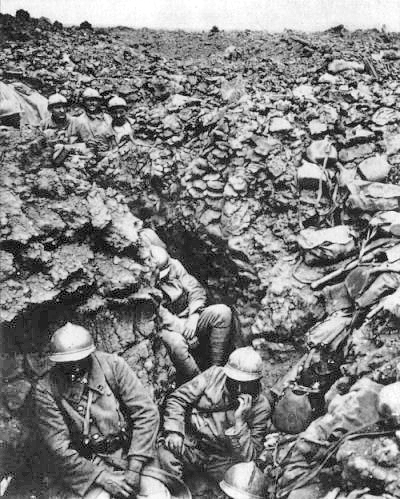
| French soldiers of the 87th Regiment, 6th Division, at Côte 304, (Hill 304), northwest of Verdun, 1916. Public Domain image. |
![]() |
| Today is Nonfiction Monday. See all of today's nonfiction posts at the Nonfiction Monday blog. |
Wednesday, July 2, 2014
Captain Underpants- the Eleventh Epic Novel!
Pilkey, Dav. 2014. Captain Underpants and the Tyrannical Retaliation of the Turbo Toilet 2000. New York: Scholastic.
(Advance Reader Copy)
Captain Underpants fans can rejoice. The "Eleventh Epic Novel" is coming this summer with everything kids expect - time travel, fiendish villains, a plot with more twists than a bag of pretzels, and of course - Flip-O-Rama, "the world-famous cheesy animation."
In Captain Underpants and the Tyrannical Retaliation of the Turbo Toilet 2000, readers will be brought up to speed on past adventures, as George and Harold re-live (and change) a previous adventure involving the Turbo Toilet 2000. Super Diaper Baby will make a cameo appearance in a comic by George and Harold, and readers will be introduced to Yesterday George and Yesterday Harold. There's even a 3-panel Flip-O-Rama.
It's ridiculous, preposterous, and downright silly - kids will love it.
On shelves August 26, 2014.
What's next? Captain Underpants and the Sensational Saga of Sir Stinks-a-Lot.
(Advance Reader Copy)
Captain Underpants fans can rejoice. The "Eleventh Epic Novel" is coming this summer with everything kids expect - time travel, fiendish villains, a plot with more twists than a bag of pretzels, and of course - Flip-O-Rama, "the world-famous cheesy animation."
In Captain Underpants and the Tyrannical Retaliation of the Turbo Toilet 2000, readers will be brought up to speed on past adventures, as George and Harold re-live (and change) a previous adventure involving the Turbo Toilet 2000. Super Diaper Baby will make a cameo appearance in a comic by George and Harold, and readers will be introduced to Yesterday George and Yesterday Harold. There's even a 3-panel Flip-O-Rama.
It's ridiculous, preposterous, and downright silly - kids will love it.
On shelves August 26, 2014.
What's next? Captain Underpants and the Sensational Saga of Sir Stinks-a-Lot.
Thursday, March 13, 2014
Ricky Ricotta's Mighty Robot - in color!
Pilkey, Dav. 2014. Ricky Ricotta's Mighty Robot. New York: Scholastic. Illustrations by Dan Santat.While at ALA Midwinter, I picked up an Advance Reader Copy of Ricky Ricotta's Mighty Robot. I know what you're thinking - that's not a new book, that was published ages ago! Yes, but it's back again, and this time in full color, with glossy pages and new "mini-comics" inside.
All of the Ricky Ricotta books will be reissued with new illustrations, and two brand new books are planned for January and March of 2015. A big campaign is in the works ... stay tuned.
Read an excerpt and see the new illustrations on Scholastic's new Ricky Ricotta web page.
Coming to a bookshelf near you on April 29, 2014.
BTW, my Advance Reader Copy went home with a very happy young boy, one of my best readers. He was looking for my library's "checked-out" copy of the original Ricky Ricotta's Giant Robot. Imagine the smile on his face when I gave him a new, as yet unpublished, full-color copy! (Luckily, I had read it at lunchtime.)
The original Ricky Ricotta artist, Martin Ontiveros deserves credit for helping to create a series that captured the imagination of a nearly a generation of children. Dan Santat will refresh the series for the next generation. Long live Dav Pilkey!
Tuesday, December 3, 2013
Short, funny, and illustrated - two chapter book reviews
I recently finished two short, easy-reading chapter books by two very popular authors - Kate DiCamillo and Jeff Kinney.

How else, but in a spirit of fun and adventure, could she gather
Flora &Ulysses resources:
(Advance Reader Copy)
In Hard Luck, Greg Heffley finds himself temporarily
friendless when Rowley gets a girlfriend and no longer has time to spend with
Greg. Since all of his previous life
decisions have led to bad ends, Greg decides to trust his fate to chance,
allowing an old Magic 8 Ball to make his choices. How much worse can it get? (If you know Greg
Heffley, you know it gets worse – much worse!)

- DiCamillo, Kate. 2013. Flora & Ulysses: The Illuminated Adventures. Somerville, MA: Candlewick. (Illustrated by K.G. Campbell)
How else, but in a spirit of fun and adventure, could she gather
- Flora - a "natural-born cynic," and avid reader of The Illuminated Adventures of the Amazing Incandesto
- Ulysses - a dreamy, poetic squirrel with a superpower (typing), garnered from the interior of a super-suction, multi-terrain vacuum
- William Spiver - a temporarily blind boy who prefers to be known by his complete name, so as so distinguish himself "from the multiplicity of Williams in the world."
- two loving, but flawed (aren't we/they all?) parents
- delightful neighbors
and
- Mary Ann - a lamp
Humorous comic panels and sketches by K.G. Campbell are the perfect complement to this warm and funny, impossible story of love and poetry, friendship and family.
Flora &Ulysses resources:
- Kinney, Jeff. 2013. Diary of a Wimpy Kid: Hard Luck, Book 8. New York: Amulet.
(Advance Reader Copy)
| Download your own Hard Luck wallpaper here. |
This is not the funniest of the Wimpy Kid books, but abandonment and loneliness are not funny topics, and I give Jeff Kinney credit
for tackling them, and doing it with humor and hopefulness.
Kids love the Wimpy Kid series, and they’ll love this one, too. Sure, it’s
funny, but it may hit a bit closer to home than others in the series, and I don't think that's by chance.
Monday, November 11, 2013
The Great American Dust Bowl - a review

Brown, Don. 2013. The Great American Dust Bowl. New York: Houghton Mifflin.
In a slim (80-page), hardcover, graphic novel, Don Brown offers a compelling account of the causes, effects, and consequences of America's 19th century push into the Great Plains - first for ranching, then small farming enterprises, and finally, large-scale, motorized farming. Years of drought combined with loss of prairie grassland that had sustained the American Indians and the wild buffalo herds, led to dust storms of epic proportions that lasted for a decade. Describing one storm, Brown writes,
On May 3, 1934, whirlwinds lifted 350 million tons of dirt from the Montana and the Dakotas' prairie, gathered them into gritty clouds that reached fifteen thousand feet, a height equal to twelve stacked Empire State Buildings.
Enough dust to fill 1,500 modern supertankers blew East.
Dust fell like snow over Chicago.
Atlanta.
Boston.
Washington.
Midday Manhattan darkened beneath a dusty gray haze. Cars switched on their headlights to see. The Statue of Liberty seemed to disappear. Everywhere, dust: streets, sidewalks, grass, even the water in New York Harbor.Panels of varying sizes, including double-spread pages, are presented primarily in sepia tones, denoting both the time period and the ever-present dirt. Facts are presented in text boxes or within panels, in easy-reading Tim Sale Brush font, and dialogue (documented in the Source Notes and Selected Bibliography) appears in word bubbles. Illustrations are pen and ink with "digital paint. The hard-luck farmers are simply sketched, but convey seriousness and gravity. Smiles can only be found on the "rainmaker," a snake oil salesman who profited from the sale of useless items that promised to bring rain, and on the faces of a small family who rejoices outside as rain finally arrives to break the drought.
When the rain came, it meant life itself. It meant a future.
The Great American Dust Bowl may be read quickly, but will not soon leave your mind. My library has cataloged this one as a young adult title, but it's certainly suitable for middle grades as well. I highly recommend it.
|
|
- The New York Times (by NYPL's Betsy Bird)
- The Nonfiction Detectives
- Out of the Dust by Karen Hesse - 1998 winner of the Newbery Medal and the Scott O'Dell Award for Historical Fiction
- The Storm in the Barn by Matt Phelan - 2010 winner of the Scott O'Dell Award and also a graphic novel
- Years of Dust by Albert Marrin
Other Don Brown books reviewed by Shelf-employed:
- America is Under Attack: September 11, 2001: The Day the Towers Fell
- All Stations! Distress!: April 12, 1915: The Day the Titanic Sank (reviewed on LibraryThing)
- Let it Begin Here!: April 19, 1775: The Day the American Revolution Began (reviewed on LibraryThing)
Looking for more reviews of nonfiction books?
Today's Nonfiction Monday roundup is at Wrapped in Foil.
Monday, September 16, 2013
Hit By Pitch - a review
Many months ago, I requested a copy of Hit By Pitch from LibraryThing's Early Reviewers program. I was thrilled that I was chosen to receive a copy, but it never showed up -- until last week, when I eagerly devoured it, and was not disappointed. This one's not for *kids, but certainly suitable for young adults.
Lawless, Molly. 2012. Hit By Pitch: Ray Chapman, Carl Mays and the Fatal Fastball. Jefferson, NC: McFarland.
If you've ever watched a player get beaned by a baseball, you've experienced the sickening feeling that occurs merely from watching. In 1920, fifty years before the mandated use of batting helmets, Cleveland Indian shortstop, Ray "Chappie" Chapman, became the first and only major league baseball player to be killed by a pitched ball. This is his story and the story of pitcher, Carl Mays of the New York Yankees.
In some ways, it is easy to write about sports as the statisticians make the research simple - dates, times, players, locations, runs, hits, balls, strikes, averages - it's all recorded history. However, the single entry in the scorer's book for the game at the Polo Grounds between the Cleveland Indians the New York Yankees, "hit by pitch," cannot explain the tragic story of baseball's only fatal beaning on August 16, 1920. Molly Lawless uses black and white drawings, period quotes, newspaper articles, and sportswriter commentaries to animate this story for a new generation.
A more perfect tragedy could not be conceived if it were a work of fiction - the odd, sullen and nearly friendless "villain," Carl Mays, versus the cheerful, handsome and beloved athlete, businessman, husband and friend, "Chappie." One will live and one will die. Both stories end in tragedy.
Lawless, Molly. 2012. Hit By Pitch: Ray Chapman, Carl Mays and the Fatal Fastball. Jefferson, NC: McFarland.
If you've ever watched a player get beaned by a baseball, you've experienced the sickening feeling that occurs merely from watching. In 1920, fifty years before the mandated use of batting helmets, Cleveland Indian shortstop, Ray "Chappie" Chapman, became the first and only major league baseball player to be killed by a pitched ball. This is his story and the story of pitcher, Carl Mays of the New York Yankees.
In some ways, it is easy to write about sports as the statisticians make the research simple - dates, times, players, locations, runs, hits, balls, strikes, averages - it's all recorded history. However, the single entry in the scorer's book for the game at the Polo Grounds between the Cleveland Indians the New York Yankees, "hit by pitch," cannot explain the tragic story of baseball's only fatal beaning on August 16, 1920. Molly Lawless uses black and white drawings, period quotes, newspaper articles, and sportswriter commentaries to animate this story for a new generation.
A more perfect tragedy could not be conceived if it were a work of fiction - the odd, sullen and nearly friendless "villain," Carl Mays, versus the cheerful, handsome and beloved athlete, businessman, husband and friend, "Chappie." One will live and one will die. Both stories end in tragedy.
Fascinating, well-researched, and told with a keen eye for the game and all its intricacies and idiosyncrasies. Ms. Lawless' respect for (and love of) baseball is apparent in every page. Her black and white illustrations evoke the time and spirit of the game in the "deadball era," and an American public, still processing the effects of the 1919 Black Sox Scandal and the relatively new phenomenon of Prohibition. Fans of baseball, graphic novels, history or tragedy will love this book.
- Amazon.com offers a peek inside Hit By Pitch. Be sure to check it out!
- Click here to see the box score as it appeared in the newspaper.
Today's Nonfiction Monday is hosted by author, Anastasia Suen, at her Booktalking blog.
Monday, May 20, 2013
Primates - a review
I borrowed this one from a colleague - hated to give it back.
Ottaviani, Jim. 2013. Primates: The Fearless Science of Jane Goodall, Dian Fossey, and Biruté Galdikas. New York: First Second. (Illustrated by Maris Wicks)
(Advance Reader Copy)The stories of pioneering primate researchers Jane Goodall, Dian Fossey and Biruté Galdikas are woven together in this nonfiction graphic novel by award-winning Jim Ottaviani. Most know Jane Goodall because of her long and storied career with chimpanzees. Many know Dian Fossey and her work with gorillas and from the film, Gorillas in the Mist (Universal Pictures, 1988). Lesser known is Biruté Galdikas, a pioneer in the study of orangutans.
Besides the obvious primate connection, another connection unites these three women and the threads of Primates: The Fearless Science of Jane Goodall, Dian Fossey and Biruté Galdikas. Goodall, Fossey and Galdikas were all hired by famed archaeologist, Louis Leakey. Amazingly, when hired, none were experienced researchers. Goodall had no college experience; Fossey's profession was occupational therapist. Only Galdikas was a college student with an intent to study primates. Leakey believed that women were more insightful and better suited to understand primate behavior. The book hints that he may also have been attracted to the three women, noting his wife's skepticism.
The chronology works well in Primates, which is less biographical and more an intense look at a fascinating period of scientific research in the field of primate studies. Hired by Leakey over a period of several years, Goodall left for Tanzania to study chimpanzees in 1960, Dian Fossey to Congo (later Rwanda) in 1967, to study gorillas, and Galdikas to research orangutans in Borneo in 1971. Ottiavani tells the three stories chronologically in first person commentary, with each story spilling over into the next. Wicks employs different color dialogue boxes to differentiate the researchers when their lives intersect in London at various points in time. During the course of their careers, the women met, knew, and understood each other.
Equal time is given to the behavior and locale of the primates, and the monumental discoveries and personal sacrifices of each woman. Goodall discovered that chimpanzees use tools. Little was know about orangutans before Galdikas' research. Fossey made many behavioral discoveries about gorillas and worked tirelessly against poaching. All three changed long-standing methods of animal observation. In the case of Fossey, Primates alludes to her tragic and untimely death, but does not mention her murder, instead showing an image of the the side-by-side headstones of Fossey and her favorite silverback gorilla, Digit. Wicks' illustrations are simple, but invoke the intense colorful beauty of the primates' habitats, the uniqueness of each primate species, the vastness of the forests and jungles and the incredible difficulties of three humans living within their midst.
An author's note explains where narrative license was used within the story.
Primates: The Fearless Science of Jane Goodall, Dian Fossey, and Biruté Galdikas will surely evoke an urge to learn more about these three fascinating women and the primates to whom they devoted their lives. An engaging and thought-provoking book for ages 12 and up.
- Check out this post from First Second's blog for a great view of the spine, flaps, and endpapers. So much more goes into the making of a quality book that one might think. I completely missed the binoculars looking through the book when I read it! First Second (00:01) is top-notch.
Learn more at
Jane Goodall Institute
Orangutan Foundation International
There are also many nonprofits dedicated to the protection and conservation of gorillas.
It's Nonfiction Monday. Check out the always interesting Perogies & Gyoza,
for links to all of today's nonfiction book reviews and postings.
Subscribe to:
Posts (Atom)
Beneath the Waves - a review
As we read disturbing news accounts of dying manatees , environmental disasters caused by toxic waste, and ocean pollution on the scale of ...
-
I'm delighted to host today's Nonfiction Monday. My contribution for today is Marc Aronson's If Stones Could Speak: Unlocking th...
-
Welcome to Shelf-employed! I'm the host of this week's Nonfiction Monday . Grubman, Steve and Jill Davis. 2010. Orangutans are Tic...
-
Gutman, Dan. 2012. Election! A Kid's Guide to Picking our President. New York: Open Road Media. Advance copy provided by NetGall...