Pages

Showing posts with label San Francisco. Show all posts

Monday, August 5, 2013

Angel Island: Gateway to Gold Mountain - a review


Freedman, Russell. 2014. Angel Island: Gateway to Gold Mountain. New York: Clarion.
(Advance Reader Copy)

Many of us, especially here on the East Coast, are familiar with stories of immigrants passing through the inspection station at Ellis Island in New Jersey. (Yes, folks, it is in New Jersey. The Supreme Court of the United States has said so.)  Less familiar are the stories of Asian immigrants who arrived and were processed or detained at Angel Island in San Francisco Bay.

  • Title: Immigration station, Angel Island, Cal.
  • Related Names: 
       Givens, J. D. (James David), 1863- , copyright claimant
  • Date Created/Published: c1915.
  • Reproduction Number: LC-DIG-ds-03059 (digital file from original item) LC-USZ62-125996 (b&w film copy neg.)
  • Rights Advisory: No known restrictions on publication.
  • Repository: Library of Congress Prints and Photographs Division Washington, D.C. 20540 USA
Thanks to the efforts of Park Ranger Alexander Weiss and an encouraging librarian, Russell Freedman has brought the stories of these Angel Island immigrants and the story of the Immigration Station's preservation to young readers in this brief, yet powerful, image-filled book.

When the buildings on Angel Island were falling into disrepair and slated for demolition in the 1970's, Alexander Weiss found rows and rows of poetry, much of it written in Chinese characters undecipherable to him, etched into the walls of the island's detention center.  Convinced of the historical significance of these poems, he brought them to the attention of Chinese community leaders in San Francisco, and so began a movement to retain the buildings as landmarks of cultural and historical significance.  Many of the poems were translated and included in the book,

Oh, poor me, Banned from landing,
     fearful of being deported back to China.
There is no way for me to face the elders east of the river.
I anticipated wealth, but it's only poverty, alas, that I've
     reaped.
Because of exclusionary laws, Chinese immigrants faced particularly intense scrutiny and interrogation, sometimes even questioning about the location of household items left in China! Answers were then checked against those of relatives to test for truthfulness.

Angel Island contains nine chapters, beginning with the discovery of the carvings by the park ranger, continuing with typical experiences of the immigrants and the notation of important laws and political events affecting immigrants, and finishing with a look at Angel Island State Park today.

Hundreds of thousands of immigrants, mostly Chinese, passed through Angel Island Immigration Station.  This is their story that deserves to be told.  

The final copy will have Source Notes, Selected Bibliography, Acknowledgments, Picture Credits and Index. Keep an eye out for its 2014 publication date.

A perfect fictional pairing for Angel Island: Gateway to Gold Mountain is Laurence Yep's,The Dragon's Child: A Story of Angel Island (2008, Harper Collins).


The Nonfiction Monday roundup is here today!  
Add your post to the form below, and I'll add them later in the day after work. Thanks for participating.

And don't forget - there's still time to enter the giveaway for an autographed copy of The Bear Hug by Sean Callahan. See Saturday's post for the online entry form.

Thanks to all of today's Nonfiction Monday contributors!  Be sure to check out these posts:


Jeanne at True Tales & a Cherry on Top, is featuring Write On, Mercy! The Secret Life of Mercy Otis Warren.  Jeanne just attended an SCBWI conference and felt inspired to feature a picture book biography of a female writer.  Write on, Jeanne!


At NC Teacher Stuff, Jeff has a review of No Monkeys, No Chocolate. "This is an interesting and informative account of how the cocoa tree produces cocoa beans for chocolate."  Thanks, Jeff, however, after reading your review, I think I now know a little too much about what's involved in the life of a cocoa bean! 


Sue, at Sally's Bookshelf, has Noisy Bug Sing-Along. "Summer is one huge concert of chirps, buzzes, hums and thrums. Who wouldn't want to sing along with the bugs?"  As this year is a 17-year cicada hatch in my area, there's been a lot of "singing!"
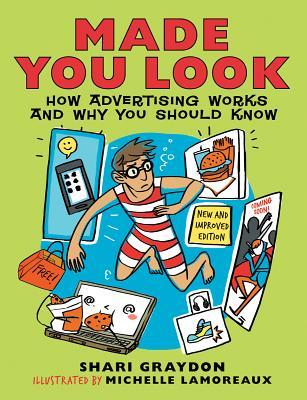


Made You Look is a featured book at Ms. Yingling Reads.This is a narrative nonfiction book for older readers. "This updated book on advertising includes helpful information on internet and social media advertising."  

Alex at Randomly Reading has a review of Lifetime: The Amazing Number in Animal Lives, a "counting book using different behaviors or features of animals in the wild."  Thanks, Alex.  I love the cover!
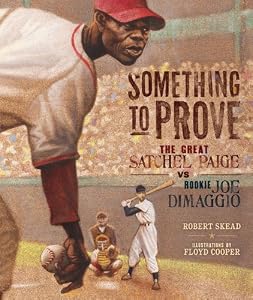


At Booktalking, Anastasia (our Nonfiction Monday organizer extraordinaire) features a picture book biography for older readers, Something to Prove: The Great Satchel Paige vs. Rookie Joe DiMaggio.  Baseball history - one of my favorite topics!


Wrapped in Foil's, Roberta, has a book on another of my favorite topics - space.  Beyond the Solar System: Exploring Galaxies, Black Holes, Alien Planets, and More is a "great book that ties history and astronomy with hands-on activities, perfect to share with the upcoming Perseid meteor shower."

(Don't miss the Perseid meteor showers coming up on the 11th and 12th of this month!)


At Jean Little Library, Jennifer has a review of the narrative nonfiction book, The Mystery of Darwin's Frog.
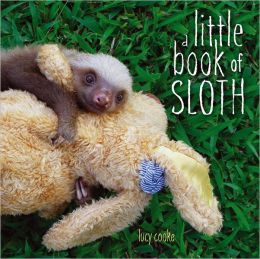

At A Mom's Spare Time (is there such a thing as a mom's spare time?), Ami has a picture book for young readers, A Little Book of Sloth.  No one will be able to resist that cover, and my teenage daughter tells me that sloths are the new hip animal. They do seem to popping up where they're least expected!  (How long before they get their own pistachio commercial?)


Sondy at Sonder Books has a review of Hoop Genius: How a Desperate Teacher and a Rowdy Gym Class Invented Basketball.  A picture book biography for young readers, Hoop Genius is a fun look at the invention of basketball.
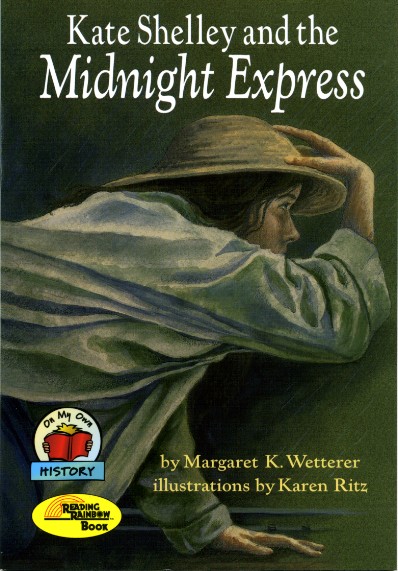
At Stacking Books, Reshama has a review of Kate Shelley and the Midnight Express, "a true story of a brave 15 year old girl, Kate Shelley, who saved lives in a raging storm by risking her own life when a railroad bridge collapsed."  


It's a wrap!   Thanks to everyone who participated!

Friday, April 9, 2010

Al Capone Shines My Shoes

Choldenko, Gennifer. 2009. Al Capone Shines My Shoes. New York: Dial.


The year is 1935 and 12-year old Moose Flanagan and his sister, Natalie, are still living with their parents on Alcatraz Island where Moose's dad is a prison guard.  The famous mobster, Al Capone is still in residence as well.  In Al Capone Does My Shirts, Al Capone  helped Moose by engineering Natalie's acceptance into a special-needs school in San Francisco.  The action in Al Capone Shines My Shoes begins when Moose receives a note in his prison-laundered clothing, "your turn."

Moose narrates the events that follow this missive from the powerful Al Capone, and there is plenty of action and suspense to satisfy readers.  However, this book has far more to offer.  As historical fiction, its location and period is certainly unique to the genre.  What child wouldn't be interested in life on Alcatraz Island when Al Capone resided there?  It's also a glimpse into a bygone era where 12-year-old kids can chaperone younger children on day-long trips in San Francisco and spend most of their time unsupervised, no modern "helicopter parents" appear in this book. For better or worse, life was just different back then.

But what truly makes this a great book, is the relationship and depth of the younger characters.  Rarely is there a children's book that offers insight into so many characters.  By the end of Al Capone Shines My Shoes, the reader will identify with all of the island's young inhabitants - Jimmy, Moose's best friend who struggles to keep up with Moose's athletic prowess and easy likability; Jimmy's little sister, Theresa, who is much smarter than her seven years belie; the beautiful and spoiled Piper, the warden's daughter who acts out to ease her own misery; Janet Trixle, the tagalong daughter of one of the island's officers, Annie, Moose's good-natured and athletic girl friend, the story's narrator, Moose, who is learning much about love and life, and of course, Natalie, his autistic sister. Natalie's role in this story is not the role of the disabled sister, however.  She is just another of the children.  Yes, her disability causes complications and tension, but every child causes complications and tension, and Natalie is just another child.  In the eyes of the Flanagans, and indeed, all of the local children, Natalie is simply Natalie - no better, no worse than anyone else.  And although the Esther P. Marinoff School may try to "cure" Natalie, the Flanagan's are the only ones with the proper prescription - love.

Al Capone, guard towers, prison escapes, baseball, mysterious notes, lies, cover-ups, adventure, love, honesty, friendship, responsibility - Gennifer Choldenko puts them all together brilliantly.


A discussion guide for the book may be found here.

Friday, July 11, 2008

The Earth Dragon Awakes

Yep, Laurence. 2006. The Earth Dragon Awakes: The San Francisco Earthquake of 1906. New York: Harper Collins. ISBN 13: 9780060275242.

PLOT SUMMARY
It is Tuesday, April 17, 1906, and two boys separate for the evening. Chin heads for home in his Chinatown tenement building, riding the cable car with his father, Chinese "houseboy", Ah Sing. Henry settles in the for the night at his Nob Hill home, now that his parents are home from the opera. Neither is aware of the earthquake that will strike within hours. The Earth Dragon Awakes chronicles the story of the great San Francisco earthquake and fire through the parallel stories of Henry and Chin.

CRITICAL ANALYSIS
The Earth Dragon Awakes: The San Francisco Earthquake of 1906 is a historical fiction novel for young readers, by Newbery Honor winner, Laurence Yep. The short chapters are titled with a time, date, and location stamp, “5:12 A.M., Wednesday, April 18, 1906, Chin and Ah Sing’s tenement, Chinatown.” The story line is clear and linear, beginning on the eve of the great quake, and ending ten days later.
Yep’s genius is in telling parallel stories of the two friends, Henry Travis, son of a White banker, and Chin, the son of Henry’s houseboy, Ah Sing. When the story begins, Ah Sing and Chin are watching Henry while his parents attend the opera. As the Chinese pair leaves Nob Hill, their tale begins to diverge from the Travis’. Chin and his father travel by streetcar to Chinatown, where, although it is now midnight, the streets are still bustling as Chinese workers attend to their errands after a long day’s work. Chin and Ah Sing purchase Chinese newspapers and buy apples. Ah Quon, their neighbor, is leaving the temple. Authentic Chinese names are used throughout. Other cultural markers are less obvious, but no less authentic.

In the tenement, Chin can hear “the clacking of mahjong tiles,” and “twisted cable-car tracks look like the strokes of a mysterious, dreadful word.” (A footnote explains that a Chinese character is representative of a word)

The book’s title, The Earth Dragon Awakes, is suggestive of this culture’s historical usage of folkloric creatures. When Ah Quon warns that the Earth Dragon is upset, Ah Sing notes, “The Earth Dragon has shaken the city before,” “We’re still holding on to his back.” Chin silently asks the “Earth Dragon to keep his temper.” A dragon symbol denotes each new chapter. In another instance of personification, “fear twists inside Chin like a snake.”

A perfect example of the dichotomy of the American and Chinese American cultures lies within the story itself. Western literature is typically conflict and resolution. The Travis family’s story in the face of the disaster is one of resoluteness. At first they attempt to stay in their destroyed neighborhood, willing to suffer deprivation and hardship. Only when their situation becomes untenable, do they begin moving – vowing to rebuild and return. The focus of their resolution is to conquer their hardship. Ah Sing and Chin’s goal, however, is to adapt and to continue. As soon as the disaster befalls, they immediately decide to press on to safety, placing survival and continuance foremost. They are decidedly adaptable in their quest – even taking on a short job as wagon loaders to earn money for their ship passage to safety. Conquering the Earth Dragon would not be a culturally authentic outlook for Ah Sing and Chin.

A modernizing aside to the text is the addition of a small footnote in the last chapter. After reading that twenty thousand people have fled San Francisco by boat, and 225,000 more by train, the reader is directed to a footnote, “Never before have so many people left an American city in peacetime – until Hurricane Katrina struck New Orleans.” The addition of this small footnote serves as a reminder of the huge proportions of both tragedies, but also of the possibility for recovery.

As one reviewer noted, the book’s theme of “ordinary heroes” is a bit didactic, “These are ordinary people Henry sees every day. “They’re acting just like heroes,’ he says to his mother.” This is a minor flaw, however, and children will likely ignore the heavy handedness. Scientific explanations of the earthquake and resulting firestorm may be very interesting to some readers, but are so neatly woven into the story, that they are not distracting to those less scientifically inclined.

Yep’s Afterword is especially interesting, placing the Great Earthquake and Fire in terms that modern youngsters can understand, explaining that in 1906, “fourteen dollars could comfortably feed for people for a week,” then outlining the cost of the disaster in 1906 and current year dollars. He also notes which of the story’s anecdotes are factual, including people stopping “a runaway horse by flapping umbrellas at it.” Yep personalizes the book by relating that his own grandfather was a Chinese houseboy who was returning to San Francisco from China on the day following the earthquake. His grandfather was detained at the immigration center for seven days. A suggested reading list and six photographs of the quake’s aftermath (sure to interest young readers) close out the book.

With its focus on the two boys, the earthquake and the fire, The Earth Dragon Awakes is an excellent choice for middle-school aged boys (or girls) who may otherwise be disinterested in multicultural literature. The vocabulary is simple; and the uncomplicated story of one of the nation’s most famous disasters will be sure to hold the interest of the less sophisticated reader.

CONNECTIONS
Bring in a mahjong set to show. Use it as an opportunity to introduce this piece of Chinese culture and its motif of Chinese characters.

The Earth Dragon Awakes is particularly well suited for cross curricular use - in language arts as a reluctant reader novel, in Social Studies to complement immigration history, and in Science to aid in the study of plate tectonics.

Readers interested in Chinatown may enjoy Yep's series, Chinatown Mysteries.

Beneath the Waves - a review

As we read disturbing news accounts of dying manatees , environmental disasters caused by toxic waste, and ocean pollution on the scale of ...