Pages

Monday, August 9, 2010

Sir Charlie Chaplin, the funniest man in the world

Fleischman, Sid. 2010. Sir Charlie: Chaplin, The Funniest Man in the World. New York: Greenwillow.


For many, particularly the younger generation for whom this book is written, Charlie Chaplin is an icon,   but not an icon in the sense of its earlier definition - as a symbolic star, an iconic idol of the silver screen, but an actual icon - a face with a ridiculously small mustache and bowler hat; a silhouette with bowed legs, a cane, and over sized shoes. Sid Fleischman's book, Sir Charlie Chaplin, The Funniest Man in the World, breathes new life into this icon, the genius of the silent screen.

From Chaplin's meager beginnings as the son of minor vaudevillian performers, a drunken father and a mother beginning to lose her voice - Chaplin fell still farther into the depths of London's Cockney slums.  Already educated in the school of hard knocks, seven-year old Charlie and his older brother Sydney were sent to a workhouse in 1896, "owing to the absence of their father and the destitution and illness of their mother," according to the ledger entry at the "booby hatch." His mother, as she would many times throughout her life, was admitted to a ward for the mentally ill.

Using period quotes and engaging prose packed with personification and similes,
...Chaplin was losing confidence in his isolated and bullheaded judgment.  Disaster holding aloft a mallet, as in one of his slapsticks, might be waiting for him in the theater.  Silent films had become as out-of-date as the once-stylish spats he still wore over his shoes. 
Fleischman gives a chronological account of Charlie's rise to fame with the creation of his signature character, The Little Tramp, his personal foibles (including paternity scandals), his wartime contributions, his fall from favor with the American people (including his investigation by the House Un-American Activities Committee and J. Edgar Hoover during the notorious "red scare" years), and his eventual arrival at the place of elevated regard that he finally held in his later years and beyond.  He was belatedly honored with a star on the Hollywood Walk of Fame in 1972, and knighted by Queen Elizabeth in 1975.

In the book's preface, Fleischman reveals that he arrived in Hollywood in the 1950s to write movie screenplays only shortly after Chaplin had left for Switzerland, but "his (Chaplin's) footprints were everywhere."  Fleischman credits Chaplin's films with tutoring him in the school of "spectator theater" and the gift "of the visual."  Fleischman's interest in and connection with his subject is apparent throughout.

Fans of Chaplin will appreciate this intense look into the ups and downs of a life devoted to the entertainment of others; sometimes at great cost to Chaplin himself and those closest to him.  Those who know Chaplin only as a bowler-wearing icon will (hopefully) scurry out to the public library in search of a Chaplin film on DVD.

Recommended for upper middle grades to adult. A thoroughly researched and referenced look at the diminutive film giant, Charlie Chaplin, from a giant of children's literature, Sid Fleischman.
Sid Fleischman passed away in March of this year at the age of 90, before this book was published, a great loss.
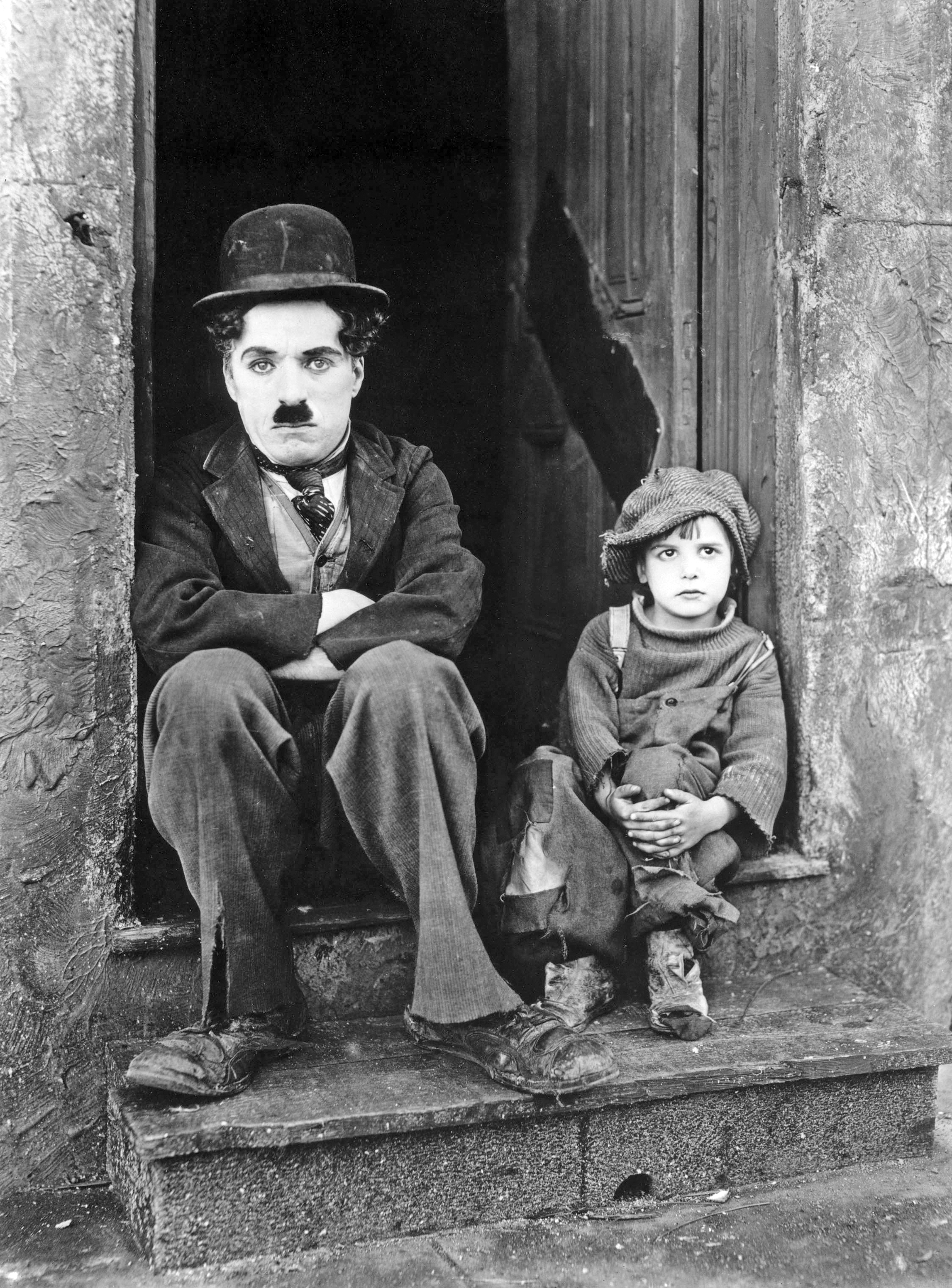


(A scene from Charlie Chaplin's 1921 movie "The Kid". Copyright has expired and the photo is in the public domain. Taken from en.wikipedia.org)
A personal aside: I once took a course, The History of Film.  I'd pop the silent comedy classics into the DVD player,  and my children would quickly dismiss or deride the grainy black and white images; but they would hear me laughing in the silence, and slowly wander in and take a seat on the couch, watching the antics of the Keystone Cops, Laurel and Hardy, or the Little Tramp.  Soon, they were asking which films I would be borrowing next.  Never underestimate the power of a pie in the face.

It’s Nonfiction Monday again!  Today’s host is Moms Inspire Learning. Stop by and visit all the contributors. 
Share |

Wednesday, August 4, 2010

Babymouse Burns Rubber

Holm, Jennifer L. and Matthew. 2010. Babymouse Burns Rubber. New York: Random House.

In pink, white and black, Babymouse is back.  Can it be almost 5 years since Babymouse first made her debut? Time flies when you're daydreaming and eating cupcakes.

Time to see what our favorite pink, sassy, messy-whiskered mouse is up to!

(booktalk)
In Babymouse Burns Rubber, Babymouse leans heavily (a bit too heavily perhaps?) on her friendship with Wilson as she endeavors to enter the soap box derby.  The fact that she can barely ride a bicycle and has no skill in building or fixing things never even enters her mind, which is, of course, full of daydreams - Babymouse's alien encounter, Babymouse the race car driver, Babymouse the worldwide traveler, Babymouse the captain of the Titanic. Will Babymouse win the race?  Will her selfishness cost Wilson the chance to enter?  You'll find out in Babymouse Burns Rubber!

Siblings Jennifer and Matthew Holm keep the fun coming in this latest installment of the very popular Babymouse series. Holm pays tribute to Star Wars films (imagine the scrolling text rolling into deep space),
CHAPTER VII
A NEW CUPCAKE
It is a dark time for the REBELLION. The brave pilot,
 BABYMOUSE, has badgered her
best friend into building her a
SOAP BOX DERBY CAR.
...
for the blah blah blah blah...
are you still reading this?
and Margaret Wise Brown's, Goodnight Moon.
In the great pink messy room ...
there was a telephone (somewhere on the floor underneath the dirty socks)
and a plate of half-eaten cupcakes.
Goodnight cupcakes.
Goodnight cupcakes being eaten by Babymouse.
Goodnight math homework that's not finished.
...
Of course, the illustrations complete the package.  Simple, yet expressive and full of humorous details like aliens wearing bunny slippers, "Goodnight aliens hiding in the closet."

Next up: Babymouse Cupcake Tycoon - coming in September.


When I first checked in with Babymouse, she was Queen of the World in 2005. Since then, she's gone on to bookshelf fame as a Rock Star, Beach Babe, Skater Girl and more. This is the 12th book in the graphic novel series.

Click here to go to the Babymouse homepage.  (don't worry - you can turn the music off) You can find more information about Babymouse, create your own comics, make posters, or play other Babymouse games.

A Random House Babymouse Educators Guide for Babymouse is also available.

I'm in the midst of a great ALSC sponsored course, Out of this World Youth Programming.  My assignment for this week is to create a new library program for elementary school-aged children.  I think I just did my homework.  Come this fall, I'll be "Calling all Cupcake Tycoons!"
Share |

Saturday, July 31, 2010

Another picture book roundup - read on!

Once again my bags of books are overflowing! Here are a few new titles worthy of mention:

Jacobs, Paul DuBois and Jennifer Swender. 2010. Fire Drill. Ill. by JuyVoun Lee. New York: Holt.

A picture perfect, non-threatening, multicultural, rhyming book about fire drills.  What more can one ask for? A must-have for every Kindergarten teacher.

Elya, Susan Middleton. No More, Por Favor. 2010. Ill. by David Walker. New York: Putnam.

Know a picky eater? Well, he's in good company.  There are plenty of picky eaters in the rain forest too! 
Deep in the rain forest - selva, so green,
lives Papagayo, an eating machine.
"Here, Bebe Parrot, papaya is yummy."
"No!" says the baby. "No more in my tummy!
Papaya for breakfast, for lunch and la cena.
Too many times in a row no es buena!"
With cute, double-spread acrylic on paper illustrations, a glossary and pronunciation guide for the many Spanish words, and a very funny story about eight picky rain forest inhabitants, No More, Por Favor is great fun! ¡qué divertido!


Roberton, Fiona. 2010. Wanted: The Perfect Pet. New York: Putnam. (first published in Australia)

Simple ink sketches, highlighted with minimal coloration tell the simple story of Henry, who, "more than anything else in the whole wide world," wanted a dog.  It is also the story of a duck, to whom
Nobody ever wrote. Nobody ever called. Nobody ever e-mailed,
that is, until he created "The Perfect Disguise."  Funny, touching, and hilariously illustrated!
                                                                         
London, Jonathan. 2010. I'm a Truck Driver. Ill. by David Parkins. New York: Holt.

This rhyming picture book has large sturdy pages featuring trucks of all kinds - cement mixers, fire engines, power shovels, and more.  Each truck has a 2-page spread with a short rhyme.  Some of the rhymes are a little forced,
I'm a big crane operator.  I lift steel beams high and build tall buildings that scrape the blue sky,
and in others, London rhymes words with themselves, but overall this is a winning book for two reasons - kids love trucks and these personified trucks are cute! 

Pinkwater, Daniel. 2010. Beautiful Yetta: The Yiddish Chicken. New York: Feiwel and Friends.

A trilingual book - English, Spanish, and Yiddish?  Yes, Yiddish - the language of Yetta, a runaway from Mr. Flegleman's organic chicken ranch!  Daniel Pinkwater has a unique sense of humor and he's obviously fond of chickens (The Hoboken Chicken Emergency comes to mind). Both of these are evident in Beautiful Yetta, in which the heroine escapes the chicken truck and finds herself in Brooklyn, where she promptly saves a small green bird, a parrot belonging to one of the local colonies,
Parrots?  ?פּאָפּוגײַ  popuGEYehn?
The chicken saved me. And look! Isn't she beautiful?
¡La gallina me salvó! ¡Y miren! ¿No es ella hermosa?
la gahYEEna me sahlVO! ee MEErehn, no ess EHya ehrMOsa?
And so begins the odd friendship and pairing of chicken and parrot, Yiddish and Spanish, on the streets of Brooklyn. The in-text pronunciation guides make it possible to share this story with only a passing ability in Spanish or Yiddish. A short explanation and chart of the Hebrew/Yiddish alphabet follows the story. A Spanish alphabet chart would have been welcome as well.

Thursday, July 29, 2010

The Viper's Nest

Lerangis, Peter. 2010. The Viper's Nest. Read by David Pittu. Scholastic Audiobooks.
About 5 hrs on CD or Playaway.

Still plugging along through the 39 Clues series, trying to catch up.  The Viper's Nest (Book 7) was not available from my library for digital download, so I checked out the Playaway version.

(If you’re not familiar with Playaway audio books, they are single-purpose, multi-use, mp3 players. It’s a very simple mp3 player loaded with one book and lacking recording capabilities. It has basic command buttons – on/off, play/pause, fast forward, reverse, volume. It begins each time at the farthest listening point. That’s it! Easy as pie. Larger than a typical mp3, but smaller than an iTouch, they’re durable, portable and convenient. Your public library probably offers them.)

As usual with the other audiobooks in the series, David Pittu does a fine job in narrating the story.  This time, he must add South African accents to his ever-expanding repertoire as Dan, Amy and Nellie continue their hunt for the clues - this time following the trail of Zulu warrior, Shaka Zulu and his curious connection to British PM, Winston Churchill.  In this installment, Dan and Amy discover a clue and a shocking revelation about their family. The books, in general, are fairly formulaic in nature and read seamlessly regardless of the author, however, Peter Lerangis' sense of humor is evident in The Viper's Nest.  Nellie has some great one-liners.

Once again, the audio version offers bonus materials - this time in the form of a recorded deposition from Mrs. Thembeka regarding the theft of the Churchill letter.

On to Book 8 and I've got to hurry. The tenth and final book, Into the Gauntlet by Margaret Peterson Haddix will be released on August 31, 2010.  There will be a live webcast with all of the authors.

Tuesday, July 27, 2010

White Crane

Fussell, Sandy. 2010. White Crane. Ill. by Rhian Nest James. Somerville, MA: Candlewick.
(Advance Reader Copy)

Set in an undetermined year, after the heyday of the samurai warrior class and prior to its demise in the 19th century, White Crane is an improbable story of a ryu, or Japanese school of martial arts, inhabited by a  revered warrior teacher and his hand-picked students, each disabled in some way.  Niya Moto is White Crane, the story's one-legged narrator, so named for his spirit totem. The white crane is a kindred creature, as comfortable as Niya in standing upon only one leg. Kyoko, the White Monkey is an albino with extra fingers and toes. One-armed Mikko is the Striped Gecko, Taji is blind and guided by the Golden Bat.  Yoshi, pacifist, yet strong and sturdy, still searches for his spirit.  All are under the guidance of the wily Sensei, who is so old that the mere mention of his name usually elicits the response, "I thought he was dead." All are preparing for the yearly ceremonial competition between the Boar, Dragon, Eagle, Rabbit, Snake, Wolf and Cockroach ryus.  Niya's ryu is, of course, The Cockroach; but as Sensei reminds his pupils,
Cockroaches are small, but they are very hard to kill.
Though the characters may be improbable, White Crane is believable.  With writing reflective of the Japanese philosophical code known as Bushido, the reader is drawn into a world in which the most important concerns are Chi! Jin! Yu!, wisdom, benevolence, courage.  White Crane is not without humor, however.  When the boys travel to the village to see the master swordsmith, they bow low to honor his age, reputation and craftsmanship,
He chants as he works, I want to listen, but Onaku's singing is even worse than mine.  Covering my ears would be impolite, so I grit my teeth and hum inside my head. Om. Om. Om. "An honorable sword sings loudly with truth and purity, " Sensei teaches.  No wonder Master Onaku's swords are so prized.  They are born singing at the top of their lungs to drown out their maker's awful voice.

The chapters move swiftly, each containing an illustrated title page and a additional full page, action-packed sketch by Rhian Nest James. With five students, many competing schools, and a fascinating period in history, debut author Sandy Fussell has all the ingredients for a great new series.  Recommended for 4th grade and up.

Read a sample chapter here.
Due on shelves August 2010
Samurai warriors, circa 1880.
(Photograph from Wikimedia Commons)

Bookmark and Share

Beneath the Waves - a review

As we read disturbing news accounts of dying manatees , environmental disasters caused by toxic waste, and ocean pollution on the scale of ...