Pages

Wednesday, April 20, 2011

Monday, April 18, 2011

Time for a Bath, Time to Eat

It's Nonfiction Monday again!  (where does the week go?) 

Just a short post today because I'm on vacation. 
 I'll try to post a photo or two later in the week and perhaps you can guess where I am. 
Here's a hint: It's a great town for baseball and ducklings.  Feel free to make a guess in the comments. 

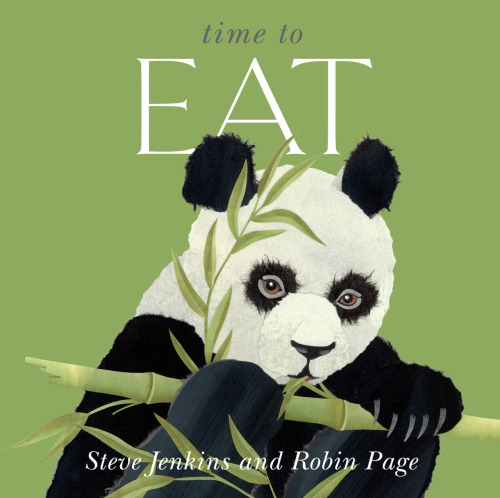
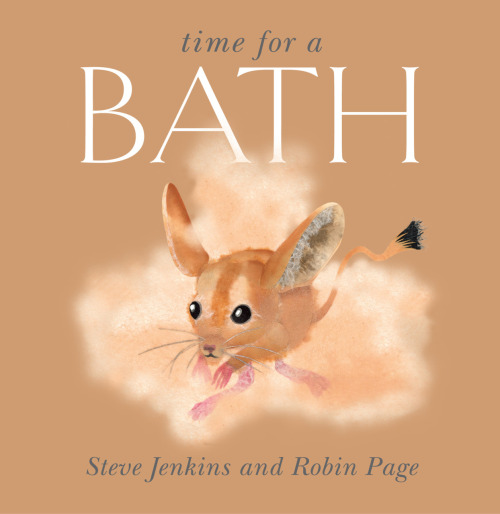
Here are two great new offerings from the talented duo of Steve Jenkins and Robin Page.

Time to Eat and Time for a Bath. 2011. Boston: Houghton Mifflin.

Illustrated in typical Steve Jenkins style, these small (81/4" square), attractive books feature the ways in which various animals eat and bathe.  The facts presented are particularly interesting, especially for young children,
Got milk?  Like all mammals, the baby blue whale drinks milk. A lot of milk - the equivalent of 800 glasses every day.  On this rich diet, a young whale can gain 200 pounds 991 kilograms) every twenty-four hours.
Don't want to take a bath?  How about a shower?
Rainy day bath The hummingbird takes its bath on a rainy day, perching on a branch and spreading its wings in a downpour.
The final pages include lengthy paragraphs of general information on each featured animal.


There is a  third book in this series, Time to Sleep, but my branch did not have a copy. I'm sure it's great as well.

Today's roundup is at The Cat and the Fiddle.
Stop by and check out all of today's Nonfiction Monday posts.

Thursday, April 14, 2011

Picture book reviews - diamond and square edition

My book bags have been overflowing!  Here are two more great choices.

I'll start with my favorite topic - you guessed it - baseball!

Abrahams, Peter. 2011. Quacky Baseball. Ill. by Frank Morrison. New York: Harper.

It's Thumby Duckling's first start for the Webbies, and they're playing rival duck team, the Quackers.  Put on your best play-by-play voice for this one,
Been a long day at the ball field.  Top of the ninth.  Two on, two out for the Quackers.  The Webbies need an out!  Here comes the pitch, and ... it's a long drive to right!  Can Thumby duckling get there?  Thumby makes the catch! Out number three.  How about that!
Line score boxes help the baseball fan follow the action.  Insets offer batting tips,
Watch the ball like a hawk- even though hawks don't play baseball.
Colorful, rough-edged artwork by Frank Morrison adds a wonderful ruggedness to the game. I will definitely be sharing this one in my baseball storytime!

Look inside Quacky Baseball.

Now we go from the baseball diamond to the square.

Hall, Michael. 2011. Perfect Square. New York: Greenwillow.

What happened when a perfectly happy perfect square was
cut into pieces and poked full of holes (?)
 It made itself into a fountain that babbled and giggled and clapped.
Each day of the week, the perfect square is crumpled, ripped, shredded and snipped; and each day it transforms itself into something wonderful. Bursting with color, this is a perfect book to teach colors or days of the week.  It's also a wonderful jumping off point for an imaginative craft.  What can you make with a square?

Look inside Perfect Square

Wednesday, April 13, 2011

National Library Week

 Here are a few things you can do to celebrate National Library week.
  1. Share your library story in 17 syllables and 140 characters. Enter the National Library Week twaiku contest - tweet a twaiku (Twitter haiku) about your love of libraries.  Details here. Today is the deadline so act fast! I entered.   "A welcoming place/ All things good, together/ Home, your library"  
  2. Enter the Why I Need my Library Teen Video Contest.  (for teens - ends on April 18)
  3. Visit ilovelibraries.org and see how you can help your library
  4. Visit your library
  5. Many libraries are threatened with budget or staffing cuts.  If you love your library, tell your friends, write the newspaper, blog it, tweet it, post it!  (and, oh yeah, you can tell your librarian, too!)
So what are you waiting for?  Visit your library today!

Monday, April 11, 2011

If the World Were a Village

Smith, David J. 2011. If the World Were a Village. Ill. by Shalagh Armstrong. Tonawanda, NY: Kids Can Press.

First published in 2002, If the World Were a Village, received a much-needed update this year.  The colorfully-painted, folk-art illustrations haven't changed, but the statistics have been updated.  As with the original book, the numbers are fascinating to contemplate, and offer Western children a look at the world from a much larger vantage point than the one with which they are familiar.

The premise of the book is simple.  Proportionately reduce the world's population to 100 people and examine the demographics. Here are just a few of the many facts in If the World Were a Village:

How many people in the village of 100 have electricity?

76 have electricity
24 do not

Of the 100 people in the global village

61 are from Asia
14 are from Africa
11 are from Europe
8 are from South America, Central America (including Mexico), and the Caribbean
5 are from Canada and the United States
1 is from Oceania

How much money do people in the global village have?

If all the money in the village were divided equally, each person would have about $10,300 US dollars per year. But in the global village, money isn't divided equally.

The richest 10 people have nearly 85 percent of the world's wealth. Each has more than $87 500 a year.

The poorest 10 people have less than $2 a day.

Language, age, religion, food, environment, school, money, energy and health are also featured, along with extensive source notes.


I'm so glad that it's been updated. In today's world, politics, society, environment and economics are all global issues.  This is a must read.

A teacher's guide is available from Kids Can Press.

Today's Nonfiction Monday is at Apples with Many Seeds.  Be sure to stop by.

Beneath the Waves - a review

As we read disturbing news accounts of dying manatees , environmental disasters caused by toxic waste, and ocean pollution on the scale of ...