Pages

Showing posts with label Caldecott. Show all posts

Monday, January 28, 2019

ALA Youth Media Awards are today!

Today's the big day!  Be sure to tune in at 11:00 am EST to watch the announcements for the ALA Youth Media Awards!


Here's the link to the live webcast: http://ala.unikron.com/  or follow #ALAyma on social media platforms for live updates.

Monday, February 12, 2018

2018 American Library Association Youth Media Awards list #alayma

I've created a complete, annotated list of all the books and audiobooks that were honored in the 2018 American Library Association Youth Media Awards in Denver, Colorado at the annual American Library Association Conference.

Flip through and enjoy!  

If you have difficulty accessing the slideshow, you may find it on Riffle Books. [https://www.rifflebooks.com/list/253991]

Monday, February 1, 2016

Thoughts on Last Stop on Market Street

In 2008, librarians surprised everyone by choosing the 533-page, The Invention of Hugo Cabret as the winner of the Caldecott Medal honoring the "most distinguished American picture book for children."  This year, the award committees surprised us again with the choice of a picture book, Last Stop on Market Street, as the winner of the Newbery Medal, given to "to the author of the most distinguished contribution to American literature for children." 

The short video below featuring author, Matt de la Peña, reading from his book will convince you that this is a wonderful book. 
My concern as a public librarian, however, is how best to share this book with kids.  The book is a little lengthy for my usual storytime crowd, and school-aged kids can seldom be convinced to check out a picture book.  It's in instances like these, that I envy school teachers and media specialists, who have such a wonderful opportunity to share great books with large numbers of kids.  This is perfect book for reading aloud in school.

But, how to share it in a public library setting?

Last week, I had a last-minute inspiration and it was a rewarding experience.  I have a small book club that meets every month. This month, I asked each of the kids to read Last Stop on Market Street - right then. In addition to positive comments about the book, I loved two of the observations that they reported:
  1. I never would have chosen this book if you didn't hand it to me.
  2. The people at the soup kitchen look like regular people.
We then discussed public transportation (none of the kids had ever been on a bus) and soup kitchens (none had ever been to one).  Working in a suburban library with poor public transportation, I can understand this. However, as a suburban parent, I can tell you that I made sure that my own children volunteered at the local food pantry and experienced public transportation (I made all of them ride the public bus with me to the mall even though it was more expensive than driving my minivan and took twice as long).  As a suburban librarian, I can't take kids on the public bus or to the soup kitchen, but at minimum, I've ensured that a few more children are now aware of the lives that others lead.This is one of the many things that makes my job worthwhile.

One of the missions of the #WeNeedDiverseBooks (TM) campaign is to make sure that "all children can see themselves in the pages of a book."  This is important, but also important is recognizing that all people are just "regular people."  We always have more in common than we think.


Last Stop on Market Street
by Matt de la Peña, Illustrated by Christian Robinson

Read it. Share it.

**Winner of the 2016 Newbery Medal
**A 2016 Caldecott Honor Book
**A 2016 Coretta Scott King Illustrator Honor Book
A New York Times Bestseller
Four Starred Reviews
Finalist for the 2014 E.B. White Read-aloud Book Award
A Junior Library Guild Selection

Monday, January 11, 2016

ALA Youth Media Awards announced today!

Watch the Golden Globes last night?  Well, it's award season for books, too!

The big news today for librarians, parents, teachers, and fans of #kidlit, is the announcement of the American Library Association's Youth Media Awards. I'll be driving to work as the live webcast begins, but I'll be checking in as soon as I get to work!

Most people know the Newbery and Caldecott Medal awards, but there are many others.  You can check them out the complete press release here: http://www.ala.org/news/mediapresscenter/presskits/youthmediaawards/alayouthmediaawards

You can watch a live stream of the event beginning at 8:00AM EST today, January 11, 2016.  Here's the link: http://ala.unikron.com/2016/ .

You can also follow the Twitter hashtag #ALAyma for live updates.

I hope to see a few of my favorites!


Image source: openclipart.org

Thursday, October 4, 2012

Picture Book Roundup - old favorites

Today's Picture Book Roundup features older winners of the Caldecott Medal. 

The Caldecott Medal was named in honor of nineteenth-century English illustrator Randolph Caldecott. It is awarded annually by the Association for Library Service to Children, a division of the American Library Association, to the artist of the most distinguished American picture book for children.
I recently completed a class, "The Caldecott Medal: Understanding Distinguished Art in Picture Books," offered by the Association for Library Service to Children (ALSC), and taught by K.T. Horning.
In addition to learning much that I didn't know about art, I had the opportunity to encounter or revisit some Caldecott Medal winners that predate my career as a librarian. I have been working in a library since 2005, and received my masters degree and first professional librarian position in 2007. The Caldecott Medal has been awarded since 1938. Clearly, I had a lot of catching up to do.

Though I did not read them all, I did read many older winners. Here are some of my favorites from the years prior to 1990:

(In order by publication date - award dates are the January following the publication year)

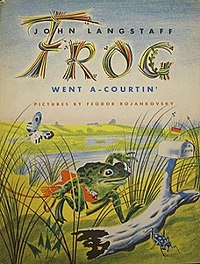
  • Langstaff, John. 1955. Frog Went A-Courtin'. New York: Harcourt Brace. Illustrated by Feodor Rojankovsky.

Richly detailed and expressive animals illustrate this favorite old folk song.  (If you don't know the song, Frog Went A-Courtin', Burl Ives' rendition was a classic)  This is my favorite of all the older Caldecotts.

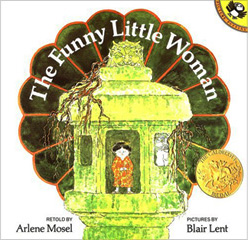
  • Mosel, Arlene. 1972. The Funny Little Woman. New York: Dutton. Illustrated by Blair Lent.

Humorous, with inventive illustrations, the funny little woman travels to a world beneath her simple home in Japan.


  • Yorinks, Arthur. 1986. Hey. Al. New York: Farrar, Strauss, and Giroux. Illustrated by Richard Egielski.

Generally disliked by most of my classmates, this quirky, surreal story about a man and his dog really grows on you.


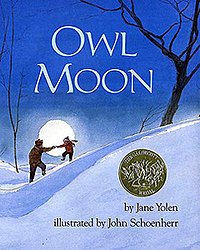
  • Yolen, Jane. 1987. Owl Moon. New York: Philomel. Illustrated by John Schoenherr.

I have been fortunate enough to hear owls in the night many times, though the only ones I have been able to spot are the low-flying burrowing owls.  In Owl Moon, the thrill of a night-time owling expedition is captured brilliantly in both illustration and prose.

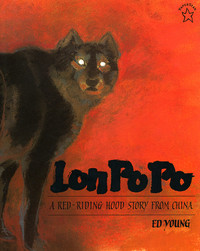
  • Young, Ed. 1989. Lon Po Po:A Red-Riding Hood Story from China.  New York: Philomel.

 
A masterpiece of danger, suspense and courage - a classic folktale. The only one of my picks written and illustrated by the same person, it's no surprise that it's a pitch-perfect pairing of text and art.

A complete list of Caldecott Medal winners 1938-present, may be found here.


I've left off many other wonderful old medal winners, I know.  Feel free to chime in with your favorite Caldecott winners from the 1930s-1980s.


Sunday, January 22, 2012

ALA Youth Media Awards

Just a reminder that tomorrow is the day that the winners of the ALA Youth Media Awards will be announced at ALA Midwinter in Dallas.

ALA will host a live webcast of the event, beginning at 7:30am CT.

I can't wait to hear the winners, and hope I've read them all.  Next week, I'm planning a storytime based on Caldecott Medal winners.  I'm hoping to share the winner with my storytime crowd (unless, of course, its a behemoth like The Invention of Hugo Cabret  - you never know)

While you're waiting for the winners to be announced, feel free to enjoy this video which "captures Newbery Award-Winning authors Virginia Hamilton and Jean Craighead George talking about how those awards (for Julie of the Wolves and M.C. Higgins The Great respectively) changed their lives."


Video provided courtesy of Open Road Media.   

Tomorrow is also Nonfiction Monday and the roundup will be here.

Wednesday, April 20, 2011

Monday, January 10, 2011

And the winners are ...

Today the American Library Association's Youth Media Awards winners (including the Caldecott and Newbery medals) will be announced from San Diego, beginning at 7:45am EST PST.  Check back throughout the day for updates to this post or view the official ALA webcast.  I can't wait to find out the winners!

(Follow Twitter hashtag #ALAYMA if you can't wait.)

Odyssey Award for best audiobook for children or teens
The True Meaning of Smekday


Pura Belpre Award
The Dreamer

John Newbery Award
Moon over Manifest
(Oh no!  I read all the honor books but not the winner! It will be next on my reading list for sure!)

Randolph Caldecott Award
A Sick Day for Amos McGee

Coretta Scott King Award
One Crazy Summer

Theodore Suess Geisel Award
Bink and Gollie

Robert F. Sibert Informational Book Medal
Kakapo Rescue: Saving the World's Strangest Parrot
and more!

These are some of the major award winners.  Watch the webcast for all the winners and the honor award recipients.

It's also Nonfiction Monday.  Today's roundup can be found at Tales from the Rushmore Kid.

Monday, January 18, 2010

Newbery and Caldecott Winners announced

A quick run-down of the major 2010 ALSC Award Winners  announced today:

Newbery Medal

When You Reach Me, written by Rebecca Stead, published by Wendy Lamb Books, an imprint of Random House Children's Books
Newbery Honor Books


Claudette Colvin: Twice Toward Justice, written by Phillip Hoose, published by Melanie Kroupa Books/Farrar Straus Giroux, an imprint of Macmillan Children's Publishing Group

The Evolution of Calpurnia Tate, written by Jacqueline Kelly, published by Henry Holt and Company

Where the Mountain Meets the Moon, written by Grace Lin, published by Little Brown and Company Books for Young Readers

The Mostly True Adventures of Homer P. Figg, written by Rodman Philbrick, published by The Blue Sky Press, an imprint of Scholastic Inc.


Caldecott Medal
The Lion and the Mouse , illustrated and written by Jerry Pinkney, published by Little, Brown and Company Books for Young Readers

Sibert Medal

Almost Astronauts: 13 Women Who Dared to Dream, written by Tanya Lee Stone, published by Candlewick Press

Belpre (Author) Award
Return to Sender, written by Julie Alvarez, published by Alfred A. Knopf

Of course there are many other winners and honor books, but I wanted to pass the word quickly.

A comlete list of all awards and honors is available on the Association of Library Service to Children (ALSC) website.


Saturday, December 19, 2009

Snow

I'm not much of a snow person, but I have to admit that there's something special about it.  This morning I appreciated the way that it blankets the world in quiet.  Even the dog sleeps late on a snowy morning!  But more importantly, as a big snowstorm rages outside, I enjoy the fact that snow can remind us that we're not quite as important as we think we are, that we are not always the ones who define our role in this great big wonderful world.

If you're lucky enough to be tucked up at home with children on snowy day, here are a few of my snowy favorites - two older classics and a great new non-fiction title:

My favorite snowy day book!
Snow by Uri Shulevitz, a Caldecott Honor book from 1999


The Snowy Day by Ezra Jack Keats, a Caldecott Medal winner from 1963

 If you don't want to go out and play after reading this one, you don't know how to have fun!


and The Story of Snow: The Science of Winter's Wonder by Mark Cassino
a new non-fiction title

Cassino, Mark. 2009. The Story of Snow: The Science of Winter's Wonder.

In thirteen simple sentences,

"This is the story of snow.
Snow begins with a speck. ... ,"

The Story of Snow explains the science behind the snowflake. But there is more to this book - smaller print on each page offers a more detailed explanation of the simpler text,

"Clouds are mostly made of air and water, but there are also bits of other things, like tiny particles of dirt, ash and salt...A snow crystal needs one of these "specks" to start growing."

Accompanying this short (32-page) "story," are diagrams, watercolor backdrops, and striking photographs of snowflakes. Directions for catching snow crystals wrap up the book.

The Story of Snow: The Science of Winter's Wonder follows a trend that I've seen a lot lately in children's non-fiction. The book is almost as multi-faceted as the snowflakes it describes - picture book, science book, story book, activity book. The simpler text may be read as a story to young listeners. Older children will benefit from the more detailed explanation. Everyone will enjoy the stunning photography. Teachers should like this one!

Wednesday, January 28, 2009

2009 ALSC Awards and the House in the Night

Below is the link to the 2009 American Library Association's (ALA) Association of Library Services to Children (ALSC) 's list of award-winning books for 2009.

http://www.ala.org/ala/mgrps/divs/alsc/awardsgrants/bookmedia/2009medawardwin.cfm
Click the link for the complete list of winners and honor books in all categories.

Here are a few highlights:

The Caldecott Medal (picture book) went to
The House in the Night, illustrated by Beth Krommes and written by Susan Marie Swanson, Houghton Mifflin Co.

The Newbery Medal (J Fiction) went to
The Graveyard Book by Neil Gaiman, HarperCollins Children's Books.

Unfortunately, because it is cataloged at a Young Adult book in my library, I did not read The Graveyard Book, and now I'm on the waiting list for a copy.

The Sibert Medal (non-fiction) went to
We Are the Ship: The Story of Negro League Baseball, written and illustrated by Kadir Nelson, Disney-Jump at the Sun, an imprint of Disney Book Group

The National Council of Teachers of English (NCTE) also chooses an annual award, the Orbis Pictus Award for outstanding non-fiction for children.

Their choice this year is:
Amelia Earhart: The Legend of the Lost Aviator by Shelley Tanaka, illustrated by David Craig (click the link for Honor and Recommended books)

As the saying goes, so many books, so little time!

Tuesday, August 26, 2008

The Hello, Goodbye Window

Juster, Norton. 2005. The Hello, Goodbye Window. Ill. by Chris Raschka. New York: Hyperion Books. ISBN 0786809140

Plot Summary:
The plot in this Caldecott Medal winning book is simple. The story is an account of a child's day spent at her grandparent's home while her parents are working. She relates a typical day, focusing on the "hello goodbye" window, the window in the front of her grandparent's home through which she enjoys the view from both the inside and the outside throughout the day and early evening hours.

Critical Analysis:
This tale is told in the first person in a tone that should be quite believable to small children. The little girl says "I get tired I come in and take my nap and nothing happens until I get up." This is one of my favorite lines in the book because I remember my own daughter being absolutely shocked to find out that Mom and Dad ate ice cream while she was sleeping! Norton Juster clearly understands a child's perspective.

The "hello goodbye window" is an integral part of the setting, both in the text and illustrations. The window represents reality, fantasy, and imagination. She sees her grandparents through the window as her parents prepare to drop her off. She sees the Queen of England coming to visit for tea. Her grandfather amuses her by talking to her nighttime reflection in the window as if she is actually outside the window.

The illustrations are bright and cheery and busy and serve to set the book's mood. They are done in the impressionistic style. The blended colors and somewhat out of focus characters make this apparently mixed-race family relative to readers of any ethnicity. It's culturally inclusive in an understated manner. The lively colors and curly lines set the tone for an upbeat look at a mundane experience.

Review Excerpts:
Writing for School Library Journal, Angela Reynolds praised the artwork in this Caldecott award winning book,noting "The artwork is at once lively and energetic, without crowding the story or the words on the page; the simple lines and squiggles of color suggest a child's own drawings, but this is the art of a masterful hand."

Connections:
This book can be a great jumping-off point to entertain and interact with a child confined inside due to illness, injury, or bad weather. With a sign created in the likeness of the book's artwork, any window can be designated the "hello goodbye window" or the "rainy day window" or even the "chicken-pox window." From that point, with pencil and lined paper or crayons or paints the possibilities are endless - bird watching, people watching, or fantasizing and even creating the perfect view from the window.

Thursday, May 15, 2008

The Wall

Sis, Peter. 2007. The Wall. New York: Farrar, Straus & Giroux.

I originally read and reviewed this book in November of 2007. Since that time, The Wall was chosen as the 2008 Robert F. Sibert Medal winner and also as a Caldecott Honor book. My original review follows:

Peter Sis, author and illustrator of many children’s books, has written an autobiography, The Wall: Growing up behind the Iron Curtain. The story spans the years he spent growing up in Prague, Czechoslovakia from 1948 through 1986, recounting the end of WWII, the imposition of Communist rule, the Prague spring of 1968 and the brutal crackdown that followed, and eventual opening of the Iron Curtain .
His story is actually told in three formats. The storyline text is simple and can be read quickly and by younger readers; it is accompanied by simple line drawings of daily life in the former Czechoslovakia under Communism. The use of red symbolizes Communism, while the addition of color symbolizes Sis and his desire for freedom. The heart of the story, however, is in the double-spread journal pages interspersed throughout the book and his many drawings and sketches. The journal pages are diary entries from the period noting the mundane (a spat with his sister) to the horrific (a friend that sets himself afire to protest Communism) to the hopeful (the Beach Boys arrive in Prague, news of the Beatles filters in). A prolific artist from his earliest years, many of the drawings are from Sis’ early childhood, some are pop art from the 60s.
This is a picture book for older readers. With many of my relatives in what is now Slovakia (then part of Czechoslovakia), I grew up following this story through the eyes of my own relatives. This book is a fascinating look at the indoctrination of children into Communism and the inability of a repressive regime to suppress individuality and the desire for freedom. It will likely only have appeal to students interested in the Cold War era, fans of Peter Sis, and those with relatives or ancestors from the Czech Republic or Slovakia. I enjoyed it, but I doubt that it will have wide appeal.

Thursday, March 20, 2008

The Invention of Hugo Cabret

Selznick, Brian. 2007. The Invention of Hugo Cabret. New York: Scholastic.

This 526-page book is the unlikely winner of this year’s Caldecott Medal, awarded annually to “the most distinguished American Picture Book for Children published in the United States during the preceding year.” In most years, the Caldecott Medal is awarded to a picture book for young children. There was much discussion about whether or not a book of this type and length, “twenty-six thousand one hundred and fifty-nine words,” belonged in contention for the award. Its nearly 300 pictures, however, sealed the deal and it is a watershed book in children’s literature.

Most of the artwork consists of Selznick’s pencil drawings, but there are also several stills from early motion pictures, and a few drawings by the famous French filmmaker, George Méliès. Selznick’s pencil drawings are incredibly lifelike and detailed. Parts of the story (including a memorable chase scene) are told only through drawings, sometimes twenty or more pages running. The story is so captivating that if the pictures weren’t so wonderful, you would be tempted to race through the illustrated pages just to see what happens next.

Without giving too much away, The Invention of Hugo Cabret is mystery, history, suspense, friendship, and coming-of-age all at once. Life in 1931 Paris, clockworks, the history of film, and a wary but blossoming friendship are strong themes of the story. Hugo Cabret is a young street urchin living inside the walls of a Paris train station. Having learned the skill of horology (the art of measuring time) from his father, he carries on the job of the absent Timekeeper of the station, carefully maintaining and winding the clocks throughout, and living in a tiny hidden room within the walls.

In his solitude, his companion and his obsession is a broken automaton, that he inherited (in a fashion) from his father. He is determined to repair the broken automaton, and so repair himself. He steals small toy parts, gears, and springs from a toy shop in the station and thus begins an unlikely relationship with the secretive and cantankerous shopkeeper and the young girl, Isabelle, frequently found at the shop.

The text on each page is bordered by a large expanse of white space and a black border. Despite its length, this story reads quickly. Hugo is a likeable, if brooding, young man and the reader is immediately swept into the drama that is Hugo’s very existence.

The book’s website is a great resource. http://www.theinventionofhugocabret.com/about_hugo_intro.htm

Beneath the Waves - a review

As we read disturbing news accounts of dying manatees , environmental disasters caused by toxic waste, and ocean pollution on the scale of ...